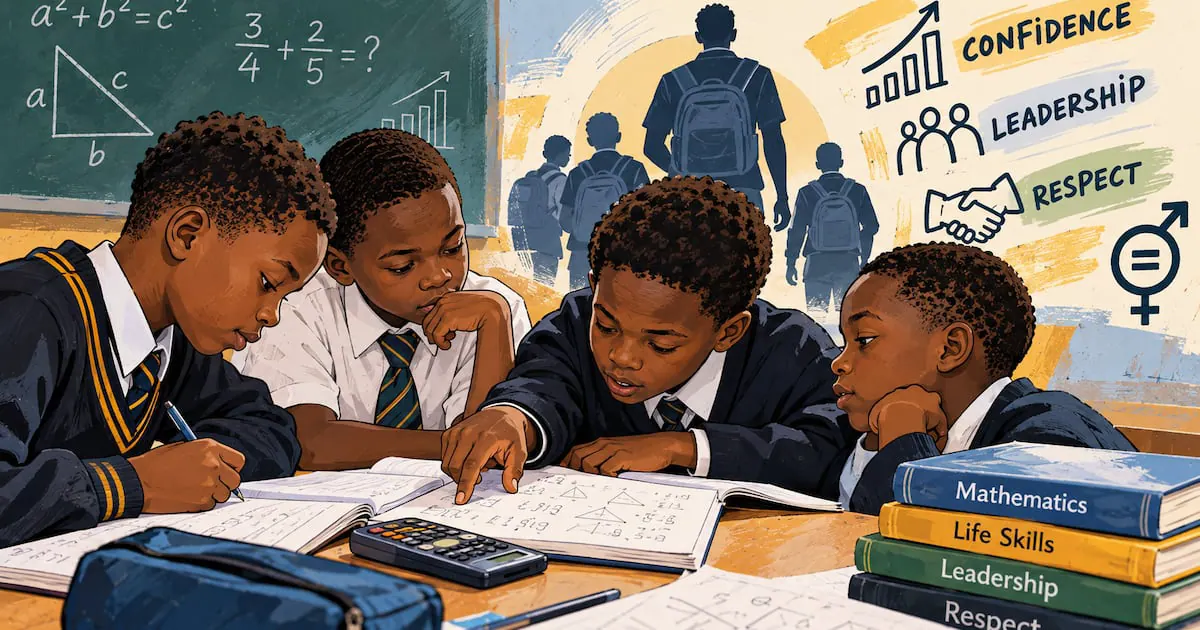
The Eastern Cape education department recently hosted a three-day Boys' Indaba in an effort to improve the mathematics performance of schoolboys across the province. The programme aimed to address the performance gap between boys and girls in mathematics, with officials noting that boys have consistently underperformed in international assessments. The indaba brought together schoolboys from across the Eastern Cape to sharpen their maths skills while learning about confidence, respect, leadership, and what it means to be a positive role model.
According to Ndumo Msindo, deputy chief specialist for mathematics for the foundation and senior phases, the indaba was designed to develop boys academically while helping them deal with challenges beyond the classroom. Msindo cited past results from international tests, which revealed that pupils from primary school to senior phase struggled to perform well. The department has identified a persistent gap in performance between boys and girls, with boys underperforming in maths. The 2027 tests will be crucial in determining whether the department's efforts have yielded any improvement.
The department is focusing on strengthening pupils' conceptual understanding of mathematics rather than simply teaching them how to arrive at answers. Msindo explained that the programme is taking pupils through term three activities and addressing any misconceptions they may have in mathematics. The initiative aims to equip boys with a deeper understanding of mathematical concepts, which will enable them to apply their knowledge more effectively. By doing so, the department hopes to see an improvement in maths performance among boys.
The three-day programme went beyond equations and numbers, with boys also being exposed to conversations around bullying, peer pressure, and relationships. Msindo noted that boys are growing up in environments where they face numerous challenges, including bullying and negative peer pressure, which can lead to them dropping out of school. The programme sought to address these issues and develop the boys holistically. By doing so, the department aims to equip boys with the skills and knowledge necessary to overcome these challenges.
Life Skills teacher Nzaliseko Mehlomakhulu from Nonesi Public School in Komani said the initiative was helping boys develop confidence and interact with pupils outside their usual circles. The boys were deliberately mixed with pupils from different schools and districts, allowing them to form new relationships and learn from one another. Mehlomakhulu noted that the programme was having a positive impact on the boys, helping them to build their confidence and develop essential life skills.
Good Shepherd Primary School principal Thulani Wana said the programme was also about preparing boys to become responsible members of their schools and communities. The indaba taught boys about the five pillars of the programme and reminded them of their responsibility as role models and "big brothers," particularly in standing up against gender-based violence. Wana noted that the programme was significant because it taught boys not only how to behave in a school setting but also socially.
For the boys attending, the lessons appeared to extend beyond the classroom. Grade 6 Schornville Primary School pupil Lukhanyo Tshushelo said he had learnt about leadership, caring for others, and improving his mathematics. The programme's impact was evident in the boys' newfound confidence and enthusiasm for learning. The department hopes that the lessons learnt during the three-day indaba will travel with the boys back into their classrooms and eventually into their communities.
Key points
- The Eastern Cape education department hosted a three-day Boys' Indaba to improve maths performance among schoolboys.
- The programme aimed to address the performance gap between boys and girls in mathematics.
- The indaba taught boys essential life skills, including confidence, respect, leadership, and teamwork.