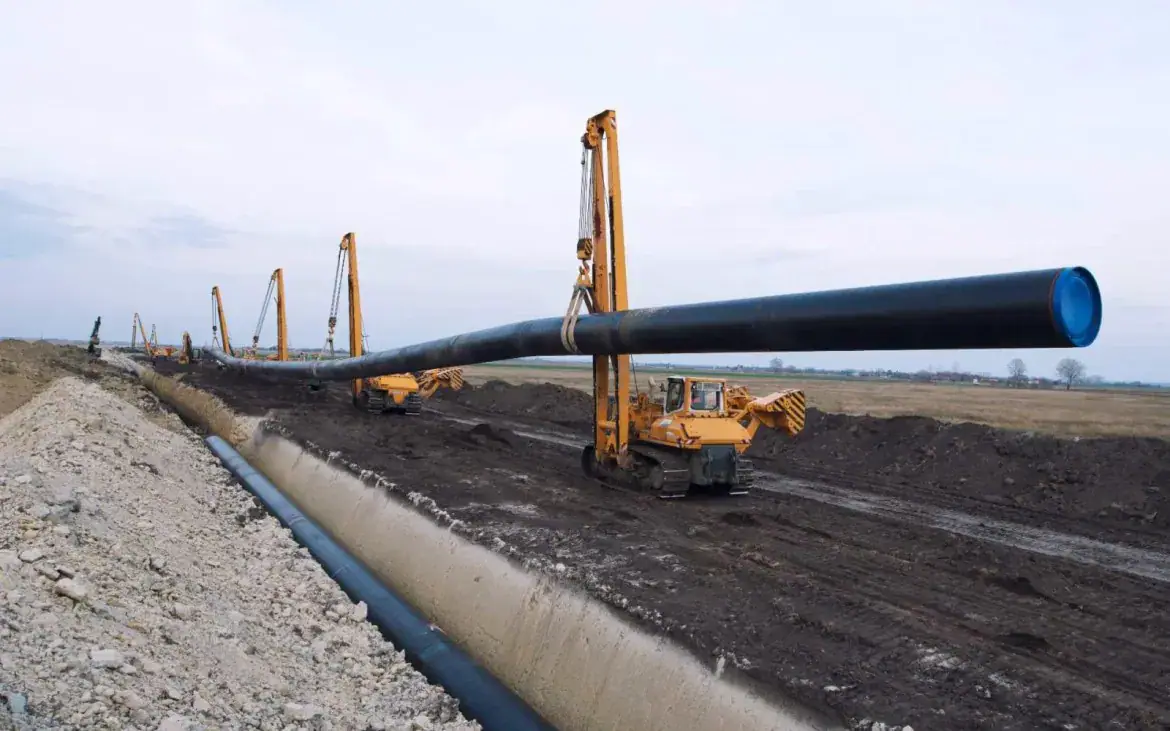
The East African Crude Oil Pipeline, a 1,443-kilometre heated pipeline designed to transport Uganda's crude oil from Hoima to Tanzania's Indian Ocean coast near Tanga, has advanced to 93.9 percent implementation progress. Despite an international campaign that persuaded dozens of commercial banks and insurers to rule out or restrict their involvement, the project has secured funding through a combination of shareholder equity, external loans, and sponsor-supported financing. This financing model involved African commercial banks, a continental trade finance institution, and the private sector financing arm of the Islamic Development Bank Group.
The project's financing experience shows that international environmental opposition can increase the cost and difficulty of raising capital without necessarily preventing construction when investors with sufficient financial resources remain committed to delivering the asset. The project's shareholders, including TotalEnergies, China National Offshore Oil Corporation (CNOOC), Uganda's national oil company (UNOC), and Tanzania Petroleum Development Corporation, committed to advancing the development, with TotalEnergies holding a 62% interest, UNOC and TPDC 15 percent each, and CNOOC the remaining 8%.
The financing challenge emerged against the backdrop of the international Stop-EACOP campaign, whose participating organizations targeted banks, insurers, pension funds, and other financial institutions involved in the proposed pipeline. According to the coalition, more than 40 banks and 30 insurers either declined participation or introduced restrictions relevant to the project. In October 2026, 149 civil society organizations renewed their demands for disclosure of financial arrangements involving African and Middle Eastern lenders.
Despite the challenges, the project continued progressing, with Uganda and Tanzania leaders reporting that EACOP had reached 93.9 percent completion and agreeing to accelerate the remaining work during their November 18, 2026, meeting in Entebbe. The commercial and political implications extend beyond Uganda and Tanzania, as EACOP has become an example of how African energy projects can attract financing from institutions outside the traditional Western lending market.
An analysis by the Institute for Energy Economics and Financial Analysis (IEEFA), published in January 2026, estimated that EACOP's shareholders had committed more than US$2.6 billion in equity while the project had secured approximately $1.2 billion in external debt. The report questioned whether the project's financing arrangements were as secure as official statements suggested and highlighted the risk created by delays and increased construction costs.
On March 26, 2025, EACOP Ltd announced that it had closed its first external financing tranche, naming five participating institutions, including African Export Import Bank (Afreximbank), Standard Bank of South Africa, and Stanbic Bank. This financing syndicate confirmed that a portion of the project's debt financing had been secured from lenders outside the traditional Western commercial banking group.
The project's financing structure shifted towards approximately 52% equity and 48% debt, reflecting the need for shareholders to contribute more capital. The practical consequence was that construction could advance even while the developers continued negotiating external financing, with sponsors providing capital to finance procurement, engineering, and construction.
Key points
- The East African Crude Oil Pipeline has secured funding through a combination of shareholder equity, external loans, and sponsor-supported financing.
- The project's financing experience shows that international environmental opposition can increase the cost and difficulty of raising capital without necessarily preventing construction.
- The project's financing structure shifted towards approximately 52% equity and 48% debt, reflecting the need for shareholders to contribute more capital.
Reporting sources
- How the East African Crude Oil Pipeline Secured Funding Despite Bank Boycotts · The Tanzania Times – News from Tanzania, Africa, World, Breaking News, Weather, Environment and Climate Change