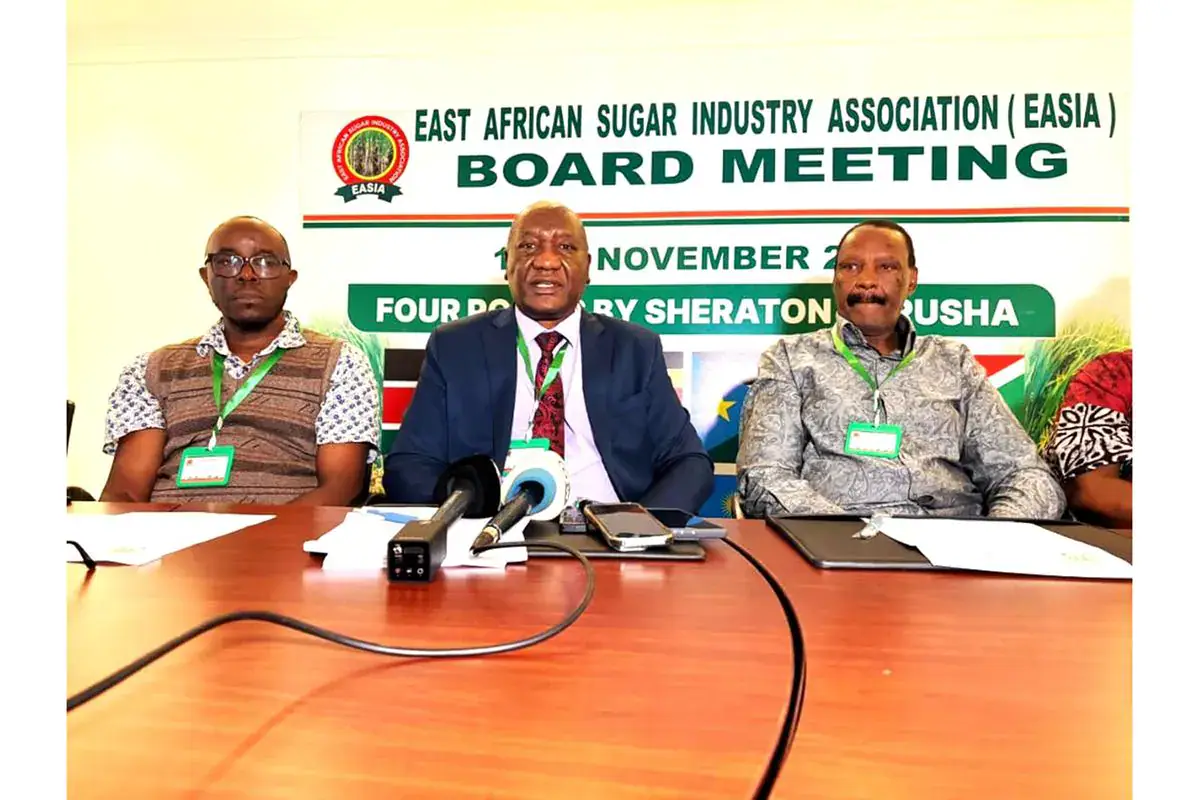
The East African Community (EAC) is intensifying regional cooperation to address a significant sugar deficit of approximately 1.2 million tonnes. According to data from the International Sugar Organisation (ISO), the six EAC member states - Tanzania, Kenya, Uganda, Rwanda, Burundi, and South Sudan - collectively produced 1.6 million tonnes of sugar in 2025, falling short of the estimated annual demand of 2.8 million tonnes. This shortage highlights the need for increased production and cooperation among member states.
There are significant disparities in sugar production capacity across the region. In the 2024/25 season, Tanzania produced 453,383 tonnes of sugar, which is about 196,617 tonnes short of its annual demand of 650,000 tonnes. Kenya, on the other hand, produced 815,500 tonnes in 2024, but this only meets about 71% of its estimated demand of 1.14 million tonnes in 2025, resulting in a shortfall of approximately 324,500 tonnes.
Uganda stands out as one of the few countries in the region that has achieved self-sufficiency in sugar production. The country produces between 650,000 and 700,000 tonnes of sugar annually, exceeding its domestic consumption of 450,000 tonnes. This results in a surplus of between 200,000 and 250,000 tonnes. In contrast, Rwanda produces only 12,000 to 13,000 tonnes of sugar per year, which meets just about 7.5% of its domestic demand.
Professor Kenneth Benges, the newly elected chairman of the East African Sugar Industry Association (EASIA), emphasized the importance of regional cooperation to address the sugar deficit. He noted that only a few countries in the region have achieved self-sufficiency, while others continue to rely heavily on imports. Closer cooperation among member states can help increase production, create employment opportunities, and reduce foreign exchange expenditure on sugar imports.
The EASIA board meeting provided a platform for member states to share expertise, research findings, and technologies to improve productivity and competitiveness. Professor Benges highlighted the need for countries to work together by sharing experiences and technologies that can improve production and strengthen the competitiveness of regional sugar producers. This cooperation is also expected to attract investment in processing facilities and promote modern production technologies.
The partnership is expected to bring several benefits, including increased production, improved efficiency, and reduced dependence on imports. By working together, EAC member states can also diversify sugarcane products, generating additional value and creating new revenue streams. Tanzania, for instance, has made significant strides in adopting improved production technologies, including using bagasse to generate electricity for factory operations.
Tanzania has achieved self-sufficiency in sugar production, with limited imports retained as a strategic reserve to protect the domestic market against potential supply disruptions. Professor Benges noted that the reserve is necessary to cushion the market against production disruptions, including factory closures resulting from adverse weather conditions. With Tanzania assuming the EASIA chairmanship for the next two years, Kenya taking the vice-chairmanship, and Uganda assuming the secretariat position, the region is poised to make significant progress in addressing the sugar deficit.
Key points
- EAC member states are strengthening regional cooperation to increase sugar production and reduce dependence on imports.
- The region faces a significant sugar deficit of approximately 1.2 million tonnes, with varying production capacities across member states.
- Regional cooperation is expected to bring several benefits, including increased production, improved efficiency, and reduced dependence on imports.
Reporting sources
- East African Community nations join forces to close 1.2 million-tonne sugar deficit · https://www.thecitizen.co.tz/