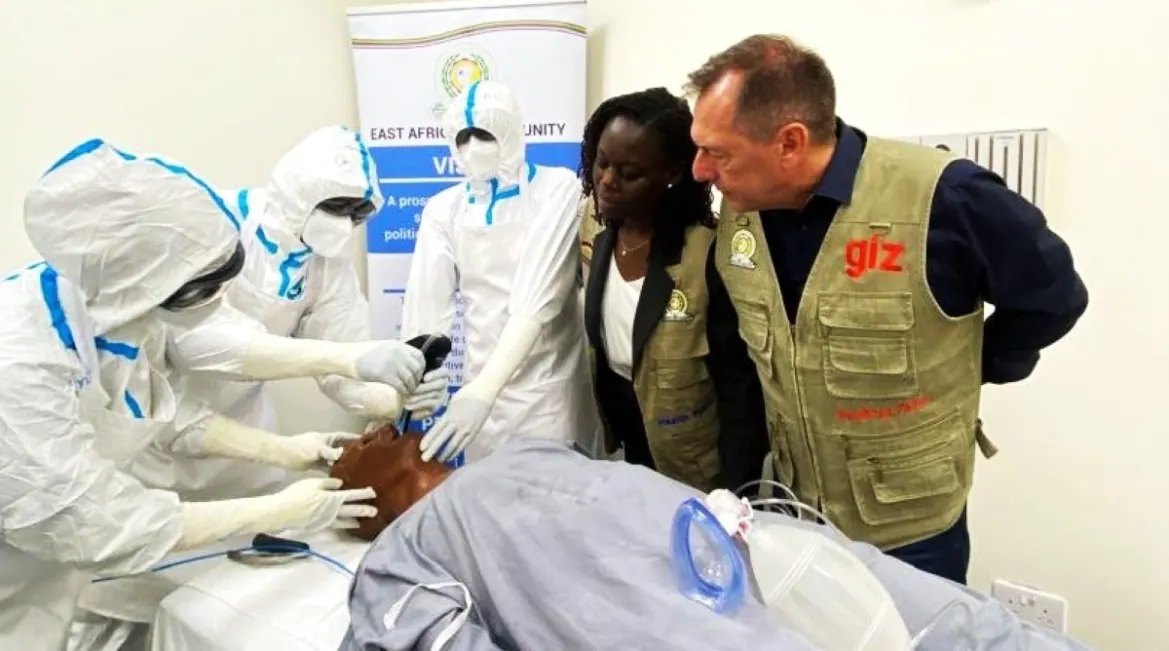
The East African Community (EAC) is intensifying efforts to equip its eight member states with the capacity to detect, contain, and manage high-consequence infectious diseases such as Ebola. As part of this initiative, 120 doctors, nurses, and frontline health professionals from all EAC member states are undergoing specialized training in Nairobi, Kenya. This training, supported by the Government of Germany, aims to strengthen the region's preparedness and response to infectious disease outbreaks.
The training, conducted under the Training in the East African Community for High-Consequence Infectious Diseases (TEACH) programme, is a collaboration between the EAC and the German Agency for International Cooperation (GIZ). Clinical experts from Charité – Universitätsmedizin Berlin and East African clinicians trained through the TEACH Training-of-Trainers' programme are delivering the training. The programme combines practical skills training with simulations covering case identification, infection prevention, and emergency response.
The EAC's efforts to enhance disease outbreak preparedness include establishing a Mobile Laboratory Network of 10 laboratories across seven member states. This network provides rapid diagnostic capacity at strategic locations and points of entry, supporting responses to diseases such as Ebola, Marburg, COVID-19, and Mpox. The EAC plans to expand the network to 34 mobile laboratories by the end of 2027.
According to Dr. Dorcas Omukhulu, EAC Acting Director of Social Sectors, a regional approach is crucial in ensuring that member states can respond collectively to outbreaks. The training aims to build a common pool of health professionals with practical skills to detect, manage, and contain outbreaks while strengthening the ability of member states to respond together during public health emergencies.
The EAC estimates that approximately USD 45 million is required to effectively respond to Ebola and other viral hemorrhagic fever outbreaks in the region. Germany has committed an additional Euro 4.8 million to support the EAC's Ebola preparedness and response efforts, which will facilitate the training of 500 frontline health workers and procurement of personal protective equipment.
GIZ Programme Manager for Support to Pandemic Preparedness in the EAC Region, Mr. Burkard Kömm, emphasized the importance of a partnership approach in ensuring that the region has the necessary capacities to respond effectively to infectious disease outbreaks. The programme aims to ensure that the knowledge and skills developed remain within the region.
Participants in the training, such as Dr. Pius Mutuku, a Medical Epidemiologist at the Kenya National Public Health Institute, have highlighted the value of the practical focus of the training in strengthening their readiness to respond to outbreaks. The training is part of the EAC's broader effort to build a sustainable pool of clinical experts and trainers for high-consequence infectious diseases across all member states.
Key points
- EAC trains 120 health professionals to tackle infectious diseases like Ebola
- Germany commits Euro 4.8 million to support EAC's Ebola preparedness and response efforts
- EAC to expand Mobile Laboratory Network to 34 laboratories by 2027