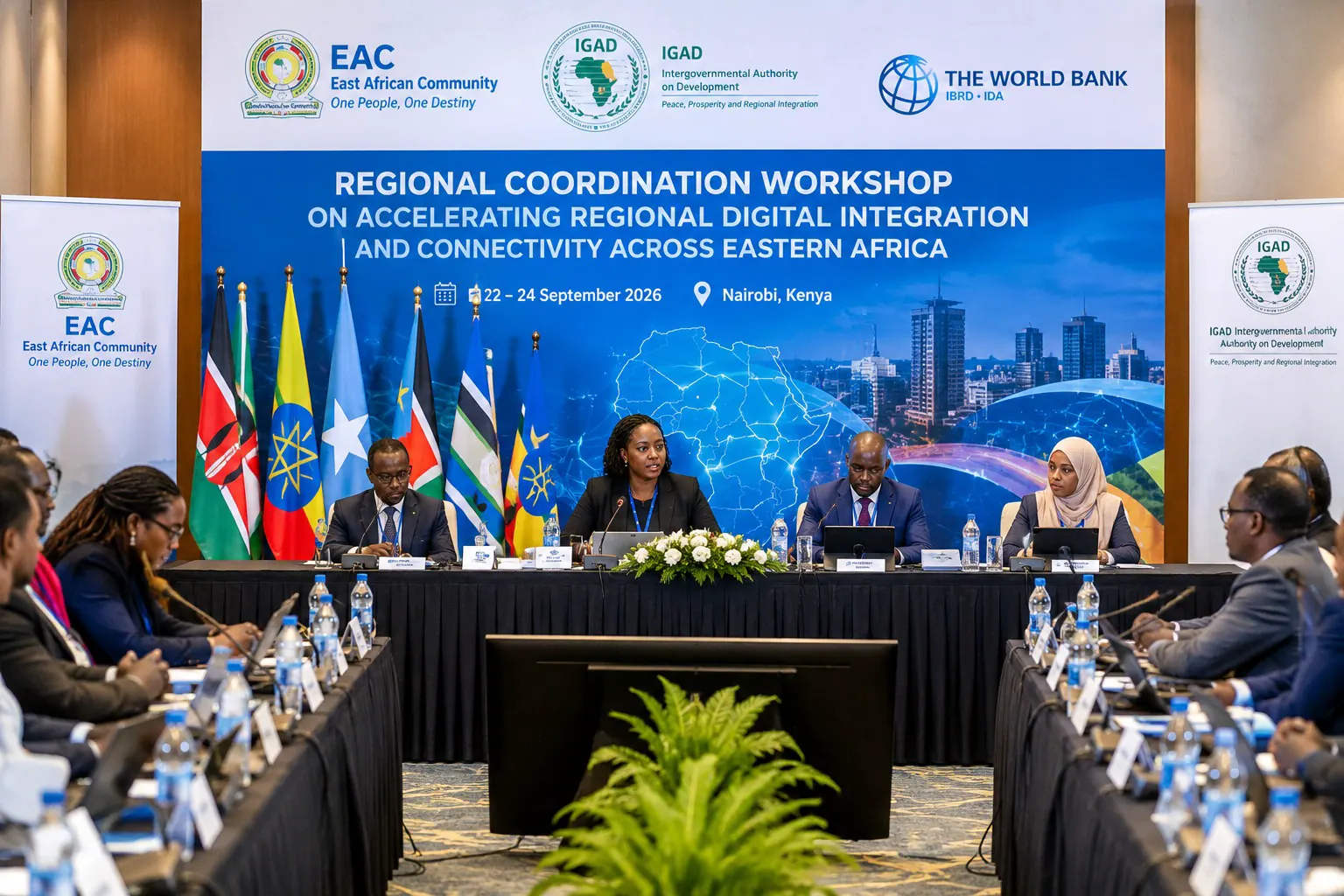
East Africa is making significant strides in building a more connected digital economy. The region's efforts are focused on improving connectivity, strengthening digital cooperation, and expanding access to technology across borders. A recent workshop in Nairobi, Kenya, brought together representatives from Djibouti, Ethiopia, Kenya, Somalia, and South Sudan, alongside officials from the East African Community (EAC), the Intergovernmental Authority on Development (IGAD), and the World Bank.
The three-day Regional Coordination Workshop on Accelerating Regional Digital Integration and Connectivity Across Eastern Africa, held from 22 to 24 September 2026, aimed to accelerate regional digital integration. The initiative reflects a growing recognition that digital connectivity is central to economic growth, regional trade, and access to essential services. African countries are expanding their digital economies, and closer cooperation can help address gaps in infrastructure and improve the movement of information and services across national borders.
Stronger digital integration in East Africa could support businesses operating across borders, improve access to digital services, and create opportunities for innovation. Better-connected digital systems can also help public institutions coordinate services and make information more accessible to citizens. The participation of countries across the Horn of Africa and the wider East African region highlights the importance of a coordinated approach to digital infrastructure investments.
Digital infrastructure investments are more effective when supported by compatible systems, shared priorities, and cooperation among neighbouring countries. The workshop also comes amid broader continental efforts to expand meaningful internet access. On 21 September 2026, the GSMA and the Partnership for Digital Access in Africa unveiled a roadmap supporting the ambition of connecting one billion people across Africa to the internet by 2030.
The framework prioritises the expansion of 4G and 5G networks, coordinated investment in energy and connectivity, and more sustainable ways to connect rural communities. However, expanding connectivity involves more than building networks. Affordability, reliable electricity, digital skills, and access to suitable devices remain important considerations in ensuring that more people can participate in the digital economy.
Regional cooperation can help countries address these challenges collectively, while creating opportunities for investment and innovation. For businesses, improved digital connectivity could make it easier to reach new markets, deliver services, and participate in regional value chains. As the Nairobi workshop concludes, its discussions offer an opportunity to strengthen cooperation among governments and development partners.
The next step will be translating shared priorities into practical initiatives that improve connectivity and make digital services more accessible. East Africa’s digital integration efforts demonstrate how regional collaboration can support a more connected economy. By strengthening infrastructure and aligning digital development priorities, the region can create new opportunities for businesses, institutions, and communities while contributing to Africa’s broader digital transformation.
Key points
- East Africa is stepping up efforts to build a more connected digital economy through regional institutions and governments working together.
- The region's digital integration efforts aim to improve connectivity, strengthen digital cooperation, and expand access to technology across borders.
- Stronger digital integration in East Africa could support businesses, improve access to digital services, and create opportunities for innovation.