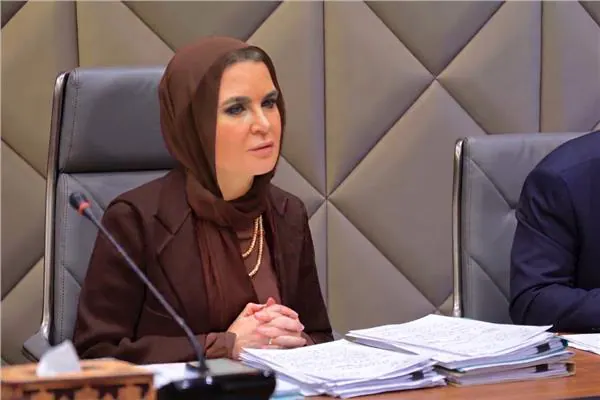
Dr. Sahar Nasr, Deputy Chair of the Financial, Economic, and Investment Committee in the Egyptian Senate, highlighted the significance of early parliamentary involvement in discussing and drafting economic and trade agreements. This ensures that international commitments align with national legislative frameworks, supporting effective and sustainable implementation of economic policies. Her remarks were made during a high-level parliamentary session at the World Trade Organization's Public Forum in Geneva.
The session, organized by the Inter-Parliamentary Union (IPU) and the World Trade Organization (WTO), focused on engaging parliamentarians in sustainable services trade. It drew participation from national parliamentarians worldwide and experts in trade, economics, and public policy. Dr. Nasr represented the Arab Republic of Egypt at the event. The discussions centered on the role of parliamentarians in shaping trade policies that support sustainable development.
Dr. Nasr underscored that services trade is a major driver of local and global economic growth, especially in sectors like communications, information technology, financial services, and digital transformation. She noted that services trade contributes to GDP, job creation, and enhancing national economies' competitiveness. Moreover, it empowers women and youth and supports small and medium-sized enterprises (SMEs), which are crucial in many countries' economic structures.
Despite its importance, services trade faces several challenges. Dr. Nasr stressed the need for parliamentarians to be actively involved in the early stages of negotiating, discussing, drafting, and reviewing economic and trade agreements. This engagement ensures that the policy-making process is inclusive, addresses legislative and regulatory obstacles, and enhances the implementation of resulting commitments. Early involvement helps identify and address legislative challenges promptly.
Dr. Nasr added that involving parliamentarians and policymakers from the outset helps synchronize international obligations with national legislation, supporting more effective and sustainable economic policy implementation. She highlighted the value of dialogue and coordination among parliamentarians, international organizations, executive bodies, and experts in developing trade and economic policies that respond to development needs and respect countries' specificities.
Reflecting on Egypt's experience, Dr. Nasr mentioned the developments in the banking sector and the non-bank financial sector, which have enhanced financial inclusion and capital market development. She also noted the progress in digital infrastructure, supporting Egypt's digital transformation and expanded access to digital services. Efforts to improve the investment climate and address legislative and institutional challenges for investors are ongoing.
Dr. Nasr's participation in the WTO Public Forum aligns with Egypt's parliamentary engagement in international forums, promoting parliamentary dialogue on economic and trade issues related to development priorities. This supports policies for inclusive and sustainable growth, reflecting the parliamentary role in discussing international economic and trade issues impacting national economies.
Key points
- Dr. Sahar Nasr emphasizes early parliamentary participation in economic agreements.