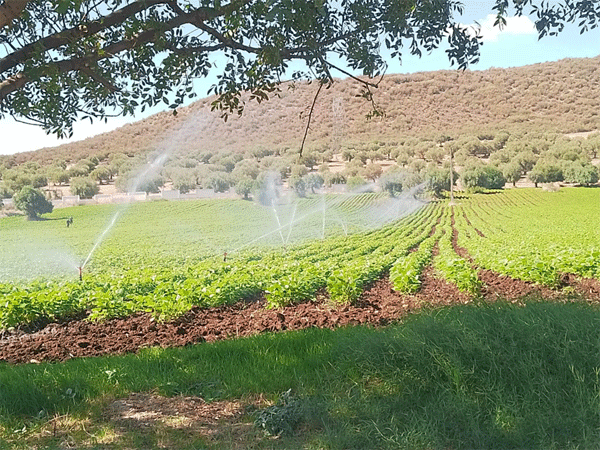
The early crop season has commenced in Guelma's Seybouse Plain, marking a significant start to the agricultural cycle. This region, renowned for its irrigated farming, has been pivotal in Algeria's agricultural sector for over three decades. The plain's unique combination of heat and humidity facilitates rapid growth and maturation of crops. Local farmers have gained substantial experience in cultivating early crops such as onions, potatoes, and various vegetables.
The Seybouse Plain's irrigation system, established over 30 years ago, spans approximately 10,000 hectares. This infrastructure has enabled farmers to diversify their crops and enhance productivity. Following the harvest of wheat and industrial tomatoes, farmers in the area have begun planting early crops that thrive in the region's climate. These crops are expected to mature within three months, making way for seasonal crops like grains and legumes.
The early crops in Guelma not only contribute to the national food supply but also play a crucial role in maintaining soil fertility. The region's agricultural activities are vital for Algeria's food security, especially in the face of climate change and global supply chain disruptions. The local authorities have been working to develop the irrigation system and explore alternative water sources to ensure the sustainability of agricultural production.
The Guelma-Bouchkoff irrigation perimeter, which supplies water to the Seybouse Plain, relies on the Boudhmane dam. However, the dam's water levels have been affected by consecutive droughts. To mitigate this issue, the authorities have been investing in wastewater treatment facilities to provide a supplementary source of irrigation water. This initiative aims to maintain agricultural production and support the local economy.
In addition to its economic significance, the early crop sector in Guelma provides employment opportunities for local residents. The experience gained by farmers in cultivating a variety of crops and implementing technical methods to reduce costs and increase yields is invaluable. As Algeria continues to face challenges related to climate change and food security, the development of its agricultural sector remains a priority.
The Algerian government has been working to enhance agricultural productivity and food security through various initiatives. The development of irrigation systems, investment in agricultural infrastructure, and support for farmers are key components of this strategy. The early crop season in Guelma's Seybouse Plain is a positive indicator of the sector's potential for growth and contribution to the national economy.
As the agricultural sector continues to evolve, the use of modern technologies and innovative practices will be essential for improving productivity and efficiency. The experience gained by farmers in Guelma and other regions will be crucial in informing and shaping Algeria's agricultural policies. The country's efforts to address the challenges facing its agricultural sector are ongoing, with a focus on ensuring food security and promoting sustainable agricultural practices.
Key points
- Algeria's Guelma region has launched its early crop season in Seybouse Plain, leveraging irrigation and favorable climate conditions to enhance agricultural productivity.