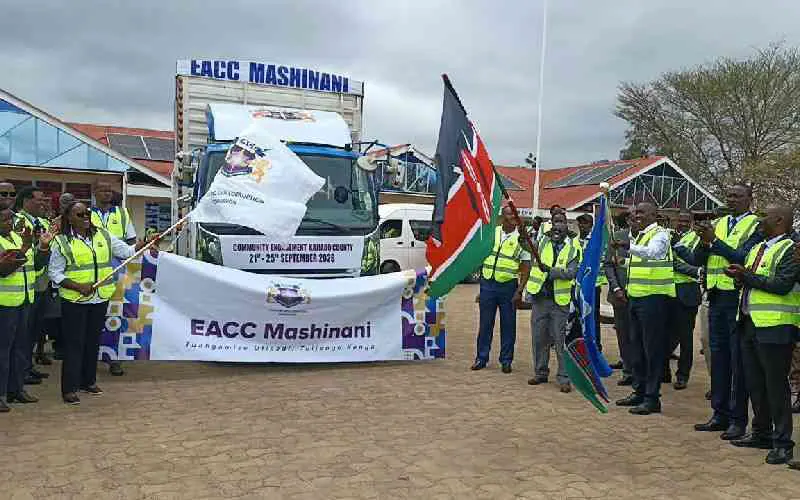
The Ethics and Anti-Corruption Commission (EACC) has initiated a five-day grassroots campaign in Kajiado County, targeting public institutions, communities, and young people to enhance accountability and integrity. This campaign, known as the EACC Mashinani programme, runs from September 21 to 25. During this period, the commission will engage in town-hall meetings, public caravan outreach, corruption-reporting sessions, and sensitization of public officials and community groups.
According to EACC Vice Chairperson Monica Muiru, the commission has encountered several challenges in its fight against corruption. These challenges include the politicization and ethnicization of the war against corruption, slow judicial processes, budget constraints, interference with witnesses, and destruction of evidence. Furthermore, Muiru cited rapidly evolving technology, such as cryptocurrency and virtual assets, as presenting new challenges in corruption investigations.
The EACC has made significant progress in its efforts to combat corruption. Over the last three years, the commission has filed 133 asset recovery suits valued at Sh25.71 billion and recovered illegally acquired and unexplained assets worth Sh7.4 billion. Additionally, the commission reported 72 convictions, while its prevention efforts averted losses amounting to Sh10.74 billion through disruptions. These achievements demonstrate the commission's commitment to fighting corruption and promoting accountability.
The EACC Mashinani programme aims to bring anti-corruption education closer to citizens and allow communities to identify and raise concerns over corruption risks affecting service delivery. The programme will involve national and county government officials, community leaders, public service providers, civil society organizations, security agencies, and media practitioners. This initiative seeks to promote a culture of integrity and accountability among public officials and citizens.
A major focus of the programme will be on young people, with EACC planning sensitization programmes targeting out-of-school youth, faith-based youth groups, and trainees in eight Technical and Vocational Education and Training (TVET) centers across the county. The commission will also hold a Campus Edition at UMMA University, where students and student leaders will be engaged on ethical leadership, accountability, and their role in fighting corruption.
Kajiado Governor Joseph Lenku, who attended the launch of the programme, urged the commission to operate freely while conducting investigations and public education activities in the county. He emphasized the importance of collaboration between the county government and the EACC in fighting corruption. Kajiado County Commissioner Michael Yator also called on public officers to uphold integrity, ethical conduct, impartiality, and professionalism.
The EACC has prioritized the monitoring of capital-intensive public projects, tackling bribery at service-delivery points, and recovering corruptly acquired and unexplained assets. The commission has urged citizens to participate actively in governance by monitoring public programmes, contributing to budget and legislative processes, and demanding accountability from public institutions. Citizens are also encouraged to report acts of corruption to EACC or any other institution that can conclusively deal with such cases.
Key points
- The EACC has filed 133 asset recovery suits valued at Sh25.71 billion over the last three years.
- The commission has recovered illegally acquired and unexplained assets worth Sh7.4 billion.
- The EACC Mashinani programme aims to promote a culture of integrity and accountability among public officials and citizens.