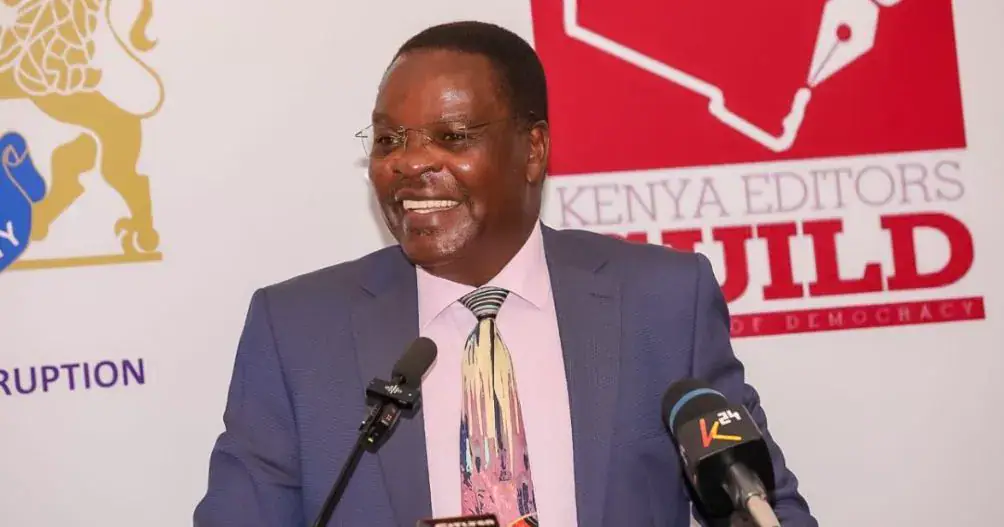
Ethics and Anti-Corruption Commission (EACC) chairperson Bishop David Oginde has called for reforms to Kenya's legal framework to strengthen anti-corruption efforts. Speaking at the Annual Editors Convention in Mombasa County, Oginde suggested that Kenya draw lessons from neighboring Tanzania to close legal loopholes. The convention was organized by the Kenya Editors Guild under the theme, "Navigating the Storm: Media Resilience on the Road to 2027." Oginde's proposals aim to address the challenges faced by anti-graft agencies in Kenya.
Oginde highlighted a recent Tanzanian law that requires individuals convicted of an offense to prove their innocence during an appeal. He contrasted this with Kenya's legal framework, where accused individuals retain the presumption of innocence until they exhaust the entire judicial process. Oginde cited the case of former Nairobi Governor Mike Sonko, who was only barred from contesting for office after his final appeal failed. This, Oginde argued, allows corruption suspects to delay justice and cling to public positions.
According to Oginde, corruption suspects in Kenya exploit the prolonged appeal processes to damage national integrity. He urged Kenyans to examine regional legal models and debate targeted constitutional and statutory amendments to give anti-graft agencies sharper teeth. Oginde emphasized the importance of public awareness in building support for these legal changes. The proposed reforms aim to address the challenges faced by anti-graft agencies in Kenya.
The EACC chair noted that Kenya's current legal framework allows accused individuals to retain the presumption of innocence until they exhaust the entire judicial process. This, Oginde argued, is exploited by corruption suspects to delay justice. He suggested that Kenya adopt a similar approach to Tanzania's, where the burden of proof lies with the accused during an appeal. This change, Oginde believes, would help to strengthen anti-corruption efforts.
Oginde's proposals have been welcomed by some as a necessary step towards addressing corruption in Kenya. The country has faced significant challenges in its fight against corruption, with many high-profile cases being delayed or dismissed due to legal loopholes. The proposed reforms aim to address these challenges and provide anti-graft agencies with the tools they need to effectively investigate and prosecute corruption cases.
The Annual Editors Convention in Mombasa County brought together media professionals and stakeholders to discuss the challenges facing the media and the role they can play in promoting accountability and transparency. Oginde's speech at the convention highlighted the need for collaboration between the media and anti-graft agencies in the fight against corruption. The convention provided a platform for stakeholders to discuss the way forward in addressing corruption and promoting good governance.
The proposed reforms to Kenya's corruption laws are part of a broader effort to strengthen anti-corruption efforts in the country. The EACC and other anti-graft agencies have been working to address corruption and promote accountability in Kenya. The proposed reforms will likely face debate and scrutiny in the coming weeks and months, but Oginde's proposals have sparked a necessary conversation about the need for change.
Key points
- EACC Chair Bishop David Oginde proposes reforms to Kenya's corruption laws to address loopholes that allow suspects to delay justice.
Reporting sources
- EACC Chair Oginde Proposes Major Changes to Kenya’s Corruption Laws · nairobiwire.com