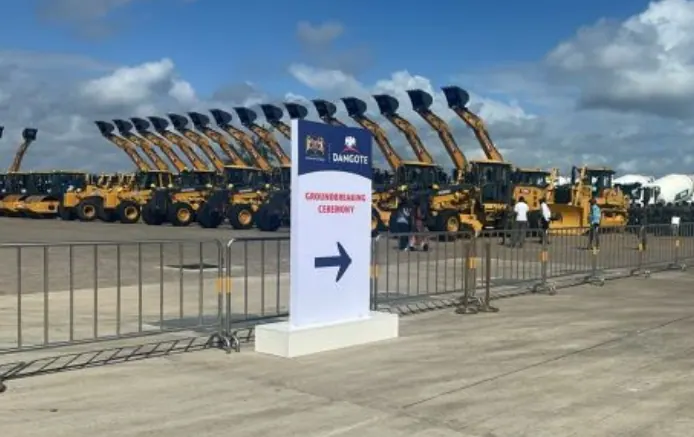
East African leaders, including Presidents William Ruto of Kenya, Yoweri Museveni of Uganda, and other dignitaries, have launched the construction of the Dangote Petroleum Refinery in Lamu County, Kenya. The refinery, valued at $16 billion, is expected to process 700,000 barrels of petroleum per day, sourced from Kenya's Turkana oilfields and other parts of Africa. The project is seen as a game-changer for the region, aiming to make African countries self-sufficient in petroleum products.
The Dangote Petroleum Refinery project was conceptualized after a meeting between President William Ruto and Aliko Dangote in April. The project was initially planned for Tanga, but later settled on Lamu. According to Aliko Dangote, the project started as a joke but has now become a reality. The refinery is expected to be completed by 2030, and Dangote believes that by then, most African countries will be self-sufficient in petroleum products.
The refinery is part of Dangote's efforts to stop the African continent from exporting raw materials and start selling finished products. The project is also aligned with discussions among African policymakers, financiers, and business leaders on how to deploy the continent's natural resources for industrialization rather than extraction. Dangote's Group has already invested over $25 billion in various businesses and plans to invest an additional $50 billion across Africa.
The Dangote Group's expansion plans include massive industrial investment and opening up its businesses to African ownership through the capital markets. According to Dangote, the goal is to create and generate wealth for Africans, defend markets, and do big-scale investments. The Lamu project is seen as a strategic opportunity for East Africa, and the refinery is expected to have a significant impact on the region's economy.
Several high-profile dignitaries attended the groundbreaking ceremony, including Presidents Kaguta Museveni of Uganda, Wadagni Romuald of Benin, and Jean-Lucien Savi de Tové of Togo, and Prime Minister Abiy Ahmed Ali of Ethiopia. The ceremony marked a significant milestone in the project's development, and the refinery is expected to create jobs and stimulate economic growth in the region.
The Dangote Petroleum Refinery is expected to have a significant impact on the East African region, providing a reliable source of petroleum products and reducing the continent's reliance on imports. The project is also seen as a boost to the region's economy, creating jobs and stimulating growth. According to Dangote, the refinery will help Africa defend its markets and create wealth for its people.
The construction of the Dangote Petroleum Refinery is a significant development in the region, marking a new era of industrialization and economic growth. The project is expected to be completed by 2030, and its impact will be felt across the continent. With its massive investment plans, the Dangote Group is poised to play a significant role in shaping Africa's economic future.
Key points
- The Dangote Petroleum Refinery is valued at $16 billion and is expected to process 700,000 barrels of petroleum per day.
- The refinery is part of Dangote's efforts to stop the African continent from exporting raw materials and start selling finished products.
- The project is expected to be completed by 2030, and its impact will be felt across the continent.