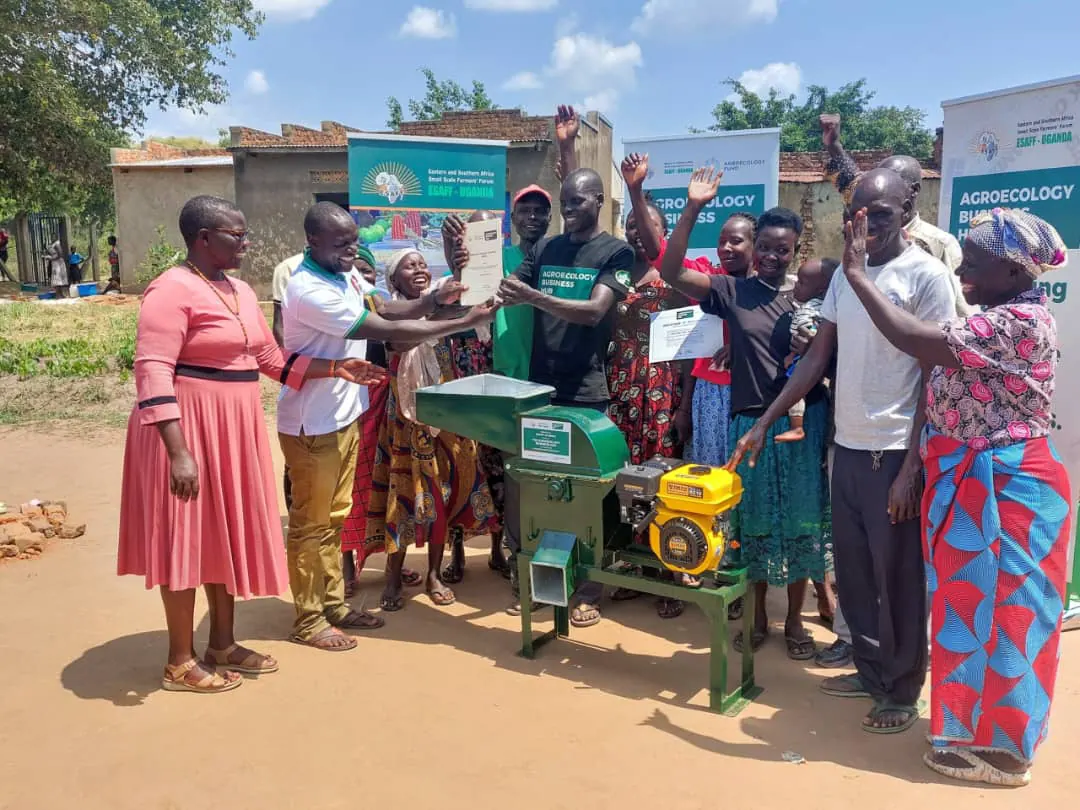
Smallholder farmers in the East African Community (EAC) bloc are calling for timely access to climate finance to effectively respond to climate change impacts. The call was made during the EAC Farmers' Regional Dialogue on Climate Change, which aimed to inform the development of the bloc's 10-year Climate Change Strategy and Action Plan (2026-2036). The strategy seeks to address the region's climate change challenges and promote sustainable development.
Climate change has become a daily reality for farmers in East Africa, affecting production, incomes, food security, and livelihoods. Unpredictable rainfall, prolonged droughts, floods, rising temperatures, pests, and diseases continue to impact agricultural production. According to Diane Sibanda, Chairperson of the Eastern and Southern Africa Small-Scale Farmers Forum (ESAFF), farmers are bearing the brunt of climate change impacts and must be active participants in shaping climate policies and programs.
ESAFF has called for the institutionalization of smallholder farmer participation in planning, implementation, monitoring, and evaluation of the EAC Climate Change Strategy and Action Plan. The forum also urges the EAC to prioritize agroecology in agricultural adaptation by translating commitments on sustainable land management into concrete actions and dedicated budgets. This approach aims to support farmer-led practices and promote sustainable agriculture in the region.
To ensure that climate finance reaches farmers and communities on time, ESAFF has proposed simplified and accessible financing mechanisms. The forum suggests that adaptation funds should be channeled to farmers' organizations and communities at the local level. Additionally, ESAFF recommends strengthening farmer-led social accountability by enabling farmers to track climate budgets, commitments, and implementation through community scorecards and participatory monitoring.
The EAC Climate Change Strategy should be aligned with regional and continental frameworks, including the CAADP Kampala Declaration and the EAC Regional Agri-food Systems Investment Plan (RASIP). This alignment aims to strengthen policy coherence, implementation, and reporting. The strategy should also be linked with Nationally Determined Contributions (NDCs), National Adaptation Plans, and the Paris Agreement to enhance East Africa's contribution to global climate discussions.
The regional dialogue is expected to develop recommendations towards the 31st UN Climate Change Conference (COP31). The recommendations will emphasize direct access to climate finance for farmers and communities, investment in agroecology and farmer-managed seed systems, and operationalizing Loss and Damage support for farmers affected by climate change. These recommendations aim to prioritize smallholder farmers' needs and concerns in climate action.
Sibanda urged farmers to share their experiences, priorities, and solutions openly, while calling on policymakers and development partners to listen and translate the recommendations into concrete actions under the new EAC Climate Change Strategy. The strategy's success depends on the active participation of smallholder farmers and the effective implementation of climate finance and agroecology initiatives.
Key points
- Smallholder farmers in East Africa call for timely access to climate finance to respond to climate change impacts.
- ESAFF recommends simplified and accessible financing mechanisms to ensure adaptation funds reach farmers' organizations and communities at the local level.
- The EAC Climate Change Strategy should prioritize agroecology and smallholder farmer participation in planning, implementation, monitoring, and evaluation.