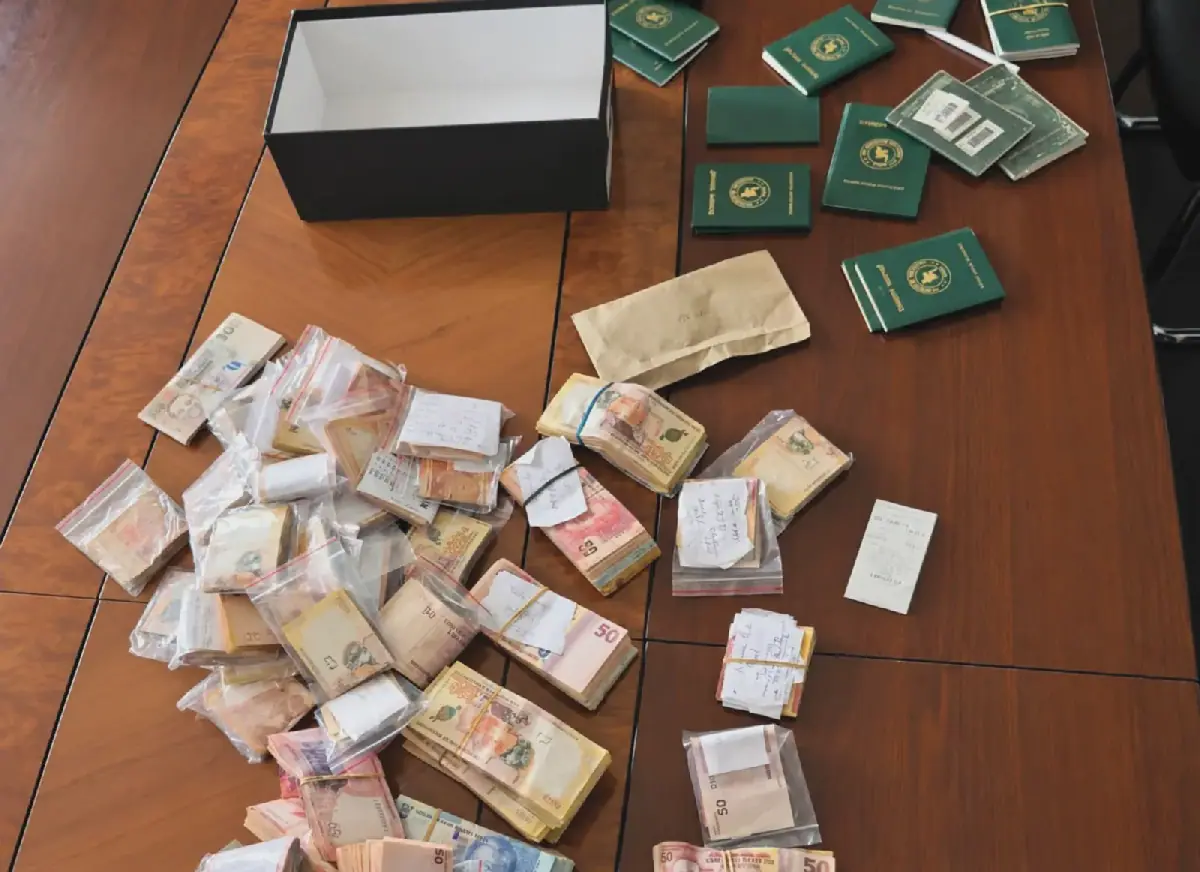
A multi-stakeholder government task team discovered E340,000 in cash and 20 passports belonging to foreign nationals at a well-known clothing shop in Swazi Plaza, Mbabane. The inspection, led by Registrar of Companies Msebe Malinga, aimed to check financial obligations, banking requirements, tax registration, and Value Added Tax (VAT) compliance. The passports belonged to people of different nationalities, including Pakistan, South Africa, and Eswatini.
This is the largest amount of cash seized during the inspections, which started on May 5. Four days prior, authorities found E214,731 in cash and 39 passports at another clothing shop in Mbabane. Malinga said the task team was checking various areas of business compliance, including trading licences, financial obligations, and tax registration. The inspections are part of a nationwide exercise to establish whether businesses are complying with laws and regulations.
Minister of Commerce, Industry and Trade Manqoba Khumalo stated that 3,226 businesses had been inspected across the four regions, with 69.4% found to be non-compliant. The retail sector accounted for 68.9% of the businesses visited. Khumalo emphasized that the exercise was not targeting any particular person, group, or nationality. He rejected claims that the inspections were xenophobic or aimed at making it difficult for locals to conduct business.
The inspections are guided by existing laws, including the Trading Licences Order of 1975, the Immigration Act of 1982, and the Income Tax Order of 1975. Khumalo clarified that government was not yet enforcing the Citizens Economic Empowerment Act, 2024, as the ministry was still working on regulations needed to operationalize the law. The ministry has urged business owners to cooperate with inspection teams and ensure their operations comply with all legal and regulatory requirements.
Malinga said authorities were yet to determine whether the passports were being kept legally, which would require further examination in collaboration with the ministry of home affairs. He added that investigators would have to establish the source, intended destination, and purpose of the seized cash. The country has a E25,000 threshold for carrying cash. Following the discovery, Malinga and his team handed over their findings to the police for further investigation and necessary action.
The exercise has also brought attention to employee registration for social security benefits. One business was reportedly found to have failed to register its employees with the Eswatini National Provident Fund (ENPF). Meanwhile, several shops in Mbabane temporarily closed their doors as inspection teams carried out their work, leaving customers unable to enter the premises for most of the day.
Some business operators have already been closed and charged with offences, including operating with invalid trading licences, trading without valid licences, and unlawful stay in the country. The ministry acknowledged the need for reasonable and fair transitional arrangements for foreign nationals involved in business activities within sectors reserved for Emaswati. However, this would not apply to people staying in the country unlawfully or those whose immigration permits did not allow them to engage in commercial activities.
Key points
- The inspections aim to establish whether businesses are complying with laws and regulations.
- The exercise is not targeting any particular person, group, or nationality.
- Authorities seized E340,000 cash and 20 passports at a clothing shop in Swazi Plaza, Mbabane.
Reporting sources
- E340 000 cash, 20 passports seized at famous shop · Swazi Observer