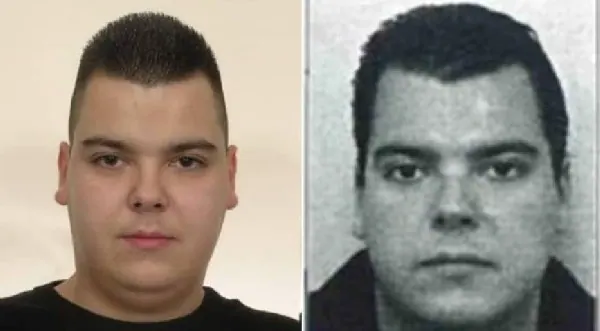
A recent investigation by The Economist has revealed that Jos Leijdekkers, a Dutch cocaine trafficker known as "Bolle Jos" or "Chubby Jos," had been living in Sierra Leone under the false identity of "Omar Sheriff," a Turkish investor. Leijdekkers, one of Europe's most wanted fugitives, was reportedly spotted near Sierra Leone's President Julius Maada Bio at a New Year church service in the village of Tihun.
According to The Economist's reporting, Leijdekkers relocated to Sierra Leone in late 2022 and spent years hiding in plain sight in Freetown. He lived lavishly, drove expensive cars, met government officials, and handed out cash and rice to residents in communities around the capital to build local goodwill. Investigative journalist Yelle Tieleman expressed his surprise that Leijdekkers had apparently been hiding in Sierra Leone, finding it hard to believe he had been operating so openly.
The Economist's investigation describes Sierra Leone as an increasingly important transit point for cocaine moving from Latin America to Europe. The country's position between Guinea-Bissau and Côte d'Ivoire makes it attractive to traffickers, with roughly a third of the cocaine reaching Europe now believed to pass through West Africa. Leijdekkers has been linked to several large cocaine shipments, including one of over 30 tonnes seized by Spanish authorities and another eight tonnes discovered in Germany.
Leijdekkers has a history of convictions in Europe, including a 57-year prison sentence in Belgium for cocaine trafficking, theft, and conspiracy to murder. In the Netherlands, he was sentenced in absentia to 24 years for drug trafficking and ordered to pay the Dutch state €96 million in fines. Dutch special forces reportedly considered an operation to capture him in Sierra Leone but abandoned the plan due to the risk.
The case has implications for Ghana, as the same "Bolle Jos" network has been linked to four Ghanaian suspects. Ghana's Narcotics Control Commission (NACOC) arrested three suspects connected to the network in September 2026, following a French customs seizure of nearly 3.9 tonnes of cocaine traced back to a Ghanaian port. This incident is part of a larger cocaine scandal in Ghana, with questions raised about the state's capacity to police the trade.
The revelation that Leijdekkers built a fake identity and social network in Sierra Leone highlights the depth and quietness of such trafficking operations in a country's institutions. For Ghana, already grappling with its reputation as part of the "Cocaine Coast," this incident underscores the need for effective measures to combat cocaine trafficking. The case has sparked concerns about the state's capacity to police the trade and the potential for corruption.
The incident has also raised questions about the effectiveness of law enforcement in the region. The Economist's investigation and the subsequent reporting by local media outlets have brought attention to the issue, but it remains to be seen how authorities will respond to these allegations. The case of Jos Leijdekkers serves as a reminder of the complexities and challenges of combating cocaine trafficking in West Africa.
Key points
- Jos Leijdekkers, a Dutch cocaine trafficker, lived in Sierra Leone under a false identity.
- Leijdekkers has been linked to several large cocaine shipments in West Africa.
- The case has implications for Ghana, where the same trafficking network has been linked to several suspects.