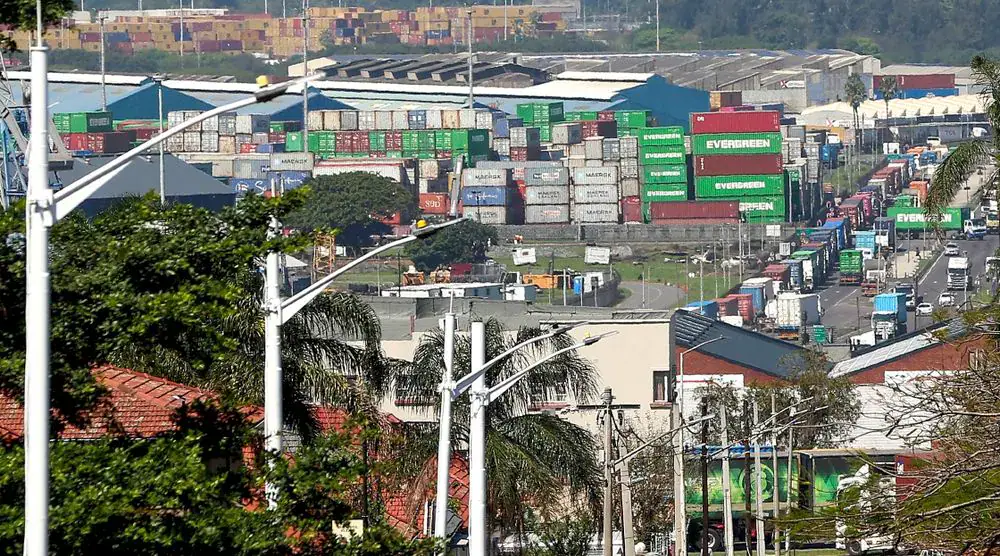
Long queues of heavy-duty trucks are waiting to enter the Port of Durban on Bayhead Road amid ongoing congestion affecting landside operations at the container terminal. The terminal, which is the country's largest container facility and a major gateway for imports and exports, has been under pressure since a mid-August 2026 cutover to the Navis N4 operating system. This has resulted in a significant decrease in throughput, with an initial fall of roughly 26-30%.
The delays are having a ripple effect on the industry, with truck drivers such as Anathi Dweba explaining that the delays affect their work schedules and route planning. "We work on loads; therefore, if we cannot complete a load in time, our productivity suffers," he said. The delays also leave truck drivers sleeping in their trucks without sustenance and losing valuable work shifts.
The Southern African Association of Freight Forwarders (SAAFF) has noted that the backlog is adding around 20 days to affected supply chains. According to Jacob van Rensburg, head of research and industry intelligence at SAAFF, while waterside throughput has improved from a depressed base, this has not yet produced a sustained reduction in the vessel queue.
Maritime consultant Dave Watts described the practical impact of the delays, stating that "a vessel arriving today may wait 12 days before service, plus several more days at berth, followed by further delays exiting the terminal because of landside congestion." The peak periods for citrus and year-end retail and industrial cargo have intensified the strain on the port.
Transport Minister Barbara Creecy has acknowledged the problems, admitting that the timing of the Navis migration was "not good" and that the resulting backlog would take months to clear. She has given ICTSI, the Philippines-based operator that holds a 49% stake in the Transnet joint venture at DGT, three months to improve performance or risk losing its licence.
Transnet has announced emergency measures to alleviate the problem, including making Berth 102 at adjacent Pier 1 available for geared vessels, diverting selected ships to Ngqura near Gqeberha, and bringing additional refurbished cranes into service. The company has also offered more rail capacity for Gauteng-bound containers.
The delays are expected to have a lasting impact on the industry, with importers facing demurrage, storage charges, and inventory build-ups, while exporters risk missing vessel cut-offs. KwaZulu-Natal MEC for Transport and Human Settlements Siboniso Duma has noted the impact of truck congestion on major routes en route to the port and has deployed more Road Traffic Inspectorate and Operation Shanela teams to manage traffic and ensure road safety.
Key points
- The delays at Durban Port are causing truckers to wait 14-20 days, driving up costs for manufacturers and logistics operators.
- The Southern African Association of Freight Forwarders has noted that the backlog is adding around 20 days to affected supply chains.
- Transport Minister Barbara Creecy has given ICTSI three months to improve performance or risk losing its licence.