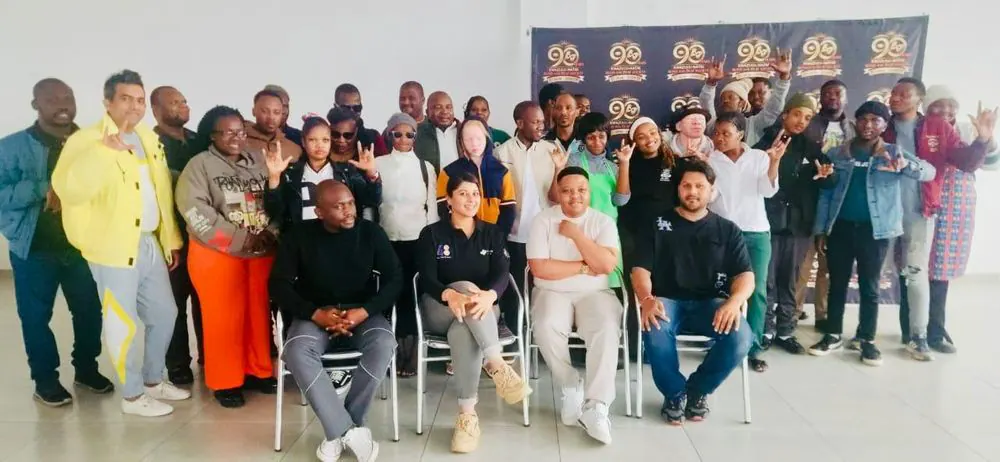
The KZN Blind and Deaf Society recently hosted an inclusive filmmaking workshop in Durban Central, giving 30 Deaf and Blind clients the opportunity to take on roles as filmmakers. The one-day workshop, held on September 17, was part of Deaf Awareness Month and partnered with the Durban 48 Hour Film Project. Participants learned filmmaking skills, explored career paths, and created short films using mobile phones.
The workshop was led by Deaf filmmaker Cinatemba Mthati of Scara Green Films, who has written, directed, and screened a short film in the 48 Hour Film Project for three consecutive years. Mthati provided practical training, enabling participants to write, direct, and perform their own stories. Two groups successfully created short films during the workshop, showcasing the potential of Deaf and Blind creatives in the film industry.
For Deaf participants like Zanele Ntsebesha, the workshop was an engaging introduction to performance and advocacy. Ntsebesha enjoyed her character and appreciated the teaching approach, expressing a desire to explore more acting opportunities. Fellow Deaf participant Mondli Ncane echoed these sentiments, welcoming the exposure to creative production and expressing excitement about learning more about filmmaking.
Nerusha Maharaj Sadapal, City Producer for the Durban 48 Hour Film Project, provided insight into the broader film industry, outlining career opportunities beyond acting. Sadapal noted that participants challenged conventional ideas about inclusion, teaching her to appreciate their unique perspectives. The workshop also served as an audition platform for The Night Watcher, an upcoming inclusive short film seeking a Deaf actress for its lead role.
The Durban initiative aims to establish ongoing training and development pathways for Deaf and Blind creatives across KwaZulu-Natal. With South African Sign Language (SASL) recognised as the country's 12th official language, organisers hope to promote inclusive storytelling and representation in the film industry. The workshop demonstrated the potential for accessible mobile technology to empower Deaf and Blind creators.
The evolution of screen history has led to increased accessibility for Deaf and visually impaired viewers. From early silent cinema to modern open captions and descriptive audio, the industry has made significant strides in inclusivity. The Durban workshop reflects this shift, enabling Deaf and Blind creators to move beyond passive consumption and take on active roles in filmmaking.
The workshop's impact extends beyond the participants, as it promotes a more inclusive and diverse film industry. By providing opportunities for Deaf and Blind creatives, the initiative challenges conventional ideas about storytelling and representation. As the film industry continues to evolve, initiatives like the Durban workshop will play a crucial role in shaping a more inclusive and accessible future.
Key points
- The workshop provided Deaf and Blind participants with hands-on experience in filmmaking and explored career paths in the film industry.
- The initiative aims to establish ongoing training and development pathways for Deaf and Blind creatives across KwaZulu-Natal.
- The workshop demonstrated the potential for accessible mobile technology to empower Deaf and Blind creators in filmmaking.