A recent report has highlighted the extent of water outages in South Africa, with over a third of households experiencing outages lasting two days or more in 2025. According to Stats SA's General Household Survey, 76% of households had access to piped water inside their home or on their property. However, 38% of households reported water outages lasting two days or more. This issue affects households across the country, with varying degrees of severity.
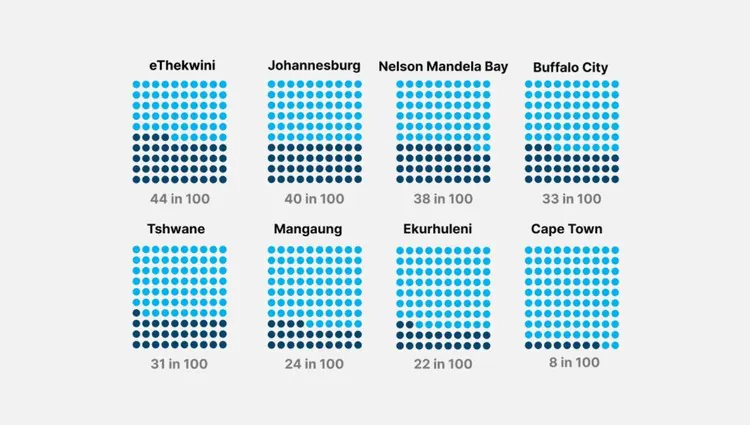
The eight metros in South Africa have performed slightly better than the national average, with 30% of households reporting long outages. Cape Town has had the smallest share of households reporting long outages, at 8%. In contrast, eThekwini has had the largest share, at 44%, followed closely by Johannesburg at 40%. Other metros, including Nelson Mandela Bay, Buffalo City, Tshwane, Mangaung, and Ekurhuleni, have also reported significant water outages.
The main cause of water outages in South Africa is attributed to old, poorly maintained pipes that leak and burst. A significant amount of water is lost before it reaches households. In eThekwini, for example, 61% of the city's water is lost to leaks and illegal connections or is never billed. In comparison, Cape Town loses about a quarter of its water. These losses have significant financial implications for municipalities.
The financial impact of water losses is substantial, with the metros collectively losing nearly R8.7 billion worth of water in the 2023/24 financial year. Nationally, the share of water lost or never paid for has increased from 37% in 2014 to 47% in 2023. This is significantly higher than the international average of about 30%. The Department of Water and Sanitation has warned of summer water risks in Gauteng and eThekwini.
In addition to old and poorly maintained pipes, other factors contribute to water outages, including problems with bulk water supply, pressure management, and the speed of repairs. The No Drop report highlights the need for improved water management and infrastructure maintenance. The report also emphasizes the importance of addressing the issue of non-revenue water.
The Department of Water and Sanitation has warned of summer water risks in Gauteng and eThekwini, emphasizing the need for households and businesses to use water wisely. The department has also encouraged municipalities to prioritize water infrastructure maintenance and upgrades. This includes replacing old pipes and implementing measures to reduce water losses.
The water outages have significant implications for households, businesses, and the economy as a whole. The issue requires a coordinated effort from government, municipalities, and households to address the root causes of water outages and implement sustainable solutions. By working together, it is possible to reduce the frequency and duration of water outages and ensure a reliable water supply for all.
Key points
- eThekwini and Johannesburg are the worst hit by water outages, with 44% and 40% of households reporting long outages, respectively.
- The main cause of water outages is old, poorly maintained pipes that leak and burst.
- The financial impact of water losses is substantial, with the metros collectively losing nearly R8.7 billion worth of water in the 2023/24 financial year.