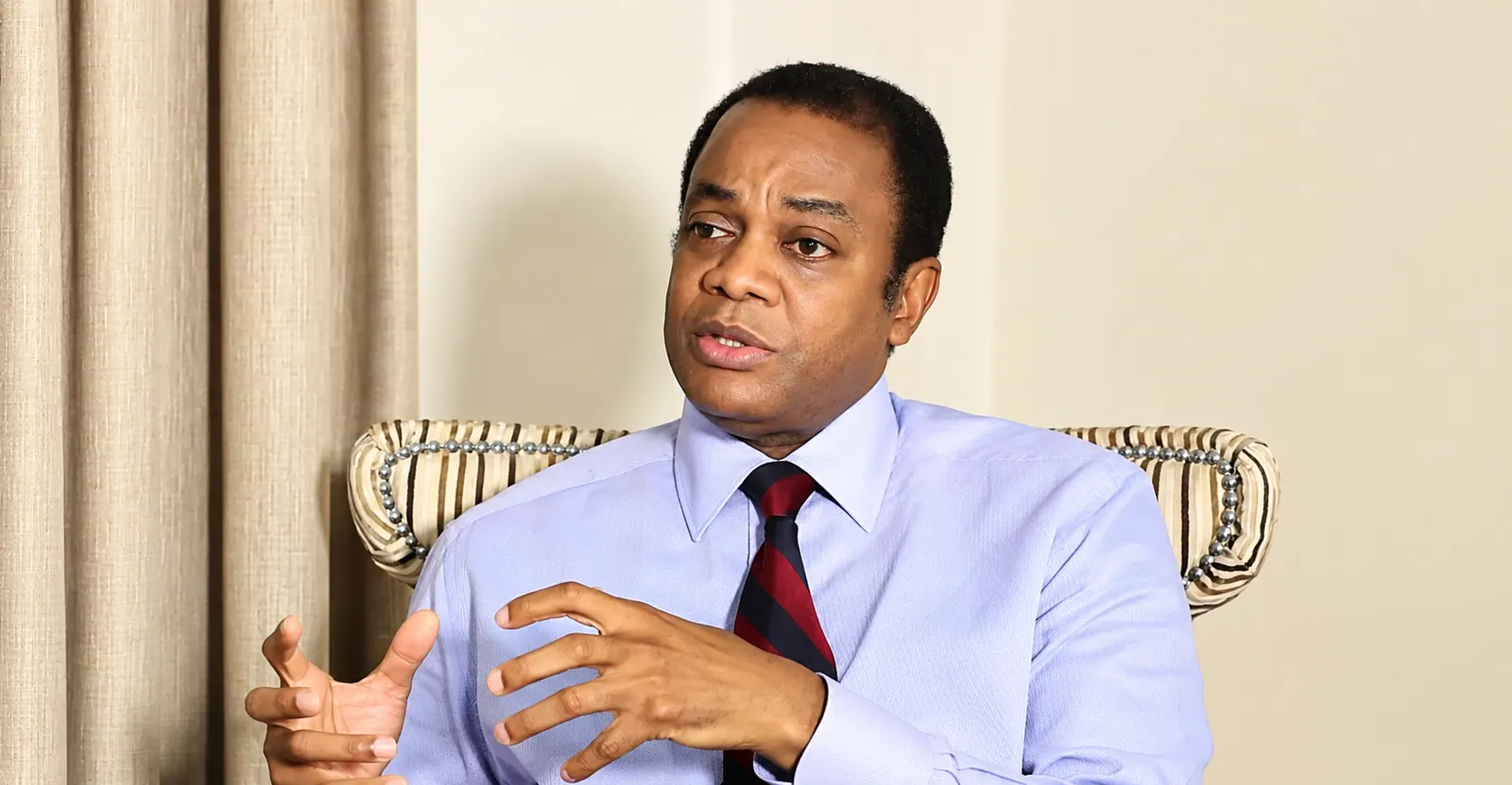
Former Cross River State governor, Donald Duke, has expressed support for the constitutional amendment seeking to establish state police, saying Nigeria's current policing system is overly centralised and ineffective in tackling insecurity. Duke advocates for decentralisation of policing, with intelligence gathering and responses brought closer to communities where crimes occur. He believes local communities are better positioned to identify suspicious movements and emerging threats.
According to Duke, 80 per cent of security is intelligence, and enforcement should account for only a smaller share of policing. He argues that security intelligence should not have to pass through a distant central command before action is taken. Duke suggests that decentralisation must be accompanied by safeguards against political abuse, including stringent operational guidelines and a stronger judiciary capable of checking abuses by security agencies.
Duke dismissed concerns that governors could misuse state police, noting that federal institutions could also be politically abused. He believes the solution is to build strong institutions, establish clear rules, and ensure effective accountability. Duke criticised Nigeria's intelligence-gathering capacity, saying years of fighting insurgency and organised crime should have produced deeper penetration of criminal networks and better advance intelligence.
The National Assembly's effort to create state police through constitutional amendment has entered a crucial stage. On September 16, 2026, the National Assembly transmitted the Constitution of the Federal Republic of Nigeria, 1999 (Sixth Alteration) Bill, 2026, on State Police Services to the 36 state Houses of Assembly. The bill proposes a dual policing structure comprising the Federal Police Service and State Police Services, with safeguards covering the appointment and removal of state police commissioners.
The amendment requires approval from at least two-thirds of the 36 state legislatures—24 Houses of Assembly—before advancing. The National Assembly requested responses within 30 days but clarified that this was an administrative timeframe, not a constitutional deadline. Several states have begun consideration of the bill, with the Rivers State House of Assembly unanimously endorsing the amendment on Monday.
The renewed legislative push follows a long-running debate over whether Nigeria's security challenges can be addressed by a police system controlled mainly from the centre. Proponents of decentralisation seek structures closer to states and communities. The Plateau State House of Assembly has also begun considering the bill.
Duke's comments have sparked renewed discussion on the need for policing reform in Nigeria. His support for state and local government police is seen as a significant boost to the constitutional amendment effort. The bill's passage would mark a significant shift in Nigeria's policing structure, with potential implications for the country's security landscape.
Key points
- Donald Duke supports constitutional amendment for state and local government police.
- The National Assembly's bill proposes a dual policing structure comprising the Federal Police Service and State Police Services.
- The amendment requires approval from at least two-thirds of the 36 state legislatures—24 Houses of Assembly—before advancing.