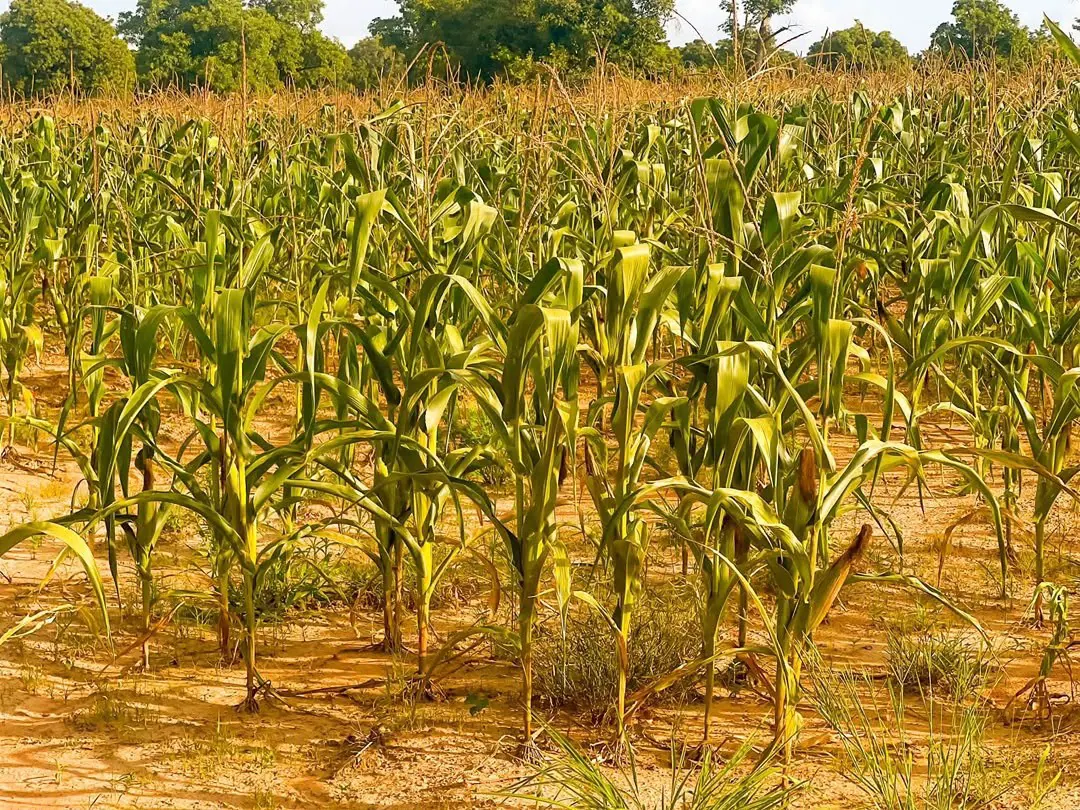
Farmers in the Upper East region of Ghana are facing a significant challenge as a prolonged dry spell has struck their maize crops, causing them to grow tall and green but fail to tassel, a crucial stage for grain formation. This has raised fears of food shortages in 2027 unless urgent support is provided to the farmers. The affected areas include Tempane, Pusiga, Binduri, and Zebilla districts.
According to Ibrahim Jambeidu, the Upper East Regional Focal Person of the Peasant Farmers Association of Ghana (PFAG), the dry spell occurred just as the maize plants were approaching the tasselling stage. Despite applying farmyard manure and inorganic fertiliser, the crops failed to produce cobs, with some forming only a few small seeds. This has significant implications for food production in the region, which serves as a key food basket for maize, rice, and millet.
The failed tasselling of maize crops in the Upper East region could lead to hunger in 2027 if nothing is done to address the issue. Farmers are unlikely to harvest enough maize and other staples to meet demand, and any food relief available may have to come from produce stored from the previous season. Jambeidu has advised farmers holding old produce to store it carefully to stretch supplies into the coming year.
This setback adds to a difficult season for farmers in the region, who have already been affected by a witchweed infestation that wiped out a significant share of harvests. The combination of these two challenges points to mounting pressure on food production in Upper East communities that depend heavily on maize for both consumption and income.
Jambeidu has identified seed variety as part of the problem, with some local maize strains appearing less tolerant of erratic weather conditions. He has tested hybrid maize seeds on his farm, recording better results, but the high cost of these seeds remains a barrier for many smallholder farmers. He is calling on the government to support farmers with improved, climate-resilient seed varieties.
The Peasant Farmers Association of Ghana is seeking government support to help farmers cope with changing weather patterns, but the specifics of the request and the government's response are unclear. The issue is being closely monitored, and it remains to be seen how widespread the tasselling failure is beyond the districts already identified.
The dry spell and poor maize tasselling have significant implications for food security in Ghana, and urgent action is needed to mitigate the effects. The government and other stakeholders must work together to provide support to affected farmers and ensure that the region's food production is not severely impacted.
Key points
- The dry spell has affected maize crops in several districts in the Upper East region, including Tempane, Pusiga, Binduri, and Zebilla.
- The failed tasselling of maize crops could lead to food shortages in 2027 if not addressed.
- The Peasant Farmers Association of Ghana is calling on the government to provide support to farmers with improved, climate-resilient seed varieties.