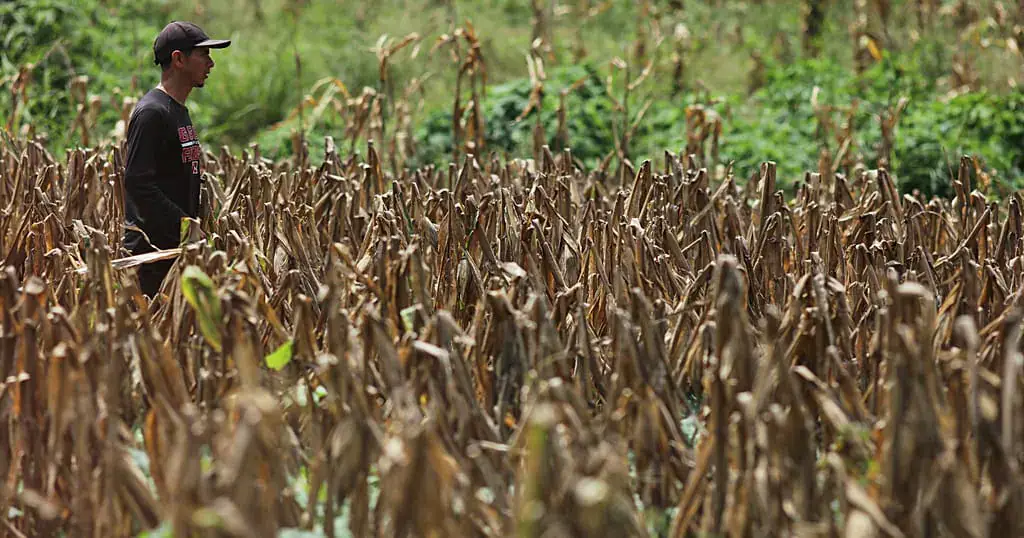
The agriculture sector in Mauritius is struggling due to the effects of El Nino-driven heat and a severe drought. The dry spell has significantly reduced crop yields, increased irrigation costs, and caused food prices to rise. The country's water supply has been tightening since September, with the largest dam, Mare aux Vacoas, currently at 33% capacity, down from 74% a year ago.
Local farmers are feeling the impact of the drought, with sustained high temperatures stunting vegetable growth in fields on the outskirts of the capital, Port Louis. Dharshini Anishta, head of a local agricultural company, stated that they have experienced a 40% loss in production over the past three months. If the situation persists, she expects the losses to increase.
The effects of the drought are not limited to open fields, as rising temperatures have also damaged vegetables grown in greenhouses. Local farmer Seesurrun Madhan noted that the increased temperature has caused peppers to get burned. The government has responded by implementing measures to enhance agricultural production, including developing drought-resistant crops and installing water storage facilities.
The government is working with international financial institutions, such as the World Bank and IMF, to support its efforts to address the drought. Arvin Boolell, Mauritius' minister of Agro-Industry, Food Security, Blue Economy, and Fisheries, stated that their research centre is producing drought-resistant seeds. He also noted that there is growing recognition of the specific challenges faced by small island nations.
Local organisations are also promoting practical, low-cost water storage solutions to help farmers cope with prolonged dry spells. With forecasters predicting that El Niño will strengthen and persist through the summer, some below-average seasonal rainfall is expected from the end of the month. This is likely to exacerbate the drought and its impact on the agricultural sector.
The drought has significant implications for food security in Mauritius, with rising food prices affecting consumers. The government's efforts to support the agricultural sector and develop drought-resistant crops are crucial in mitigating the effects of the drought. However, the situation remains challenging, and it is essential to monitor the progress of the drought and its impact on the sector.
The Mauritian government is taking a multi-faceted approach to address the drought, including investing in research and development, working with international partners, and promoting practical solutions for farmers. While the situation is difficult, the government's proactive measures and the resilience of local farmers and organisations are essential in navigating the challenges posed by the drought.
Key points
- The drought has reduced crop yields by 40% in Mauritius, leading to increased food prices.