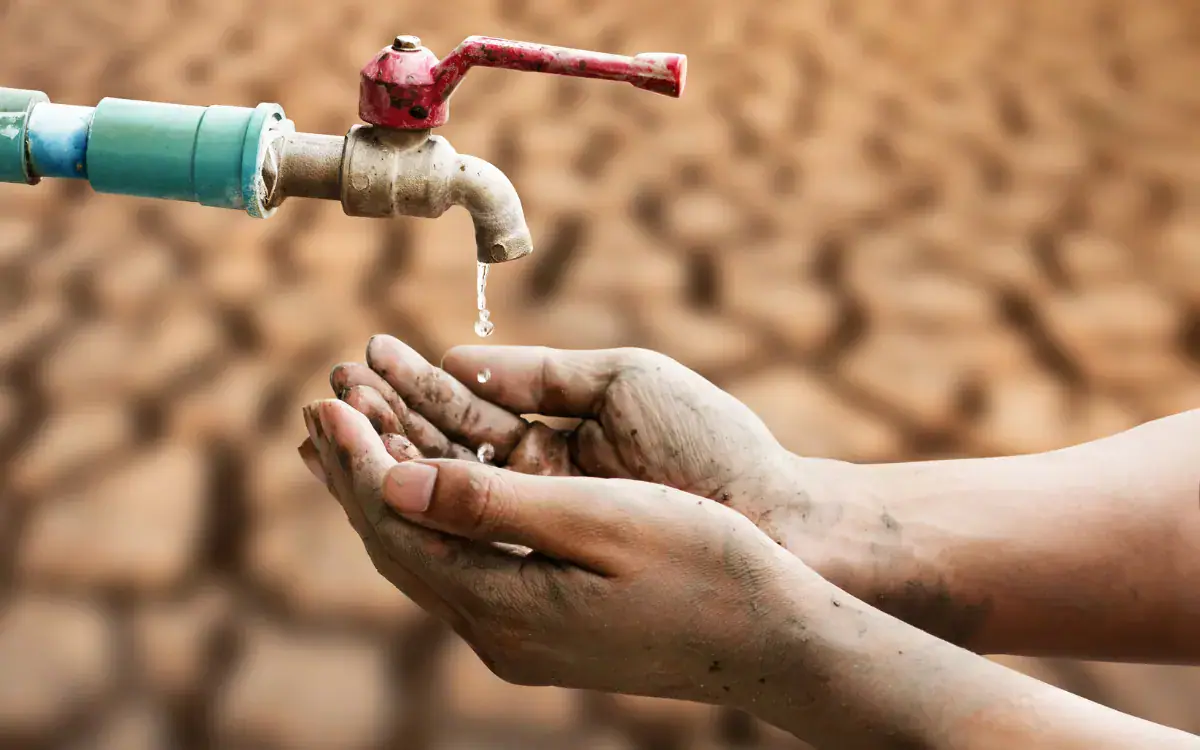
The World Bank has issued a report highlighting the growing economic and social challenges posed by water scarcity in Tunisia. According to the report, "Tunisia's Water Challenge: From Scarcity to Resilience," released on September 22, the country's water resources are under severe strain, with renewable water resources dwindling to around 380 cubic meters per person per year.
The World Bank estimates that Tunisia needs investments of around $900 million annually until mid-century to address water-related challenges and enhance its resilience to climate change. The report notes that the water crisis in Tunisia is not just a matter of fluctuating rainfall and dam storage levels but also involves the depletion of groundwater resources, losses in distribution and irrigation networks, and increasing pressure on agricultural production and prices.
The report emphasizes that Tunisia's water crisis is structural, not circumstantial, and that improved rainfall and dam storage levels would only provide temporary relief. The World Bank's findings are echoed by experts, who stress that water and energy are crucial determinants of economic development in any country. According to Hussein Rahili, a specialist in development and resource management, the report aligns with warnings issued nearly a decade ago.
Tunisia's agricultural sector, which employs around 14% of the workforce, is particularly vulnerable to the water crisis. The World Bank warns that climate change and water scarcity could lead to the loss of at least 30% of agricultural jobs by mid-century. Rahili notes that irrigated agriculture consumes around 75-77% of Tunisia's total water usage, and that declining agricultural production has driven up prices of essential goods such as tomatoes, peppers, potatoes, and onions by over 200%.
The economic impacts of the water crisis are also significant, with inflation in Tunisia standing at 5.9% in September. Rahili expects further price increases in October, driven by ongoing pressures on production and prices. The expert also highlights the social dimensions of the crisis, particularly in rural areas, where women make up 72% of the agricultural workforce and are disproportionately affected by job losses and economic hardship.
The water crisis has severe implications for Tunisia's economy and society, with far-reaching consequences for the country's development and stability. The country's agricultural sector is facing unprecedented challenges, and the government must take urgent action to address the crisis and ensure a sustainable future for its citizens.
Key points
- The World Bank estimates that Tunisia needs $900 million in annual investments to address water-related challenges.
- Water scarcity could lead to a 6.4% loss of GDP by 2050 if no adequate measures are taken.
- The agricultural sector, which employs 14% of the workforce, is particularly vulnerable to the water crisis.