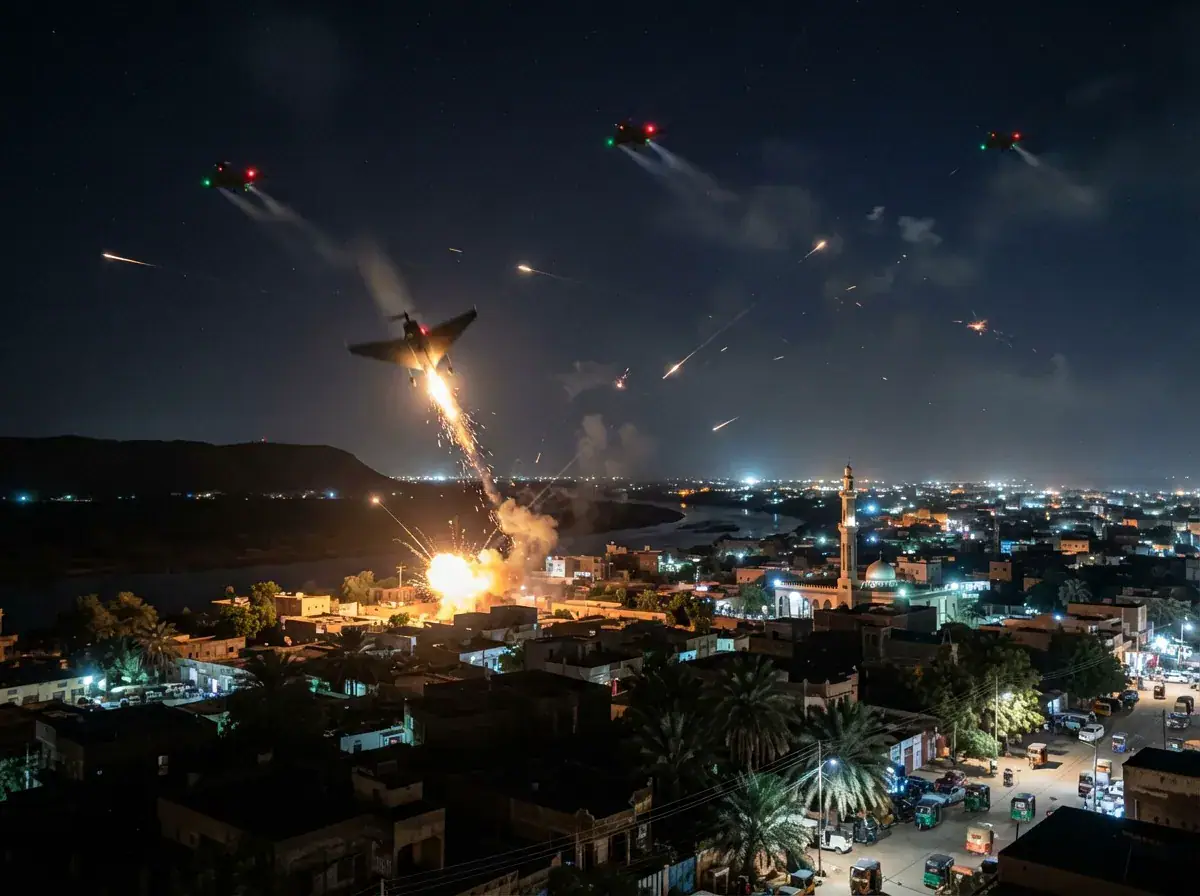
The city of Damazin, capital of Sudan's Blue Nile state, came under attack by drone aircraft in recent hours. Sources claim the drones are affiliated with the Rapid Support Forces. The attacks targeted civilian facilities, but details on casualties and damage are scarce. This development occurs amidst heightened military operations in the Blue Nile region. Clashes have been ongoing between Sudanese armed forces and the Rapid Support Forces, along with the Sudan People's Liberation Movement-North led by Joseph Tuka.
Damazin has faced repeated drone attacks this November, with both military sites and civilian infrastructure being targeted. This escalation reflects the expanding conflict, now reaching closer to the region's center. Previous attacks have been accompanied by anti-aircraft fire and explosions in various areas. Authorities have taken precautions during drone flights, including temporary power outages, although a comprehensive report on damages from each attack is yet to be released.
The Blue Nile region is witnessing increased military activity, particularly in areas such as Kaysan, Karmak, and Baw. There, Sudanese armed forces and Rapid Support Forces, along with their allies, are exchanging attacks and attempting to advance or regain control of strategic locations. The Rapid Support Forces and Sudan People's Liberation Movement-North recently claimed advances in several areas, while military sources reported regaining positions and countering infiltration attempts.
The evolving situation indicates that Damazin is under growing pressure, with clashes spreading to areas closer to the city and continued use of drones in attacks on military sites and vital facilities. This escalation coincides with military reinforcements and movements by Sudanese forces in the region, aiming to counter the field advances of Rapid Support Forces and their allies while securing critical areas and supply routes.
The Blue Nile region holds strategic importance due to its border with Ethiopia and its connection to areas adjacent to Karmak and Kaysan. There are allegations of external support and facilitation for Rapid Support Forces, which Ethiopia denies. Repeated attacks on Damazin and surrounding areas raise concerns about the potential expansion of military operations and their impact on civilian infrastructure and displacement.
The situation on the ground remains volatile, with military activities intensifying in southern and eastern parts of the Blue Nile region. Both sides are engaged in a series of offensives and defensive maneuvers. The ongoing conflict in the region, one of the most active fronts in southeastern Sudan, continues to pose challenges to local populations and regional stability.
International attention is focused on the developments in Sudan, particularly in regions like Blue Nile, where the conflict's impact on civilian populations and infrastructure is a growing concern. Efforts to de-escalate tensions and address the humanitarian needs arising from the conflict are ongoing. The situation demands continued monitoring and response from both local and international stakeholders to mitigate the crisis's effects.
Key points
- The conflict in Sudan's Blue Nile region escalates with drone attacks on civilian targets in Damazin.
- Military activities intensify in areas such as Kaysan, Karmak, and Baw, with both sides claiming advances.
- The strategic importance of the Blue Nile region, bordering Ethiopia, adds to the conflict's complexity and potential for wider impact.