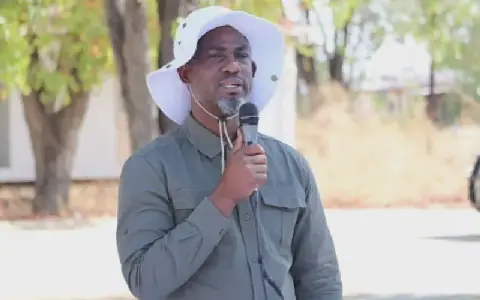
A writer from the Democratic Republic of the Congo, Hervé-Michel Bia Buetusiwa, also known as Tata N’longi Biatitudes, has expressed concerns about the impact of artificial intelligence on literary creation. In an interview with the Congolese press agency, he warned that the growing use of AI in writing may undermine young authors who are not widely known by the public. This could create a climate of suspicion within literary circles, he said.
According to Tata N’longi, writing remains a difficult undertaking, which could become even more challenging with the development of artificial intelligence. He pointed out that AI adds further pressure, with suspicion now hanging over every published text. This situation could create inequality among writers, as already established authors are less likely to face suspicion than young writers whose literary styles are still developing.
Tata N’longi identified two categories of authors who could be affected by this situation. On the one hand, traditional authors are facing competition from those who secretly use AI. On the other hand, there are authors who, despite having written their works themselves, will have to prove that they did not resort to the machine. This could lead to unfair treatment of young and emerging writers.
The writer also pointed to the risk of discrimination against African and Haitian authors, as well as self-taught writers. He suggested that proficiency in artificial intelligence should be regarded as a literary skill in its own right, distinct from authentic creative work. This would help to level the playing field and reduce suspicion.
Tata N’longi urged writers to keep drafts of their works so that they can provide evidence of authorship. He emphasized the importance of transparency in this new situation, where technology reformulates age-old concerns about authorship and creativity. By being open about their writing processes, authors can help to build trust and credibility.
Tata N’longi Biatitudes is a Congolese writer, poet, playwright, lawyer, and publisher. He has written several works, including “Mes j’aime”, a collection of love poems published in 2017; Cœur (é) pelé, a poetry collection published in 2018; and Bateki Mboka, a play published in 2020. His work reflects his passion for writing and his commitment to promoting literary excellence.
The concerns raised by Tata N’longi highlight the need for a nuanced discussion about the role of artificial intelligence in literary creation. As AI technology continues to evolve, it is essential to address the potential consequences for authors and the literary community as a whole. By engaging with these issues, writers, publishers, and readers can work together to ensure that the benefits of AI are harnessed while minimizing its risks.
Key points
- A Congolese writer has warned that the growing use of artificial intelligence in literary creation may lead to unfair suspicion and inequality among authors.
- The writer, Tata N’longi Biatitudes, suggests that proficiency in AI should be regarded as a literary skill in its own right.
- He urges writers to keep drafts of their works to provide evidence of authorship and promote transparency.