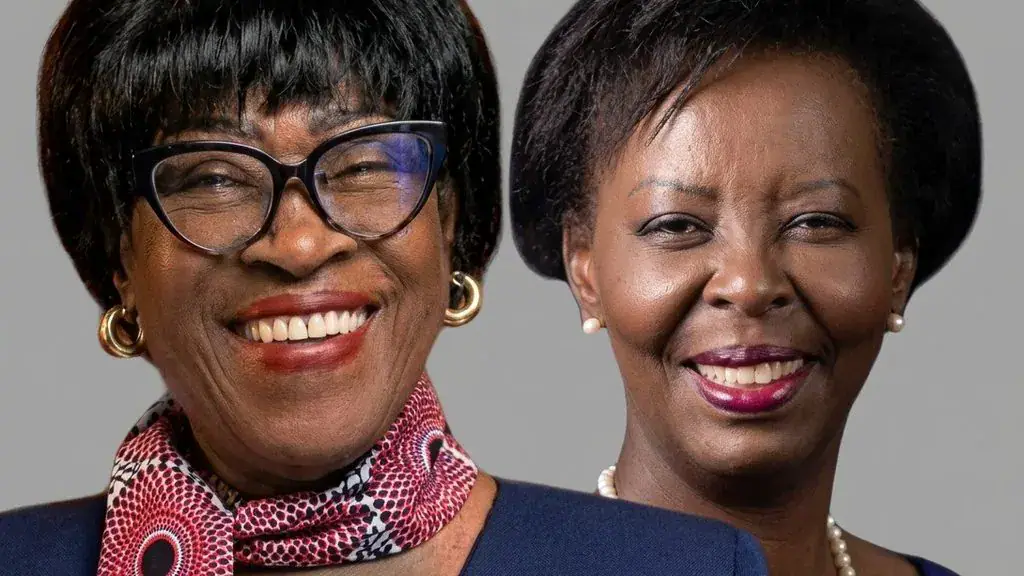
The Democratic Republic of Congo has set a red line ahead of the November 16 election for the secretary-general of the Organisation internationale de la Francophonie (OIF) in Phnom Penh, Cambodia. According to sources, Kinshasa may withdraw from the organization if Louise Mushikiwabo of Rwanda is re-elected for a third term. The DRC sees this as a test of the institution's principles and geopolitical balance.
The DRC's administration, led by President Félix Tshisekedi, views this as a matter of sovereignty and diplomatic coherence. Allowing Mushikiwabo, who is from Rwanda, to lead the Francophonie for another four years is seen as unacceptable due to ongoing security tensions between the DRC and Rwanda. The DRC's candidate, Juliana Amato Lumumba, is promoting a different vision for the institution, focusing on citizen participation, education, and cultural promotion.
Lumumba's campaign emphasizes the importance of diversity within the Francophonie, highlighting it as a source of strength and solidarity among member states. Her platform includes initiatives such as youth mobility, digital transformation, and promotion of Francophone cultures. In contrast, Mushikiwabo is seeking a third term as secretary-general. The DRC's stance has elevated the candidacy of Lumumba to a central position in a diplomatic confrontation that extends beyond the leadership succession of the OIF.
President Tshisekedi has discussed the DRC's candidacy with French President Emmanuel Macron, who has significant influence within the Francophonie. During their meeting on February 25, Tshisekedi and Macron touched on the future of the Francophonie and the DRC's ambitions within the organization. France, as a major contributor to the OIF's budget, holds considerable sway in the election outcome.
The DRC, with over 65-70% of its population speaking French, is a crucial demographic for the Francophonie. As the primary Francophone country, the DRC's potential departure from the organization would have significant implications, potentially undermining the credibility of the OIF. France, which contributes around 36% of the OIF's budget, stands to lose from any institutional instability.
The diplomatic dynamics involve a delicate balance for France, which must navigate its relationships with both the DRC and Rwanda. In 2018, Macron supported Mushikiwabo's candidacy, strengthening ties with Rwanda. Now, France faces a dilemma in choosing between preserving its alliance with Rwanda and securing the support of the DRC, a key Francophone nation in Africa.
The stakes are high as the Francophonie seeks to assert its influence alongside other linguistic blocs. The DRC's significant Francophone population makes it a favorite in this diplomatic equation. The outcome will depend on France's strategic calculations and its priorities within the organization.
Key points
- The DRC may withdraw from the Francophonie if Louise Mushikiwabo is re-elected as secretary-general.
- The DRC's candidate, Juliana Amato Lumumba, promotes a vision focusing on citizen participation and cultural promotion.
- France, a major contributor to the OIF, faces a dilemma in balancing its relationships with the DRC and Rwanda.
Reporting sources
- OIF : Kinshasa ne transige pas sur ses lignes rouges · Ouragan.cd