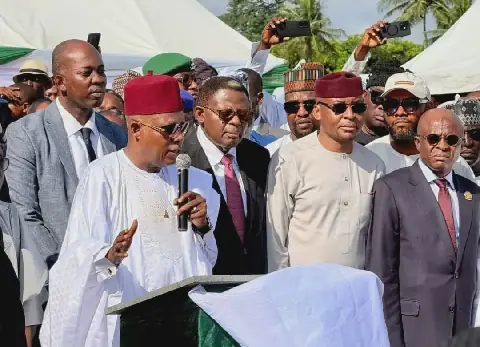
At the 31st Conference of Parties on Climate Change (COP31) in Antalya, Turkey, Democratic Republic of Congo (DRC) President Félix-Antoine Tshisekedi called for fair, sustainable, and equitable compensation for the preservation of the Congo Basin forests. The Congo Basin, the second-largest tropical forest in the world, is a crucial ecosystem that benefits the entire planet. Tshisekedi emphasized that the preservation of these forests can no longer rely solely on the sacrifices of the countries that host them.
Tshisekedi's plea is centered on the idea that the ecological services provided by the Congo Basin forests go beyond national borders and constitute a global common good. He stressed that the destruction of these ecosystems would have significant environmental, economic, and human costs for the entire planet. The DRC president highlighted the need for concrete financial recognition of the country's contribution to global climate balance through its preservation of the Congo Basin forests.
A key aspect of Tshisekedi's argument is the need to address the disparity between the environmental responsibilities assumed by forest countries and the financial resources mobilized to support them. The DRC wants to recognize the economic value of its forests in regulating the climate, preserving biodiversity, and combating climate change. Tshisekedi also emphasized the social dimension of this issue, stating that the compensation for forest services should directly benefit the populations living in and around the forests.
Tshisekedi insisted that the financing for forest and climate initiatives should directly benefit indigenous peoples, local communities, women, and young people. He emphasized the importance of respecting their land rights and involving them in decision-making processes related to natural resource management. The DRC president also supported the establishment of a perpetual fund for tropical forests (TFFF) with a robust financial mechanism to provide predictable long-term resources for forest countries.
To support his claims, Tshisekedi highlighted national initiatives aimed at balancing environmental protection and economic development. The Kivu-Kinshasa Green Corridor is a flagship project, a large community-led protected area covering approximately 540,000 km². This initiative focuses on agroforestry, ecosystem restoration, and sustainable production chains to preserve natural resources while creating new economic opportunities for local communities.
The DRC president's intervention comes amid calls from developing countries for increased international financing to address climate change. The global community must take concrete actions to transform climate commitments into tangible benefits for countries like the DRC. Tshisekedi concluded his address by emphasizing the collective responsibility to protect tropical forests and the need for shared financial commitments to support their preservation.
The DRC's demand for fair compensation for forest preservation is a pressing issue, with significant implications for the country's development and the global fight against climate change. As the international community continues to discuss climate action, the DRC's call for equitable and sustainable financing for forest preservation is likely to remain a key point of contention.
Key points
- The DRC president's call for fair compensation for Congo Basin forest preservation highlights the need for global solidarity in addressing climate change.
- The proposed perpetual fund for tropical forests (TFFF) aims to provide predictable long-term resources for forest countries.
- The Kivu-Kinshasa Green Corridor is a flagship initiative showcasing the DRC's approach to balancing environmental protection and economic development.