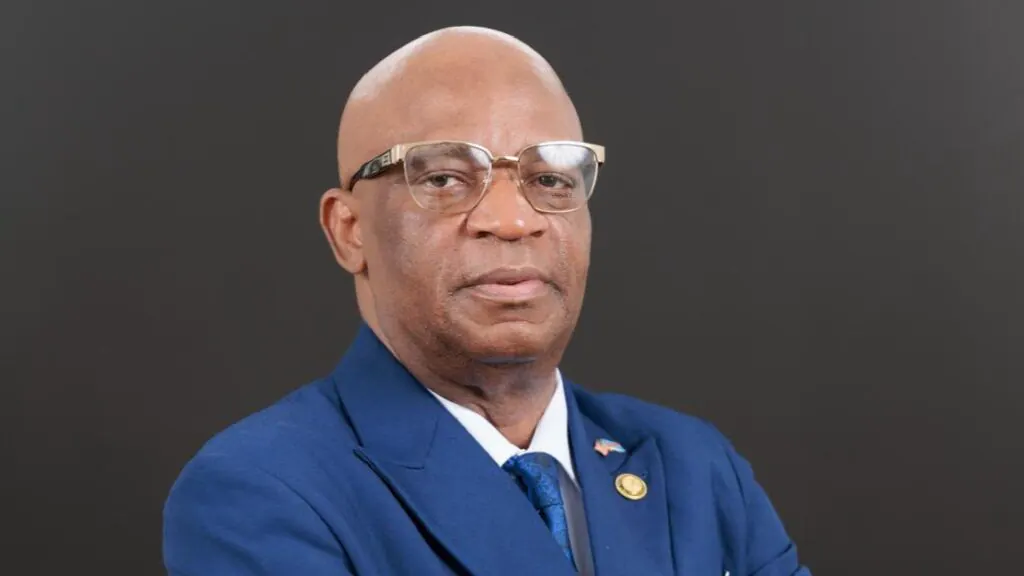
The Democratic Republic of Congo's debt capacity has sparked a national debate, with Vice-Premier Minister and Budget Minister Adolphe Muzito recently announcing that the country has a theoretical capacity to borrow up to $100 billion. This statement has raised questions about the country's development strategy and the use of borrowed funds. According to Muzito, the country's external debt stands at around $11 billion, with a GDP estimated at $137 billion.
The idea that the DRC can borrow up to $100 billion without exceeding a 50% debt-to-GDP ratio has been met with skepticism. Critics argue that a country's debt capacity is not a strategy for development, and that the focus should be on how borrowed funds will be used to generate economic and social value. Éric Kamba, a geostrategist and international relations analyst, emphasizes that the question is not how much the DRC can borrow, but how effectively it can invest and transform borrowed funds into measurable results for its population.
The debate highlights the need for a clear national investment architecture, with specific projects, timelines, and expected outcomes. Before discussing large-scale borrowing, the government should present a comprehensive plan for the use of borrowed funds, including details on project implementation, interest rates, and repayment schedules. This plan should be aligned with the country's development goals and priorities, and should prioritize projects that will generate significant economic and social benefits.
The DRC's history of controversy surrounding public procurement and project execution has raised concerns about the potential misuse of borrowed funds. In this context, announcing a large debt capacity can be perceived as an invitation to seek out funding without a clear plan for its use. Kamba and other analysts stress that the approach should be reversed, with the identification of specific projects and their financing needs taking precedence over the search for funding.
The DRC's infrastructure deficit is a significant obstacle to development, and borrowing can be a legitimate means of financing priority projects. However, the quality of debt is crucial, and borrowed funds should be used to support productive investments that will generate long-term economic and social benefits. Examples of such investments include infrastructure projects, such as roads, railways, and hydroelectric power plants, which can support industrialization and economic growth.
The debate also highlights the need for transparency and accountability in the use of borrowed funds. The government should establish clear mechanisms for monitoring project implementation, evaluating outcomes, and ensuring that borrowed funds are used efficiently and effectively. This will help to build trust and ensure that the DRC's debt capacity is used to support sustainable development.
Ultimately, the DRC's development strategy should prioritize responsible borrowing and investment, with a focus on generating long-term economic and social benefits. The government should avoid using debt as a means of simply financing consumption or meeting short-term needs, and should instead prioritize investments that will support sustainable development and poverty reduction. By doing so, the DRC can harness its debt capacity to support a more prosperous and equitable future for its citizens.
Key points
- The DRC's potential debt capacity should be used to support productive investments that generate long-term economic and social benefits.