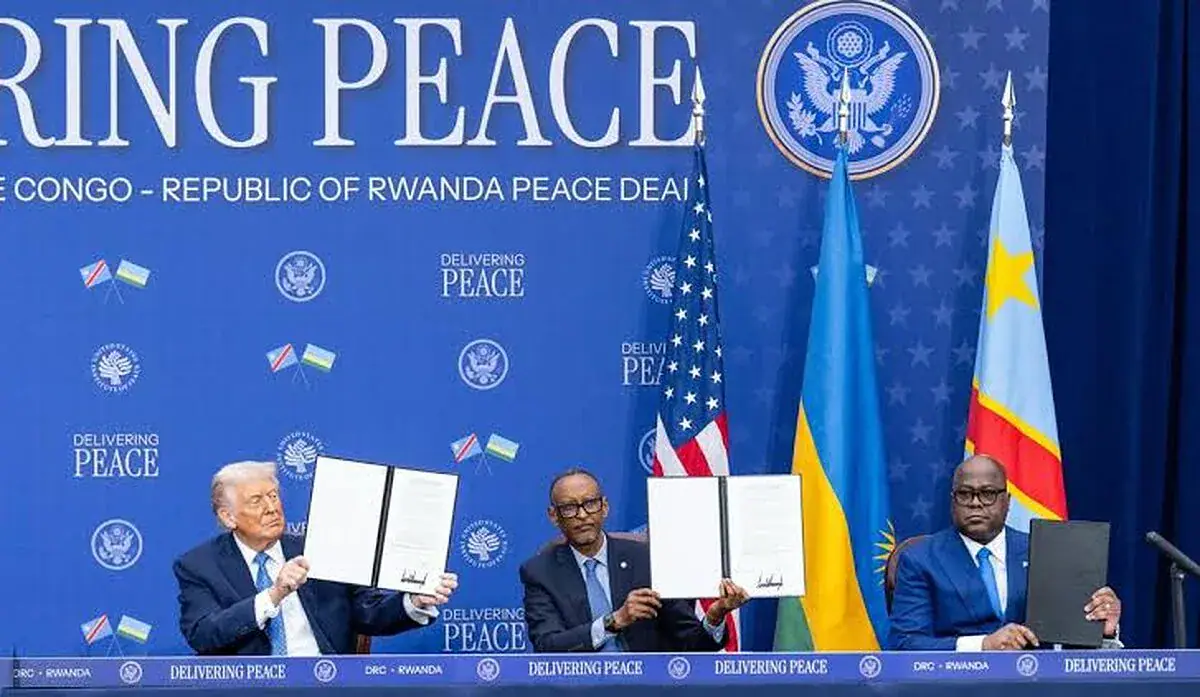
The peace agreement between the Democratic Republic of Congo and Rwanda, signed in June 2025, has failed to deliver on its promises, with an implementation rate of 33.3% as of October 2026. This represents a decline from 35% three months prior. The agreement aimed to reduce tensions and create conditions for sustainable stability in the region. However, the current state of implementation falls short of expectations.
The main reason for the stall is the lack of a clear operational framework for the agreement. The Order of Operations (OPORD), a crucial document outlining the sequencing of operations, responsibilities, and verification mechanisms, remains incomplete. Despite discussions in August and October 2026, the parties have not reached a consensus on the OPORD. This impasse has hindered progress on security-related commitments.
The Barometer of Peace Agreements in Africa (BAPA) has revised its assessment of two key tasks related to operational planning, lowering their scores from 7.5 to 5 points out of 10. This reflects the minimal level of execution. However, the report notes that this revision does not necessarily imply an equivalent deterioration in the fundamental obligations of the parties.
The DRC and Rwanda have made limited progress in meeting their commitments. The DRC's implementation rate has decreased from 31.7% to 30.8%, while Rwanda's has dropped from 30.6% to 29.5%. These numbers indicate a common challenge in advancing the different components of the agreement, particularly in coordinating security-related efforts.
The agreement's success depends heavily on cooperation between Kinshasa and Kigali. The two parties have struggled to establish a coordinated operational framework, which has hindered progress on key security issues, including the neutralization of the Forces démocratiques de libération du Rwanda (FDLR) and the disengagement of forces.
The stalled implementation of the peace agreement has significant implications for the region. The persistence of violence in eastern DRC and the lack of decisive progress in implementing the agreement have raised concerns about the effectiveness of the diplomatic mediation. The situation remains uncertain, with ongoing discussions and mechanisms in place, but a clear resolution remains elusive.
The DRC-Rwanda peace agreement's implementation faces significant challenges, including the lack of a clear operational framework and coordination between the parties. The agreement's success depends on the ability of Kinshasa and Kigali to work together to address key security issues and establish a stable and peaceful environment in the region.
Key points
- The DRC-Rwanda peace agreement's implementation rate has stalled at 33.3% as of October 2026.
- The main reason for the stall is the lack of a clear operational framework for the agreement.
- The agreement's success depends heavily on cooperation between Kinshasa and Kigali.