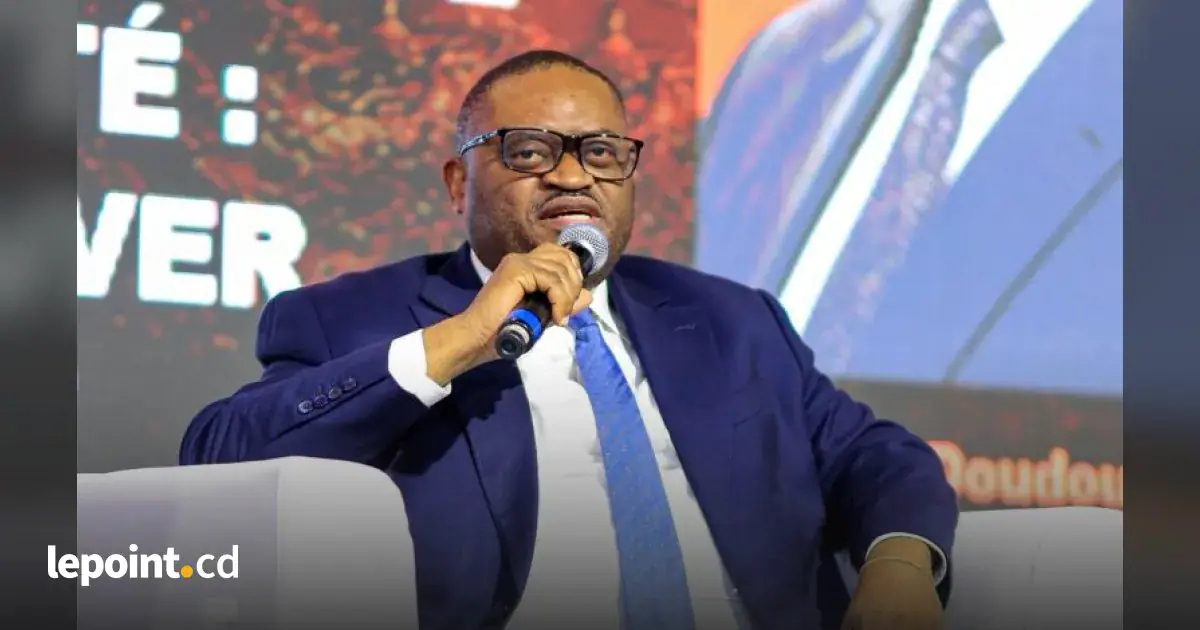
The Democratic Republic of Congo's government has successfully mobilized over $150 million in additional revenue between July and December 2025, following the end of fuel subsidies for mining companies. According to Finance Minister Doudou Fwamba Likunde Li-Botayi, this significant increase in revenue was announced on November 24 at the Makutano Mining 2026 conference in Kinshasa. This development is a result of the government's decision to remove fuel subsidies for mining companies.
Prior to the reform, the government was only collecting between $15 and $20 million in tax revenue from the importation of petroleum products destined for miners during the first half of 2025. With the new measures in place, the government is now also collecting excise duties on these imports. Minister Fwamba emphasized that this change does not constitute a new tax or parafiscality, but rather a normalization of the situation, as it is not reasonable for the state to subsidize fuel for mining companies that generate billions of dollars in revenue.
Since August 2025, mining companies have been required to purchase their petroleum products under customs, at a price distinct from that for households. In March 2026, the Ministry of National Economy set the price of diesel for mining companies in the Southern zone at 5,584,256.89 Congolese francs per cubic meter, approximately 5,584 francs per liter. This change aims to level the playing field and ensure that mining companies operate under fair market conditions.
According to the report on fiscal expenditures for 2025, annexed to the 2027 budget bill, the government's measure is expected to recover around 354.3 billion Congolese francs in lost revenue for 2025. This significant recovery is a result of the government's efforts to optimize revenue collection and reduce unnecessary subsidies. The minister stressed that the state should not subsidize fuel for mining companies that generate substantial revenue.
The government plans to extend this measure to other sectors, starting with breweries. The 2027 budget bill also includes provisions on fuel for telecommunications and forestry exploitation. This expansion aims to ensure that all sectors operate under fair market conditions and contribute to the state's revenue. The government's efforts to reform the fuel subsidy system are expected to have a positive impact on the country's economy.
However, the reform also has a downside, as it creates an incentive for fuel diversion. The double price of fuel between households and miners may lead to smuggling, with fuel intended for households being diverted to mines. The government is aware of this risk and is working to address it. This challenge highlights the need for effective monitoring and enforcement mechanisms to prevent fuel diversion and ensure the success of the reform.
The government's decision to end fuel subsidies for miners has yielded significant results, with over $150 million in additional revenue collected between July and December 2025. As the government continues to implement and refine this measure, it is expected to have a positive impact on the country's economy. The extension of this measure to other sectors is also expected to contribute to the state's revenue and promote fair market conditions.
Key points
- The Democratic Republic of Congo has recovered over $150 million in additional revenue since ending fuel subsidies for miners in July 2025.