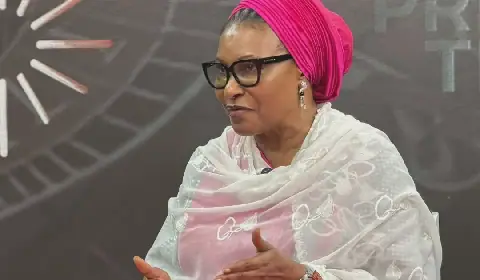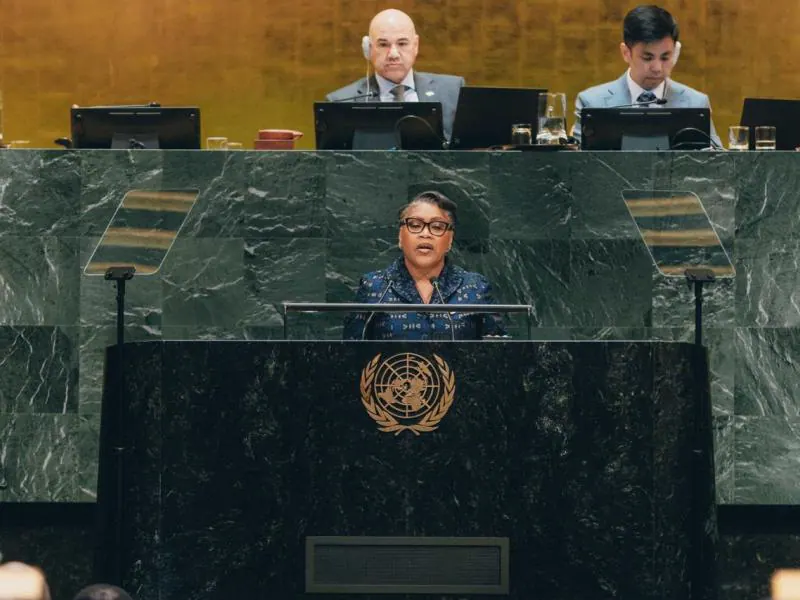
On September 23, Democratic Republic of Congo Prime Minister Judith Suminwa addressed the 81st session of the United Nations General Assembly in New York. She discussed the issue of the Forces démocratiques de libération du Rwanda (FDLR), a point of contention between Kinshasa and Kigali. Suminwa stated that her government has taken measures to address the FDLR issue, which has been used by Kigali to justify its military presence in eastern DRC.
Suminwa recalled that on May 30, 2026, a protocol was signed with the FDLR, outlining their disarmament, demobilization, and cantonment, with the goal of repatriating or relocating its combatants. This protocol also includes provisions for judicial proceedings against those responsible for serious crimes. The Prime Minister highlighted the successful repatriation of 120 individuals associated with the FDLR on September 8, which she presented as concrete evidence of the government's commitment to addressing the issue.
The DRC government aims to dissociate the FDLR issue from the presence of foreign military forces on its territory. Suminwa emphasized the need for coordination between the Washington, Doha, and African Union peace mechanisms. She called for a precise calendar, independent verification mechanisms, and regular information sharing among concerned parties. The Prime Minister stressed that the FDLR issue can no longer serve as a pretext for maintaining a foreign military presence in the DRC.
The agreement between the DRC and Rwanda, signed in Washington on June 27, 2025, under US facilitation, includes the neutralization of the FDLR and the lifting of Rwandan defensive measures. The latter implies the withdrawal of Rwandan forces from Congolese territory. However, Kigali disputes Kinshasa's interpretation of the agreement and has expressed concerns about the new protocol on FDLR disarmament.
The Rwandan authorities consider Kinshasa's initiative as "non-event" and accuse the DRC of not respecting its commitments. In contrast, Kinshasa defends its actions, arguing that the effective neutralization of the FDLR will deprive Kigali of a justification for maintaining its forces on Congolese territory. This development occurs amid persistent differences between the two parties over the interpretation and implementation of their respective commitments.
Despite the signing of the Washington agreement, the situation remains marked by ongoing hostilities, mutual accusations of ceasefire violations, and divergent interpretations of the commitments made by Kinshasa and Kigali. The UN has also expressed concerns about the implementation of the agreement. US advisor Massad Boulos previously called on Kinshasa and Kigali to respect the agreement's provisions.
The DRC's efforts to address the FDLR issue are part of a broader push for peace and stability in the region. The government has reiterated its commitment to implementing the Washington agreement and engaging with international partners to achieve lasting peace. The situation in eastern DRC remains complex, with multiple factors contributing to the ongoing tensions between the DRC and Rwanda.
Key points
- The DRC government has taken steps to address the FDLR issue, including the repatriation of 120 individuals associated with the group.
- The DRC and Rwanda have signed an agreement aimed at normalizing relations, but differences persist over its implementation.
- The UN has expressed concerns about the situation in eastern DRC and called for the implementation of the Washington agreement.