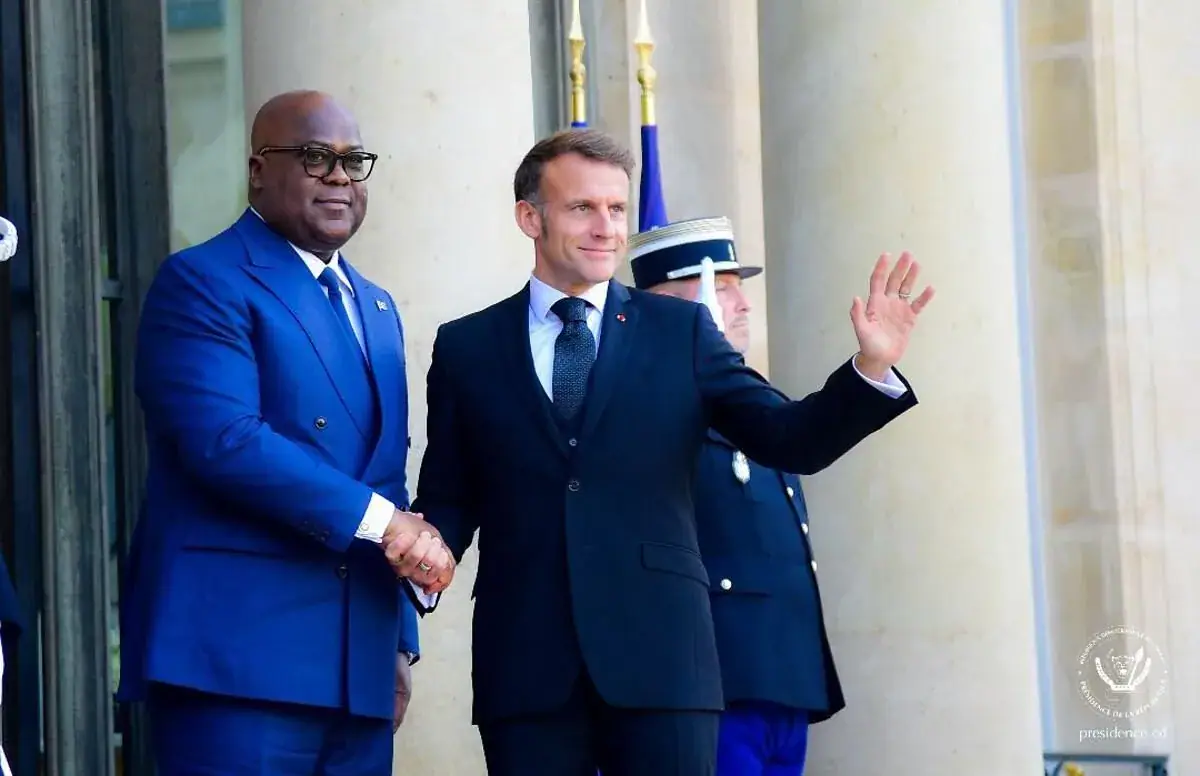
The battle for the leadership of the Organisation internationale de la Francophonie (OIF) has taken a new diplomatic turn. The President of France, Emmanuel Macron, has reportedly asked his Rwandan counterpart, Paul Kagame, to withdraw the candidacy of Louise Mushikiwabo, who is seeking a third term as head of the institution. This move follows pressure from Kinshasa on Paris, with the Democratic Republic of the Congo threatening to leave the organization if Mushikiwabo is re-elected.
The DRC considers a new term for Mushikiwabo unacceptable due to the ongoing security crisis in the east of the country and strained relations between the DRC and Rwanda. Kinshasa believes it would be paradoxical for a Rwandan national to continue leading an organization that promotes peace, solidarity, democracy, and respect for state sovereignty, given the conflict between the two countries. The DRC has made it clear to France that supporting Mushikiwabo's re-election could be seen as a political choice in favor of Rwanda, at the expense of the DRC's security and diplomatic concerns.
France is now faced with a diplomatic dilemma, seeking to avoid a confrontation with Kinshasa over the OIF leadership. A withdrawal of the DRC would be a significant blow to the organization, given the country's demographic, linguistic, and institutional importance within the Francophonie. The French government must balance its relationships with both the DRC and Rwanda, while also preserving the unity of the Francophonie.
The DRC's strategy involves internationalizing its opposition to Mushikiwabo's candidacy, framing the issue as a matter of credibility for the Francophonie. Kinshasa argues that the organization's values are at stake, given the ongoing conflict in the east of the country and Rwanda's alleged support for armed groups operating in the region. The DRC's diplomatic efforts aim to convince other Francophone states that the leadership of the OIF cannot be separated from the principles the organization claims to defend.
If Mushikiwabo's candidacy is withdrawn, it could open a new opportunity for the DRC to promote its own interests within the OIF. However, Kinshasa cannot take a favorable outcome for granted, as the competition for the leadership will involve other Francophone capitals and their respective interests. The DRC must capitalize on its diplomatic efforts, consolidate its support, and convince its partners of the importance of its concerns.
The Francophonie is facing a battle for influence, with the DRC seeking to assert its voice within the organization. The outcome of the leadership competition will depend on the ability of the DRC to build alliances and secure support from other Francophone states. The stakes are high, as the OIF's credibility and relevance are at stake in the face of ongoing conflicts and challenges in the region.
The XXth summit of the Francophonie is taking place in Phnom Penh, where the issue of leadership will likely be discussed. The DRC's efforts to promote its interests and values within the organization will be closely watched, as the country seeks to play a more significant role in the Francophonie. The outcome of the leadership competition will have implications for the future of the organization and its role in promoting peace, democracy, and cooperation among its member states.
Key points
- The DRC is threatening to leave the Francophonie if Louise Mushikiwabo is re-elected as secretary-general.