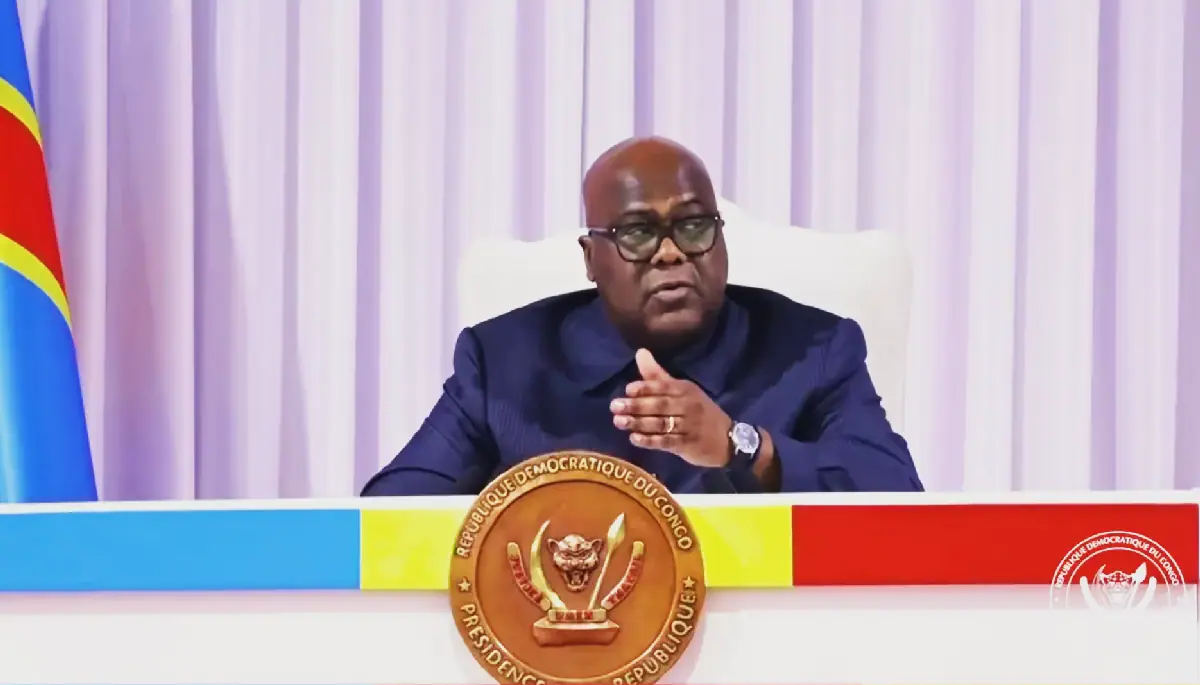
On October 24, in a significant address to deputies, senators, and dignitaries of the Sacred Union at the Cité de l’Union africaine in Kinshasa, Félix Tshisekedi, the President of the Democratic Republic of Congo, stated that the nation is "in danger." He urged his lawmakers to return to their constituencies and "educate, awaken, and inform" the people about the current state of the country. This call to action comes as Tshisekedi faces opposition from a political-military coalition led by his predecessor, Joseph Kabila.
The conflict between Tshisekedi and Kabila escalated on October 12, when Kabila took the leadership of the Front pour la Refondation de la Nation (FRN), a coalition that includes the Rwandan-backed M23 rebel group. Tshisekedi views this move as a threat to the country's territorial integrity and stability. In his address, he expressed confidence that the adversary is "backed into a corner" but also warned of potential "acts of desperation." This situation has raised concerns about the potential for further violence and instability in the region.
Tshisekedi's accusations against Kabila are severe. He claims that Kabila, at the request of Rwandan President Paul Kagame, has taken the lead in the aggression against the DRC. Tshisekedi stated that he has formed his opinion based on information from Congolese services and friendly countries. He also pointed to Kabila's past actions, including his departure from the country, which Tshisekedi described as an "exile that didn’t say its name." Furthermore, Tshisekedi criticized Kabila for his silence on his foreign trips, suggesting that Kabila's actions are suspicious.
The FRN, led by Kabila, presents itself as a movement fighting against constitutional violations, corruption, and repression. The coalition includes notable figures such as Corneille Nangaa and Bertrand Bisimwa as vice-presidents, and Major General Sultani Makenga, a key leader of the armed wing associated with the AFC/M23. While the grievances expressed by the FRN resonate with many Congolese citizens who distrust their institutions, the presence of an armed wing backed by Rwanda complicates the situation and raises questions about the group's true intentions.
Tshisekedi's response to the crisis includes launching a national dialogue, which he hopes will bring together various stakeholders to address the country's challenges. He announced that a preparatory team will be named the following week, with the participation of provincial coordinators and two African Union co-facilitators. However, the M23 rebel group has been excluded from this process, with Tshisekedi insisting that the Doha process remains the proper channel for negotiations with the group.
One of the significant challenges facing Tshisekedi is addressing concerns about his own intentions regarding the Constitution and his term in office. Some members of the public fear that the national dialogue may be used to amend the Constitution and allow Tshisekedi to extend his stay in office. In response, Tshisekedi has stated that he has no intention of exceeding the limits of his mandate. However, conflicting reports suggest that he may have expressed disagreement with certain aspects of the Constitution, leaving room for speculation about his true intentions.
The situation in the DRC remains volatile, with the opposition and various stakeholders closely watching Tshisekedi's actions. The C64 grouping, a coalition of opposition parties, had hoped to present an alternative to both Tshisekedi and Kabila but faces challenges in uniting the fragmented opposition. As the country prepares for the national dialogue, the international community is closely monitoring developments, and the success of the dialogue will depend on the ability of various stakeholders to work together to address the country's deep-seated challenges.
Key points
- Tshisekedi accuses Kabila of leading a rebel movement backed by Rwanda.
- The FRN presents itself as a movement fighting against constitutional violations and corruption.
- Tshisekedi launches a national dialogue to address the country's challenges.