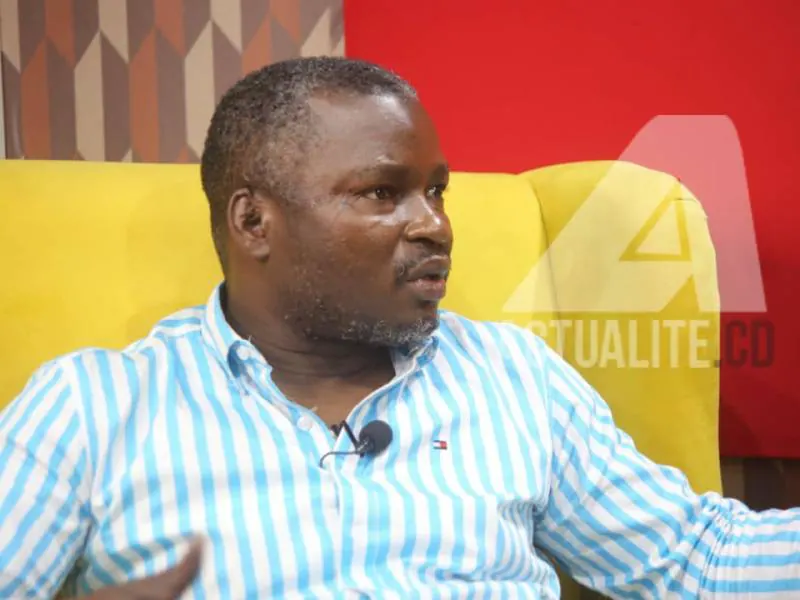
Democratic Republic of Congo national deputy Gratien Iracan has expressed disapproval of the National Assembly's bureau request for deputies to provide photo and video evidence of their achievements in their respective constituencies during the three-month parliamentary recess. Iracan, who represents the constituency of Bunia in the Ituri province, stated that this request undermines the role of deputies as representatives of the nation, lawmakers, and government overseers. He emphasized that constructing schools, roads, bridges, and health centers is the responsibility of the executive branch.
According to Iracan, evaluating a deputy's performance based on their achievements is misguided, as this role belongs to the executive. He argued that if deputies are judged on the number of projects they finance, it would transform them into financiers and open the door to clientelism. Iracan stated that he has not received any government or Assembly funding for constructing public infrastructure, conducting social actions, or intervening financially in his constituency. He added that any initiatives he undertook were done using his personal resources or through advocacy with authorities.
Iracan requested that the National Assembly's bureau disclose the mechanism for financing deputies' projects, if one exists, and clarify the criteria for allocating these funds. He suggested that the evaluation of parliamentary work should focus on legislative initiatives, the exercise of parliamentary oversight, and advocacy actions on behalf of the population. In contrast, several deputies from the Union Sacrée support the Assembly's approach, citing the realities on the ground that often prompt deputies to engage in charitable acts in their constituencies.
Deputy Alexandre Kambale Muhasa from Lubero, North Kivu, explained that the Assembly's request is not an obligation but rather a way to encourage deputies to report their achievements. The Assembly's rapporteur announced that deputies have until October 15 to submit the requested information, including photos and videos of their achievements and the cost of each project. This initiative has sparked reactions on social media, with some questioning the origin and nature of the funding used by deputies to undertake these projects.
The debate surrounding the role of national deputies and the distinction between their constitutional missions and the direct implementation of infrastructure or social actions has gained momentum. Some citizens have expressed concerns about the potential for clientelism and the blurring of lines between the roles of deputies and the executive. Iracan emphasized that each deputy is free to contribute to the country's development through various initiatives, depending on their financial resources and ability to respond to social situations.
In response to the controversy, some deputies have defended the Assembly's initiative, arguing that it aims to promote transparency and accountability. Deputy Aimé Boji Sangara supported the initiative, stating that it seeks to inventory the achievements of deputies that are not covered by the state. The controversy highlights the complexities of the role of national deputies in the DRC and the need for clarity on their responsibilities and the evaluation of their performance.
The issue has sparked a broader discussion on the role of deputies and the need for clear guidelines on their responsibilities and accountability. As the deadline for submitting the requested information approaches, it remains to be seen how the National Assembly will respond to the concerns raised by Iracan and other deputies. The controversy underscores the challenges of promoting transparency and accountability in the DRC's parliamentary system.
Key points
- Deputy Gratien Iracan opposes the National Assembly's request for proof of achievements in constituencies.
- Iracan argues that constructing infrastructure is the responsibility of the executive branch, not deputies.
- The controversy highlights the complexities of the role of national deputies in the DRC and the need for clarity on their responsibilities.