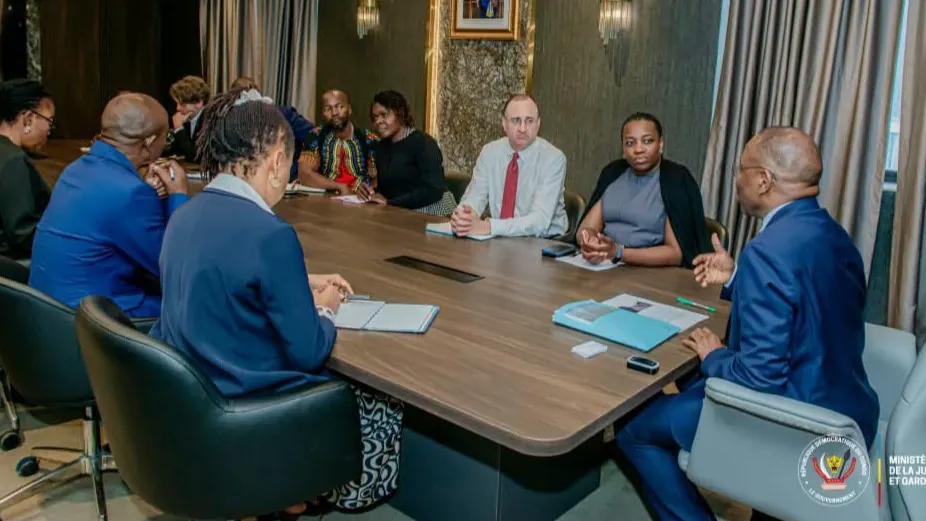
Democratic Republic of Congo's Minister of Justice, Guillaume Ngefa, has stated that all perpetrators of crimes in the eastern part of the country will be pursued, regardless of their affiliation or status. This statement was made during a working session with a delegation from Amnesty International, led by Flavia M. Mwangovya, in Kinshasa on October 1. Ngefa emphasized the importance of documenting severe violations to shed light on the facts and establish responsibilities.
The Minister of State highlighted the need to create a collective memory of the crimes committed over the past few decades. He stressed that documented facts can also serve judicial procedures launched on the violence committed in the eastern part of the country. Ngefa's comments come as part of a broader effort to combat impunity for crimes committed in the region. Amnesty International and the DRC government are working together to document and investigate human rights abuses.
The DRC has experienced cyclical conflicts for thirty years, resulting in numerous human rights abuses. Ngefa emphasized the importance of continuing to document these abuses, building on the UN's Mapping Report, which detailed severe human rights violations committed in the DRC. The report's findings are crucial in establishing a collective memory of the crimes and ensuring that perpetrators are held accountable.
During the meeting, Amnesty International presented the findings of its research on alleged human rights abuses in mining areas controlled by the M23 rebel group. The organization reported cases of death, torture, forced recruitment, and illicit exploitation of natural resources. Discussions also centered on alleged abuses attributed to certain Wazalendo groups. Ngefa stressed that membership in a group or the cause defended does not exempt individuals from criminal responsibility.
The working session also touched on transitional justice mechanisms and ways to prosecute international crimes. The issue of reparations for victims was also discussed, with participants emphasizing the need for transparency, accountability, and efficiency in existing mechanisms. This would ensure that mobilized resources effectively benefit conflict victims. Amnesty International's Mwangovya described the exchanges as "very constructive."
Mwangovya also presented the "6 million voices for justice in Congo" campaign, launched in Kinshasa on the same day, in support of victims and survivors of conflicts. The campaign aims to bring attention to the plight of those affected by the violence and push for accountability. Ngefa's commitment to pursuing perpetrators aligns with the government's priorities, including combating impunity for human rights abuses.
The DRC government's efforts to combat impunity and ensure accountability for human rights abuses in the eastern part of the country are ongoing. The collaboration between the government and organizations like Amnesty International is crucial in documenting abuses and pushing for justice. The "6 million voices for justice in Congo" campaign is a significant step towards amplifying the voices of victims and survivors, and ensuring that their stories are heard.
Key points
- The DRC government is committed to pursuing all perpetrators of crimes in the east, regardless of affiliation or status.
- Amnesty International and the DRC government are working together to document and investigate human rights abuses in the eastern part of the country.
- The "6 million voices for justice in Congo" campaign aims to bring attention to the plight of victims and survivors of conflicts in the DRC.