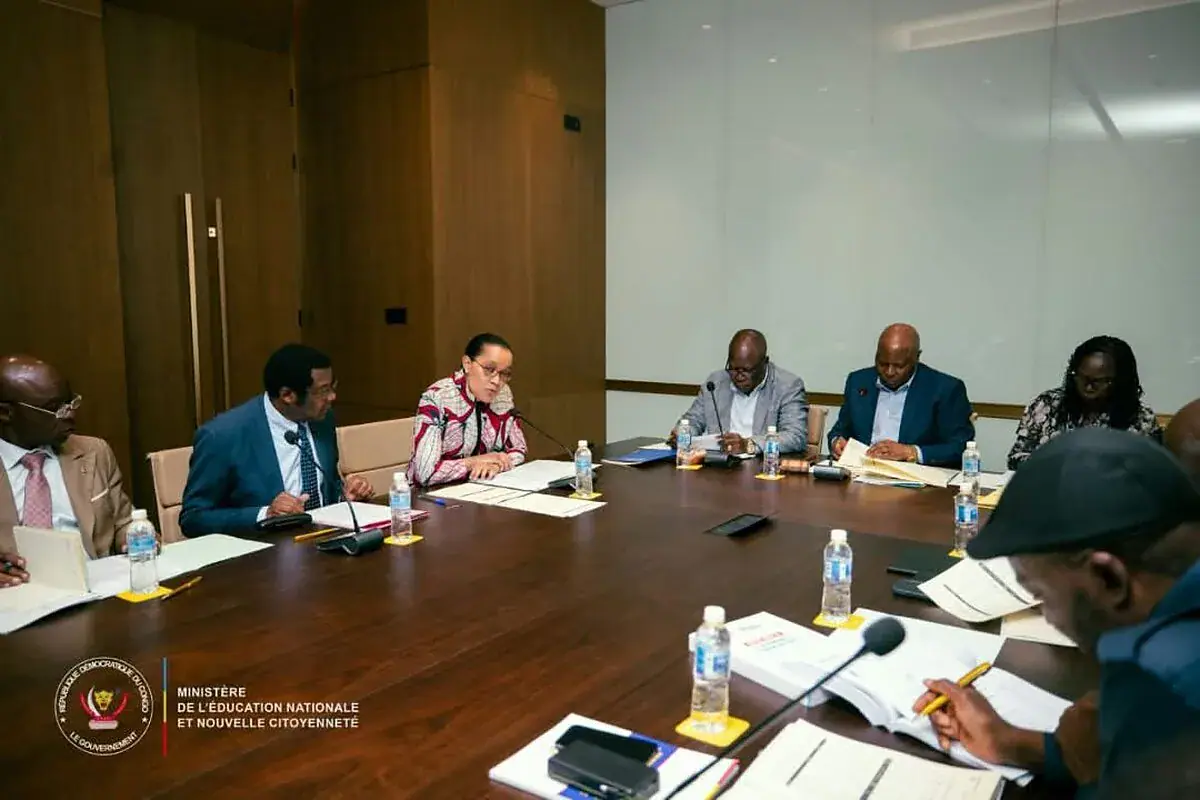
Democratic Republic of Congo's Minister of State for Education, Raïssa Malu Dinanga, presented the 2027 budget forecast for her sector to the Senate's Economic and Financial Commission on November 23, 2026. She requested a total of 5,118,429,353,868 Congolese francs (CDF) to support key reforms and improve the education system. This budget aims to address crucial areas such as infrastructure development, teaching quality, and administrative modernization.
Minister Malu's presentation focused on six priority areas essential for strengthening the education sector. These areas include developing school infrastructure, improving teaching and learning quality, and modernizing educational administration through the integration of information and communication technologies (ICTs). Additionally, her proposal emphasized the importance of enhancing system management, addressing educational needs in emergency situations, and consolidating free primary education.
The minister was accompanied by her Secretary General, Juvénal Sanga Kaubo, and Inspector General, Hubert Kimbonza Sefu. During the parliamentary session, Malu addressed concerns from senators regarding the 2025 budget execution report and provided clarification on the management of allocated funds. The discussion also touched on the socio-professional situation of teachers, with Malu discussing efforts to support unpaid teachers and the retirement process for eligible agents.
The issue of unpaid teachers, particularly those categorized as NP and NU, was a significant topic of discussion. Minister Malu outlined steps being taken to address their concerns. The minister also called on senators to consider the state's financial constraints and the school calendar when formulating recommendations to the government. This appeal highlights the need to balance education reform ambitions with the government's actual financing capabilities.
The presentation is part of the parliamentary examination of 2027 budget forecasts, where institutions are required to defend their financial needs before the competent parliamentary commissions. Minister Malu's proposal aims to improve the education system's functioning and address key challenges facing the sector. The requested budget will support initiatives to increase school infrastructure capacity, enhance teaching quality, and modernize educational administration.
The Senate's Economic and Financial Commission will review the minister's proposal and provide recommendations. The commission's feedback will be crucial in determining the final budget allocation for the education sector in 2027. Minister Malu's efforts to secure funding for the education sector demonstrate the government's commitment to improving education in the Democratic Republic of Congo.
The 2027 budget proposal for the education sector reflects the government's priorities for education reform and development. If approved, the budget will enable the implementation of key initiatives to improve the quality of education and increase access to education for all. The outcome of the budget review process will be closely watched by stakeholders in the education sector.
Key points
- The proposed 2027 budget for the education sector in the Democratic Republic of Congo is 5,118,429,353,868 Congolese francs (CDF).
- Minister Raïssa Malu's proposal focuses on six priority areas, including infrastructure development, teaching quality, and administrative modernization.
- The budget review process will determine the final allocation for the education sector in 2027.