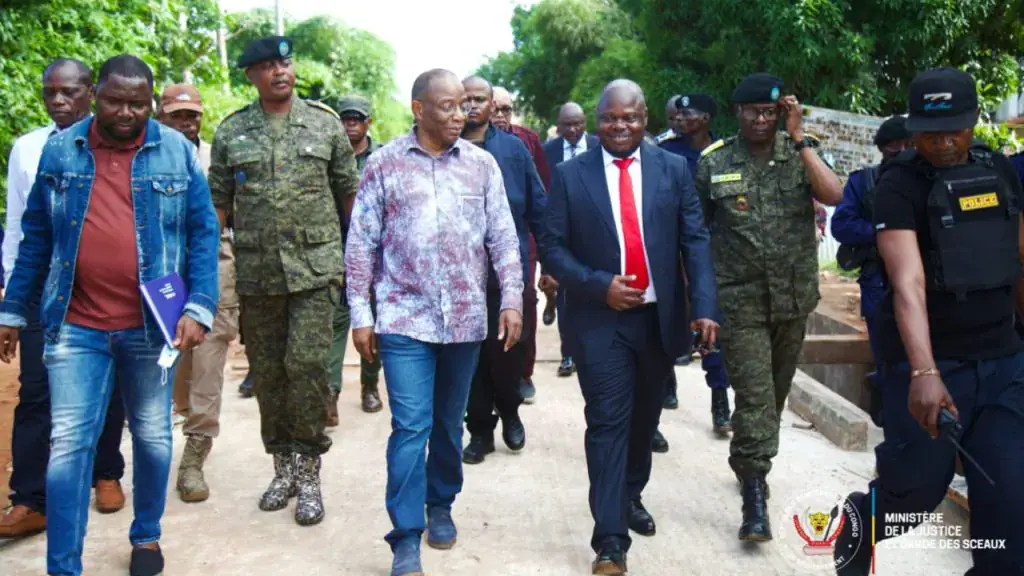
Democratic Republic of Congo's Justice Minister, Guillaume Ngefa, recently embarked on a tour of the Grand Bandundu region to assess the realities of the judicial system and engage with local populations. The tour, which included stops in Kenge, Kikwit, Ibansi, and Idiofa, aimed to restore the judicial apparatus, bring institutions closer to the people, and address dysfunctions that have eroded trust in the system. During his visit, Ngefa met with judicial actors and local populations to discuss their concerns and challenges.
The tour began in Kenge, where Ngefa visited the site of a recent air crash that claimed the lives of two high-ranking military magistrates, Lieutenant-General Joseph Mutombo Katalay Tiende and Lieutenant-General Lucien-René Likulia Bakumi. The minister paid tribute to the deceased, highlighting their dedication to justice and the nation. He also emphasized the need to address the challenges facing the judicial system, including the occupation of public land and poor detention conditions.
In Kikwit, Ngefa focused on two key issues: the contested occupation of airport land and the situation of detainees at the urban prison. He called for the strict application of the law to address the alleged illegal occupation of public land by private developers. The minister also met with prisoners, who shared their concerns about daily life in detention. As part of efforts to decongest prisons, 11 inmates were identified for release, and the prosecutor proceeded with their nominal call in the minister's presence.
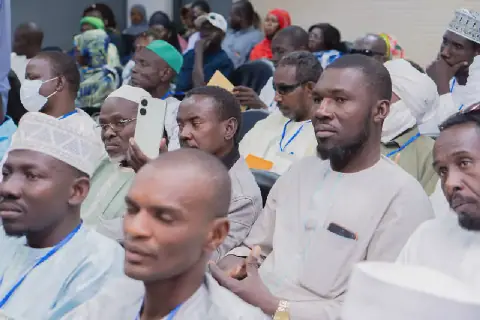
The tour took an unexpected turn in Ibansi, where Ngefa met with residents who expressed grievances about the functioning of justice in their locality. They reported arbitrary arrests, exorbitant fines, land conflicts, and alleged abuses by security agents. The minister listened attentively to their testimonies, acknowledging the need for a more equitable justice system. He emphasized the importance of promoting proximity justice, particularly in rural areas, to bridge the gap between judicial services and local populations.
The residents of Ibansi highlighted the challenges they face in accessing justice, citing the high costs of obtaining legal representation and the influence of money in the judicial process. Layobo Muke, a 70-year-old farmer, bluntly stated that "those who have money have access to justice." The minister's visit provided an opportunity for the local population to express their concerns directly to the head of the justice sector.
Ngefa's tour also underscored the issue of the judicial desert, where the concentration of judicial institutions in urban areas leaves rural populations at a distance. The minister's advocacy for proximity justice aims to address this challenge and ensure that justice is more accessible to all. The visit also highlighted the need for greater accountability and transparency in the judicial system, particularly in rural areas.
The concerns raised during Ngefa's tour reflect a broader challenge facing the DRC's judicial system. Addressing these issues will require sustained efforts to promote access to justice, improve detention conditions, and combat corruption. The minister's visit has provided a platform for local populations to voice their concerns, and it remains to be seen how the government will respond to these challenges.
Key points
- The DRC Justice Minister's tour of Grand Bandundu highlights the challenges facing the country's judicial system, including poor detention conditions and limited access to justice in rural areas.