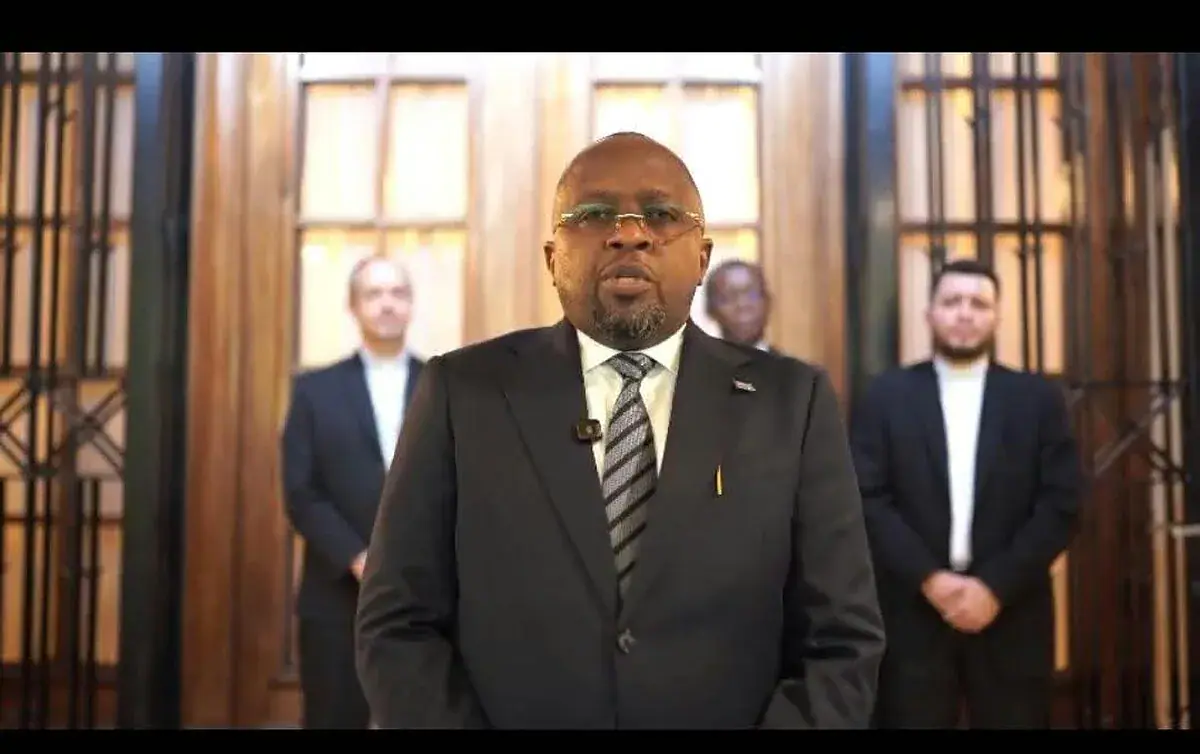
The Democratic Republic of Congo's government is working to prevent recent incidents involving the Catholic Church from escalating into a lasting institutional crisis. On November 24, Interior Minister Jacquemin Shabani met with Vatican representative Mitja Leskovar to address tensions surrounding the ban on a Christ-Roi mass at Kinshasa's Tata Raphaël stadium and the mobilization of bishops in Lubumbashi.
Shabani defended the government's decisions, denying any intention to target the Catholic Church specifically. He explained that the cancellation of the religious celebration was part of a broader security measure to prevent risks associated with large gatherings. The minister emphasized that the government has a lot of respect for Catholic ministers and values their good relations.
The meeting took place amid growing distrust between public authorities and part of the Catholic hierarchy. The ban on the mass at Tata Raphaël stadium raised questions about the limits imposed on the exercise of religious freedoms and the conditions under which the state can regulate confessional gatherings. Shabani stated that preventing public order disturbances remains a priority.
According to Shabani, the decisions taken must be understood in light of the national security context, while excluding the risk of a rupture between institutions and the Church. He expressed his intention to reassure the Catholic hierarchy about the government's respect for the Church. The events in Lubumbashi also featured prominently in the discussions.
Beyond Kinshasa, the events in Lubumbashi have also occupied an important place in the discussions. The participation of bishops in a march in the copper capital was deemed "inopportune" by Shabani. He believes that a judicial decision in favor of the Church had already been made, and the priority should now be given to its execution.
Shabani called on the parties to measure their public statements, warning against comments that could fuel anger, stigmatization, and misunderstandings. The Interior minister's approach to Leskovar reflects the government's desire to contain the political and social repercussions of this conflict.
The outcome of this situation will depend on the concrete translation of the announced commitments, including the application of the judicial decision mentioned in Lubumbashi and the clarification of the conditions for banning religious gatherings. The management of this dispute has significant implications for the coexistence between state security prerogatives and guaranteed freedoms for religious institutions.
Key points
- The DRC government's actions aim to prevent an institutional crisis with the Catholic Church.
- The tensions between the government and the Church center around restrictions on Catholic Church activities.
- The government's approach seeks to balance security concerns with respect for religious freedoms.