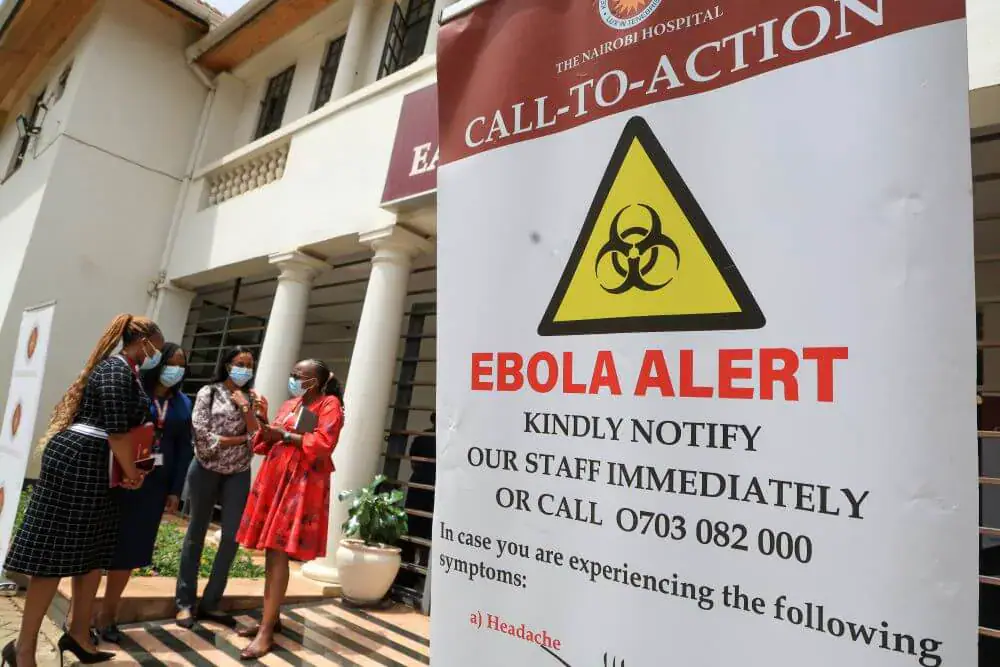
The Democratic Republic of Congo (DRC) has recorded over 10,000 confirmed Ebola cases, with 4,887 deaths, as health authorities intensify efforts to contain the outbreak. The outbreak, caused by the Bundibugyo virus, has become the deadliest Ebola epidemic in the DRC's history. According to figures released on Tuesday, October 27, the DRC had recorded 10,060 confirmed cases and 4,887 deaths as of October 25. This represents nearly half of all confirmed patients dying from the disease.
Kenya has reported nine confirmed cases, including two deaths, since the country confirmed its first case on October 6. All the cases are linked to a single cluster that began with a Kenyan man who had been living in the DRC and travelled to Nairobi through Uganda. Kenya's health authorities said all eight additional cases were identified among people linked to the first patient. There is no evidence of wider community transmission in the country.
The World Health Organisation (WHO) said 20 contacts linked to Kenya's first case had completed the mandatory 21-day quarantine period and returned home. Another 98 contacts remained in quarantine. The WHO said the discharged contacts had remained without symptoms throughout quarantine and had undergone final health assessments and counselling before returning to their families.
Kenya's Director General for Health, Dr Patrick Amoth, urged communities to welcome the discharged contacts, saying those who had completed 21 days without symptoms posed no risk of infection. The WHO is supporting Kenya's response through disease surveillance, contact tracing, laboratory testing, case management, screening at points of entry and community engagement.
Nigeria confirmed one imported case on October 20 involving a patient who had travelled from Uganda. Investigations into the patient's travel history and possible source of infection are continuing. Uganda, which recorded 20 cases and two deaths during its own outbreak earlier this year, was declared Ebola-free on August 27.
The Minister of Health Dr. Chris Baryomunsi on Sunday told journalists that Uganda had continued to remain Ebola-free but was on high alert against possible cross-border transmission. The latest regional developments have renewed the need for cross-border surveillance and preparedness. The outbreak is particularly difficult to contain because the Bundibugyo virus has no licensed vaccine or specific treatment.
A clinical trial known as TUMAINI has been launched in the DRC to evaluate vaccine candidates using a ring-vaccination approach, which targets contacts of confirmed Ebola patients and people who may have been exposed. The ONE Campaign has called on international donors to increase funding for the response, arguing that inadequate protective equipment and unpaid wages have weakened efforts to contain the outbreak.
Key points
- The DRC has recorded over 10,000 confirmed Ebola cases and 4,887 deaths.
- Kenya has reported nine confirmed cases and two deaths.
- The WHO is supporting Kenya's response through disease surveillance and contact tracing.