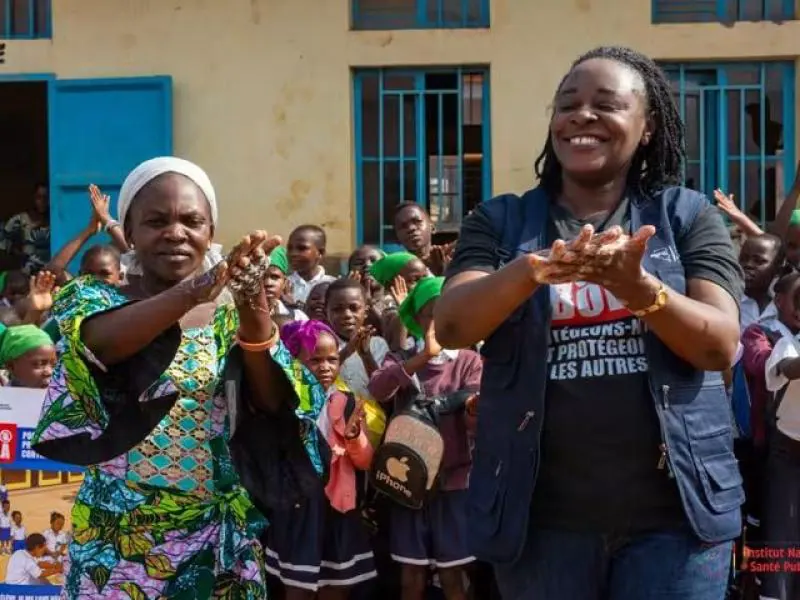
The Democratic Republic of Congo has developed a 180-day plan to combat the ongoing Ebola outbreak, which has spread to seven provinces and 63 health zones, with the Ituri province being the main epicenter. The plan, which has a budget of $1.2 billion, aims to ensure the continuity of health interventions, including surveillance, patient care, contact tracing, and community prevention. The plan was presented by Dieudonné Mwamba, Director-General of the National Institute of Public Health, during a press conference in Kinshasa.
The Ebola outbreak, caused by the Bundibugyo strain, was officially declared on May 15, 2026. Since then, the virus has continued to spread, with a total of 8,300 confirmed cases and 4,018 deaths reported, representing a lethality rate of approximately 48.4%. Over 2,100 people have been declared cured. The seven affected provinces are Ituri, North Kivu, South Kivu, Haut-Uele, Bas-Uele, Tshopo, and Sud-Ubangi.
The plan's development comes as the Congolese authorities seek to determine the precise end date of the epidemic. The plan's implementation will require the continued efforts of partners on the ground, and Mwamba called on them to clarify their commitments and the resources dedicated to this new plan. He emphasized the need for transparency and accountability, citing the importance of tracking the resources mobilized and spent.
The call for transparency follows statements by Health Minister Samuel Roger Kamba, who mentioned that out of 97 partners involved in the response, only 25% had justified the resources mobilized. Kamba announced that letters would be sent to organizations that had not provided the required justifications, and that their presence in the DRC could be called into question if they refused to comply.
The Incident Manager of the response, Professor Steve Ahuka Mundeke, presented the epidemiological report, highlighting the severity of the outbreak. The report noted that the epidemic continues to affect seven provinces, with the Ituri province being the main epicenter. The situation remains challenging, with the virus imposing the maintenance of epidemiological surveillance activities, patient care, contact tracing, and community prevention.
The plan's implementation will also involve the engagement of local communities, with the aim of enhancing their participation in the response efforts. The authorities are working to strengthen the response, including the deployment of resources and personnel to affected areas. The international community has also been called upon to provide support to the DRC's response efforts.
The development of the plan is a critical step in the fight against the Ebola outbreak in the DRC. The situation remains complex, and the response efforts will require sustained support from partners and the international community. The Congolese authorities have emphasized the need for a coordinated response to bring the outbreak under control.
Key points
- The DRC has developed a 180-day plan to combat the Ebola outbreak with a budget of $1.2 billion.
- The Ebola outbreak has spread to seven provinces and 63 health zones, with 8,300 confirmed cases and 4,018 deaths reported.
- The plan's implementation will require transparency and accountability from partners on the ground.