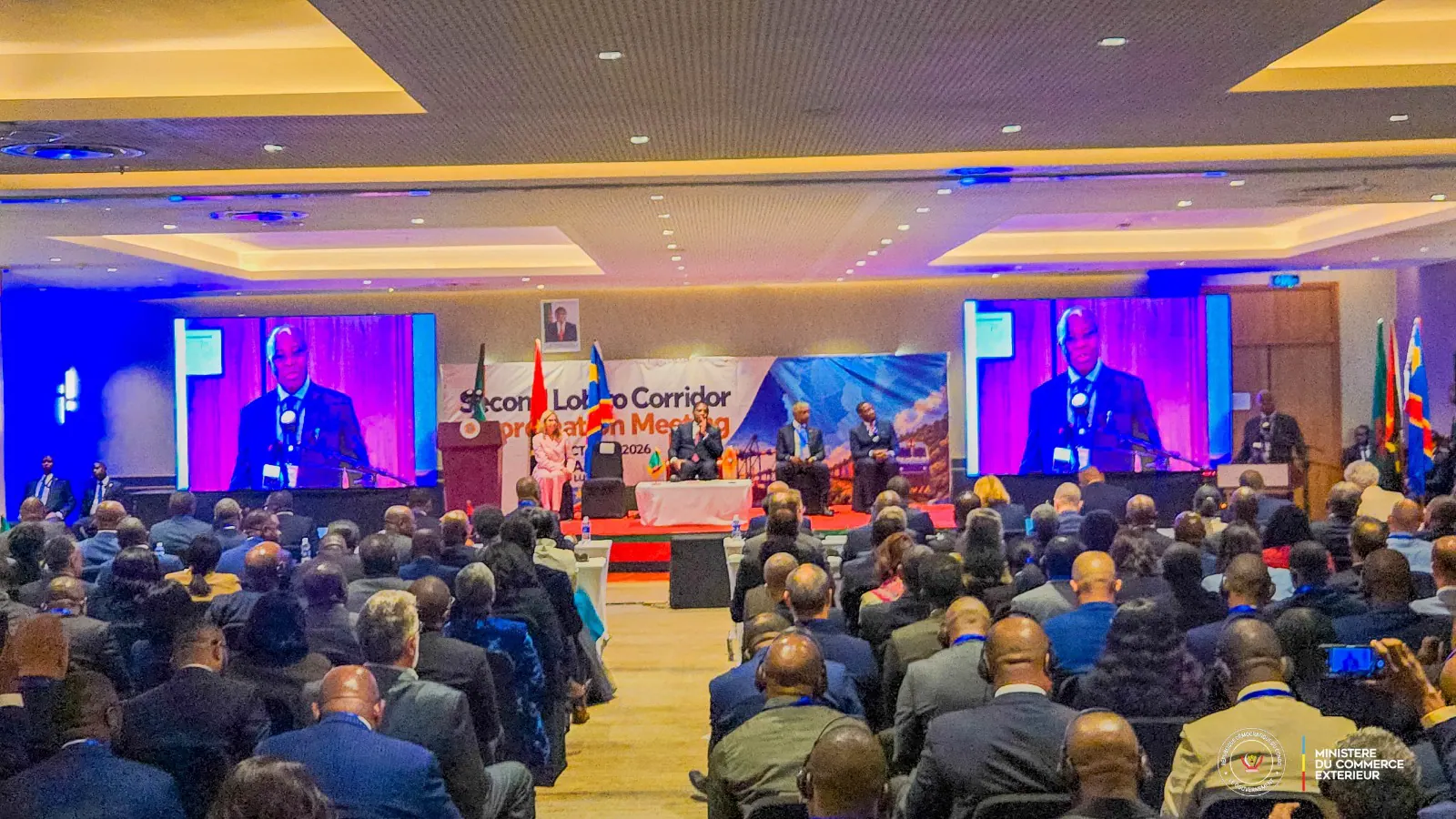
The Democratic Republic of Congo, Angola, and Zambia, along with international partners such as the World Bank and the African Development Bank, have reaffirmed their commitment to accelerating the development of the Lobito Corridor. This was agreed upon during the second high-level coordination meeting, which concluded on October 6, 2026, in Lusaka, Zambia. The meeting aimed to address administrative obstacles at border crossings to stimulate trade and economic growth.
The Lobito Corridor is a critical infrastructure project that seeks to enhance regional trade and economic integration. By streamlining border procedures and investing in infrastructure, the project aims to increase the involvement of small and medium-sized enterprises and create jobs. The development of energy infrastructure was also emphasized, enabling the local processing of minerals and agricultural products before export.
Julien Paluku, the DRC's Minister of Foreign Trade, emphasized the need for a clear roadmap with specific indicators to accelerate the project's implementation. He also welcomed the European Union's mobilization of 2 billion euros in funding. However, Paluku stressed that capacity building is equally important, suggesting that a portion of future funding should be allocated to this end.
The DRC's Minister of Planning, Guylain Nyembo, announced that his country will undertake reforms to harmonize the Common Master Plan for the Lobito Corridor. He highlighted the importance of good governance and coordination among the three countries to ensure the project's success. Nyembo expressed satisfaction that the DRC's interests were represented and that the meeting had set a positive tone for future collaboration.
All participants at the summit agreed that the Lobito Corridor has the potential to significantly boost the economies of the DRC, Angola, and Zambia. The project's success is contingent upon the effective implementation of the agreed-upon measures, including the development of infrastructure and the simplification of border procedures.
The meeting also touched on the signing of a concession contract for the Dilolo-Sakania railway section between the DRC and Angola. This development is expected to enhance the transportation of goods and people along the corridor, further facilitating trade and economic integration.
The Lobito Corridor project has garnered significant attention and support from international partners. The World Bank's involvement, in particular, is expected to play a crucial role in mobilizing funding and expertise. As the project moves forward, the DRC, Angola, and Zambia will need to work closely together to address challenges and ensure its successful implementation.
Key points
- The DRC, Angola, and Zambia have committed to accelerating the development of the Lobito Corridor to boost trade and economic growth.