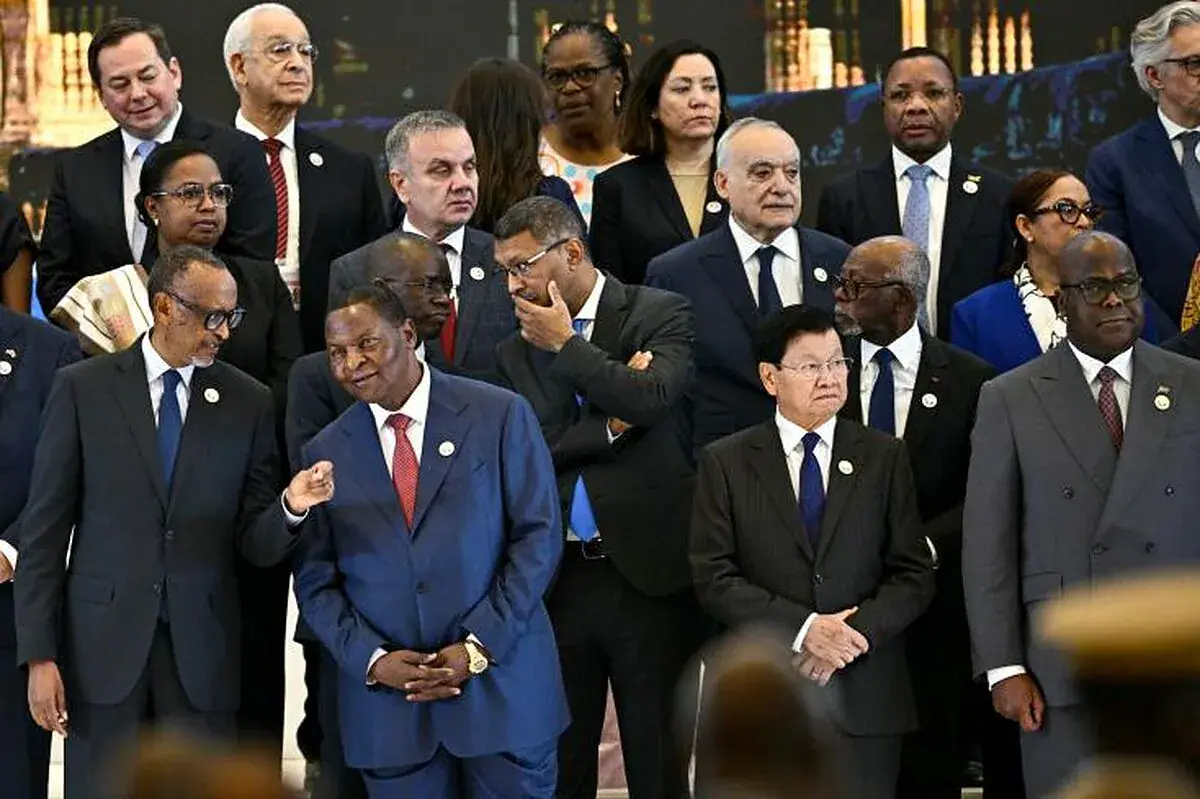
The Organisation internationale de la Francophonie has announced that Louise Mushikiwabo will remain as its leader for an additional 12 months, following a diplomatic confrontation between the Democratic Republic of Congo and Rwanda. This decision, made in Phnom Penh, Cambodia, has been hailed as a compromise by both parties, with each side claiming a partial victory. The DRC had sought to prevent Mushikiwabo, a Rwandan national, from being re-elected immediately, while Rwanda aimed to maintain its influence within the organization.
The compromise allows Mushikiwabo to continue in her position until 2027, when the next election will take place. For the DRC, this outcome represents a partial victory, as it had sought to prevent Mushikiwabo's immediate re-election. However, the DRC did not achieve its goal of an immediate change in leadership. The country's diplomats had argued that allowing Rwanda to maintain control of the Francophonie would be a symbolic blow, given the organization's role in promoting dialogue, cooperation, and diplomatic projection.
The DRC and Rwanda have been engaged in a tense diplomatic relationship in recent years, largely due to the conflict in eastern DRC. The conflict has led to accusations from the DRC that Rwanda is supporting rebel groups, including the AFC/M23. In this context, the Francophonie leadership issue has taken on a larger significance, with the DRC seeking to prevent Rwanda from consolidating its influence within the organization.
For Rwanda, the compromise represents a temporary reprieve, allowing it to maintain a presence within the Francophonie for another year. This will give Rwanda time to reorganize its diplomatic strategy and preserve its networks of influence before the next election. The country's diplomats will also have the opportunity to engage with other member states and maintain a level of visibility within the organization.
The decision has implications for the broader diplomatic landscape, particularly in the lead-up to the 2027 French presidential election. France is a key player in the Francophonie, and changes in its political landscape could have a ripple effect on the organization's dynamics. While it is uncertain how the French election will impact the next Francophonie leadership election, it is likely that diplomats will take this factor into account in their calculations.
The compromise highlights the complexities of diplomatic relationships in the region, where national interests and regional dynamics often intersect. The Francophonie leadership issue has become a proxy for the broader tensions between the DRC and Rwanda, with each side seeking to assert its influence and protect its interests.
Ultimately, the decision represents a temporary solution to a complex issue, with the next election scheduled for 2027. Until then, Louise Mushikiwabo will continue to lead the Francophonie, while the DRC and Rwanda engage in ongoing diplomatic efforts to promote their respective interests.
Key points
- The Democratic Republic of Congo and Rwanda have reached a compromise on the leadership of the Organisation internationale de la Francophonie.
- Louise Mushikiwabo will remain as leader for an additional 12 months, until 2027.
- The decision reflects a delicate balance between the competing interests of the DRC and Rwanda.