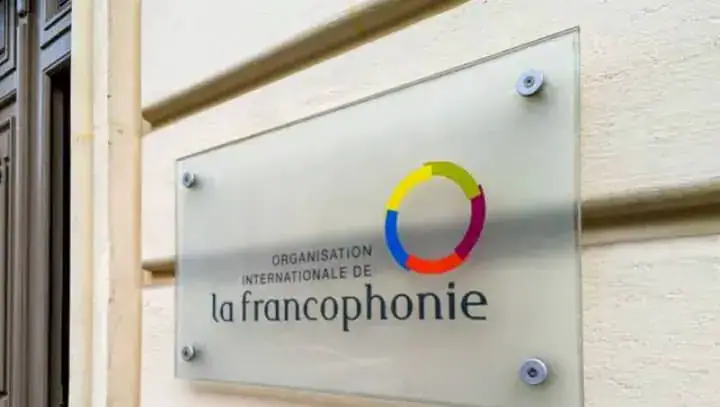
The Democratic Republic of Congo and Rwanda are engaged in a discreet yet intense diplomatic battle for the leadership of the Organisation internationale de la Francophonie (OIF). The competition centers around the candidacy of Juliana Amato Lumumba, a former culture minister and daughter of Patrice-Émery Lumumba, for the position of OIF Secretary-General. The Congolese government officially announced her candidacy on February 26, 2026, with the aim of contributing to the renewal and radiance of the Francophone space.
The DRC's candidacy is backed by its significant demographic and cultural weight as the largest Francophone country in the world. With a population of over 100 million Francophones, the DRC has a legitimate claim to play a major role in the governance of the OIF. Juliana Amato Lumumba's vision for the organization is centered around creating a "living, inclusive, and people-centered" Francophonie. The Congolese government has emphasized that this candidacy is not a rivalry between states, but rather a multilateral effort to promote the interests of the Francophone community.
Rwanda, on the other hand, is supporting the re-election of Louise Mushikiwabo, who has been leading the OIF since 2018. The Rwandan government has highlighted Mushikiwabo's achievements, including her management of the organization's budget, human resources, and assets. This approach is seen as a bid for continuity, contrasting with the DRC's vision for a renewed Francophonie.
The competition for the OIF leadership is taking place against the backdrop of ongoing tensions between the DRC and Rwanda. The eastern DRC has been plagued by conflicts involving several armed groups, including the M23, which is supported by Rwanda. The international community has responded with measures and statements critical of Rwanda's actions. In this context, the DRC's candidacy for the OIF leadership offers an additional platform for Kinshasa to promote its interests and voice its concerns.
Other candidates are also vying for the top spot at the OIF. Coumba Bâ, a Mauritanian minister and envoy to the OIF, and Dacian Cioloș, a former Romanian prime minister and EU commissioner, have also thrown their hats into the ring. Their candidacies reflect the diversity of the Francophone community and the organization's global reach.
The campaign for the OIF leadership has been marked by intense diplomatic efforts, with the DRC engaging in a strategy of persuasion to rally support for its candidate. The Congolese delegation has met with leaders in Morocco, Togo, and Canada, promoting Juliana Amato Lumumba's vision for a renewed Francophonie. This approach reflects the DRC's determination to defend its project for a more inclusive and people-centered Francophone community.
The outcome of the OIF leadership election, set to take place in November 2026, will have significant implications for the future of the Francophone community. The DRC's candidacy has already highlighted the growing importance of Africa in the Francophone world and the need for greater representation in international institutions. Regardless of the outcome, the DRC's bid for the OIF leadership has marked a significant moment in the country's diplomatic efforts to promote its interests and values on the global stage.
Key points
- The DRC and Rwanda are competing for the leadership of the Organisation internationale de la Francophonie.