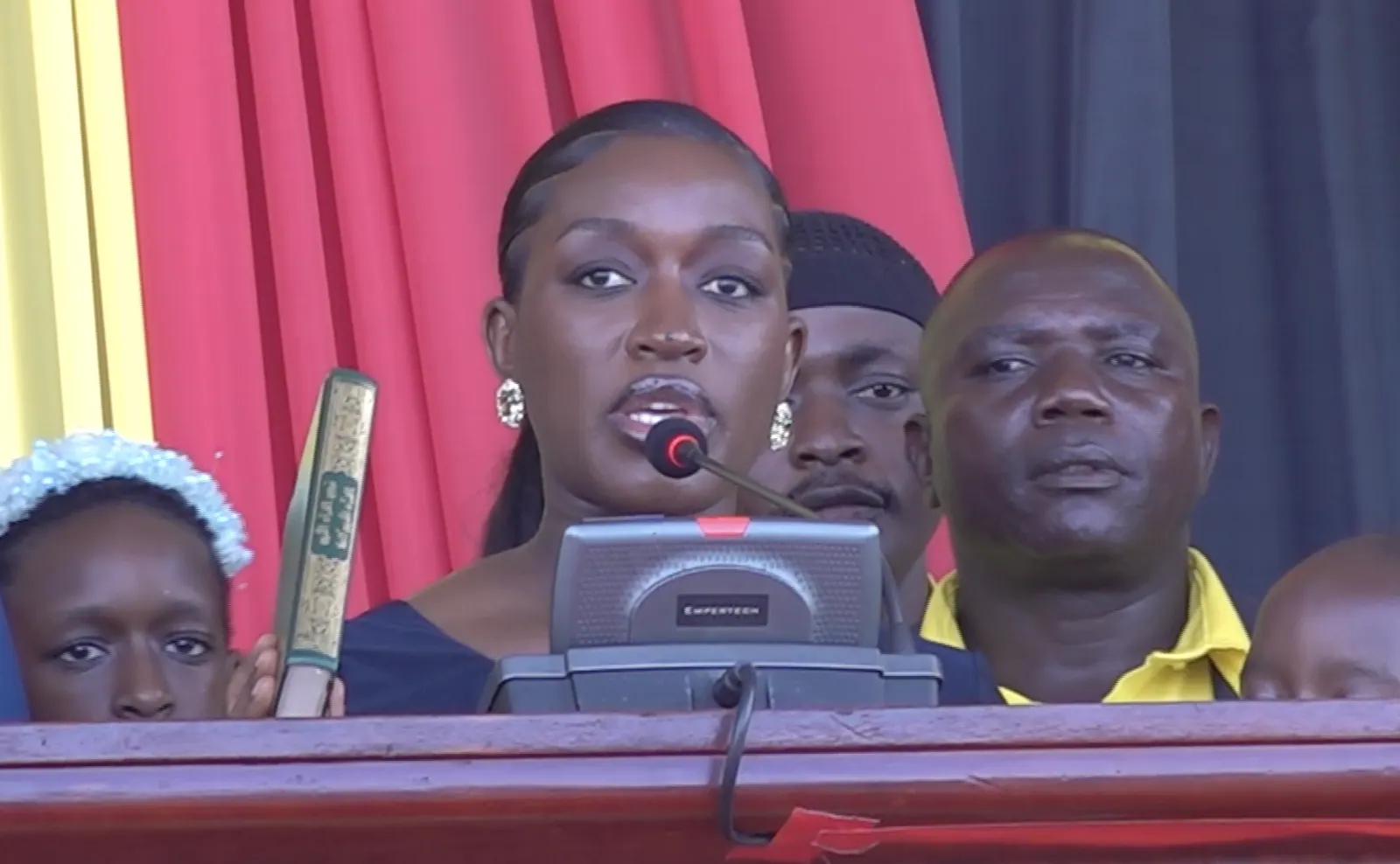
The Masaka City Woman MP election petition took a dramatic turn in the High Court, with incumbent Justine Nameere facing intense cross-examination via Zoom. She declined to answer questions from the petitioner's lawyer, NUP's Rose Nalubowa, who is challenging the election results over alleged irregularities. The petition cites issues uncovered during a recount of votes from 314 polling stations. Proceedings were briefly halted due to Nameere's refusal to respond.
Justine Nameere is defending her victory against Rose Nalubowa, who claims the election was marred by irregularities. The petitioner alleges that the issues were discovered during a vote recount, prompting her to challenge the results in court. The case is being heard in the High Court, with Nameere appearing remotely via Zoom. Her decision not to answer questions has added a new layer of complexity to the proceedings.
The Masaka City Woman MP election petition has garnered significant attention due to its potential impact on the region's politics. The petitioner's allegations of irregularities have raised concerns about the integrity of the electoral process. As the case continues, the court's decision is expected to have far-reaching consequences for the involved parties and the community at large.
The High Court is yet to determine the next course of action following Nameere's refusal to respond to questions. The petitioner's team is expected to present further evidence to support their claims of electoral irregularities. The court's ruling will be crucial in determining the validity of the election results and the fate of Nameere's position as Masaka City Woman MP.
The case has sparked debate about the role of technology in Uganda's judicial processes, with Nameere's appearance via Zoom being a point of discussion. The use of digital platforms in court proceedings is becoming increasingly common, but it also raises questions about the potential for technical issues and their impact on the administration of justice.
Electoral disputes are not uncommon in Uganda, and the Masaka City Woman MP petition is just one of several cases currently before the courts. The outcome of this case will be closely watched by stakeholders and the general public, who are eager to see how the electoral disputes will be resolved. The court's decision is expected to set a precedent for future cases.
The Masaka City Woman MP election petition is a significant test of Uganda's electoral laws and the country's judicial system. The case highlights the challenges of ensuring the integrity of the electoral process and the importance of addressing allegations of irregularities. The court's ruling will be a crucial step towards resolving the dispute and promoting transparency in the country's politics.
Key points
- The Masaka City Woman MP election petition has taken a dramatic turn with incumbent Justine Nameere declining to respond to questions.
- The petition cites alleged irregularities uncovered during a recount of votes from 314 polling stations.
- The court's decision is expected to have far-reaching consequences for the involved parties and the community at large.