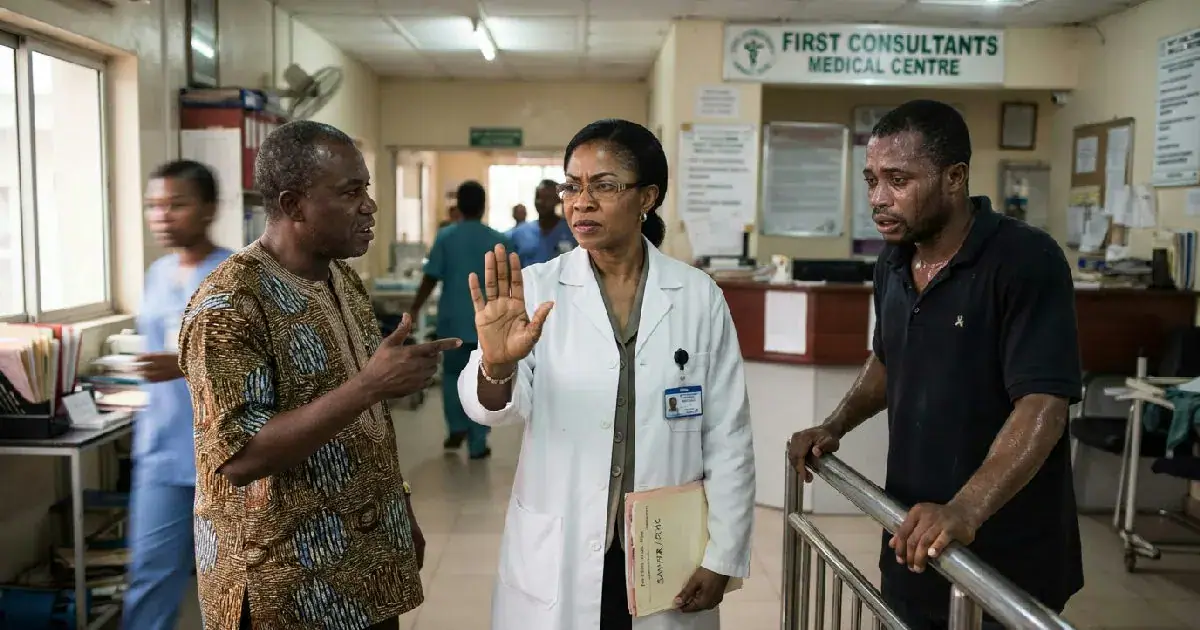
In July 2014, a Liberian diplomat, Sawyer, arrived in Lagos, Nigeria, and collapsed at the airport with alarming symptoms. Dr. Stella Adadevoh, recognizing the signs of the deadly Ebola virus, immediately suspected Ebola and took swift action to isolate him. Her early intervention was crucial in preventing the spread of the virus in the densely populated city of Lagos. Adadevoh's actions demonstrated her commitment to public safety and her willingness to take a stand against diplomatic pressure.
Despite demands from Sawyer and Liberian officials to release him, Adadevoh stood firm, prioritizing public safety above all else. She reportedly declared, "For the greater public good, I am not letting go of him." Her resolute stance was a solitary bulwark against an invisible enemy, and it underscored her commitment to her profession, even as she risked her own life. Adadevoh's family background, which included being the great-granddaughter of nationalist Herbert Macaulay, arguably instilled a deep sense of civic duty.
Adadevoh moved quickly to isolate Sawyer, using her own funds to procure scarce protective gear for her staff. She also alerted health authorities, sending samples to the Lagos University Teaching Hospital. The tests confirmed Ebola on July 23, 2014, validating her crucial early diagnosis. Sawyer died two days later, but Adadevoh's actions bought Nigeria invaluable time to activate emergency response systems and commence contact tracing.
In 2014, the West African Ebola epidemic was already the largest in history, claiming thousands of lives in Guinea, Liberia, and Sierra Leone. Nigeria, with its bustling ports and dense population centers, was exceptionally vulnerable. The arrival of an infected diplomat posed an existential threat to regional stability. Public health infrastructure across the region was strained, and fear was rampant.
Adadevoh's actions prevented a widespread outbreak in Nigeria, which could have pushed the entire continent into a deeper crisis. Her intervention proved that individual dedication could bridge systemic gaps, at least temporarily. Nigeria recorded just 11 Ebola cases, with 7 survivors, a remarkable achievement compared to other affected nations. The World Health Organization declared Nigeria Ebola-free within 89 days, praising the nation's rapid and effective response.
However, Adadevoh's heroism came at a tragic cost. She contracted the virus during her care for Sawyer and died on August 19, 2014, along with three of her colleagues. Her personal sacrifice underpinned Nigeria's wider triumph over the deadly disease. The government quickly implemented emergency measures, containing the virus to a specific cluster and preventing exponential spread within the country.
The World Health Organization hailed Nigeria's containment as a "spectacular success story," a testament to the rapid response enabled by Adadevoh's actions. Experts estimated her intervention saved over 18,500 lives. Her bravery earned her posthumous accolades and widespread admiration, and her legacy ensured Nigeria learned critical lessons from the near-catastrophe.
Key points
- Dr. Stella Adadevoh's courageous stand against Ebola in Nigeria saved thousands of lives and prevented a widespread outbreak.
- Her actions demonstrated the vital role frontline healthcare workers play in national security and the importance of individual courage and ethical fortitude.
- Adadevoh's legacy continues to inspire public health education and emergency preparedness in Nigeria.