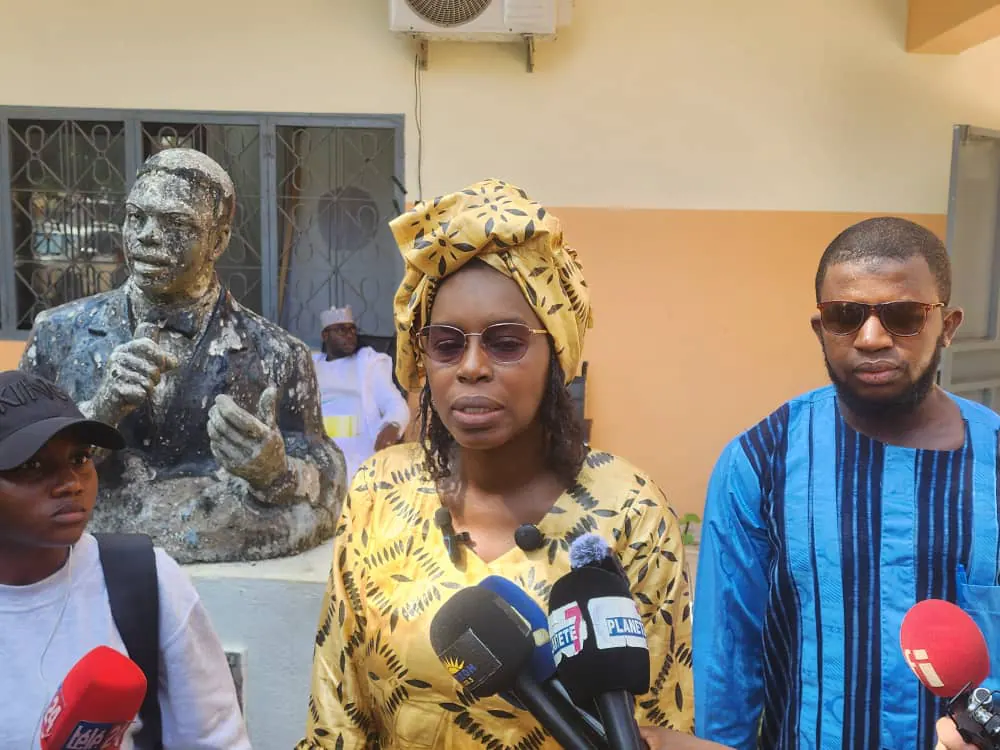
Dr. Safiatou Diallo, Director of the Center for Innovation and Research for Development (CIRD), recently spoke at a panel discussion titled "The Return of Ancestors: Memory, Dignity, Transmission" held at the Sandervalia National Museum in Guinea. The event took place on September 29, 2026. During her address, Dr. Diallo highlighted the profound significance of the restitution process initiated by Guinea, emphasizing that it goes beyond mere political rhetoric.
According to Dr. Diallo, the restitution process involves rigorous documentation of the exact trajectory of objects and remains by historians and researchers. This process aims to understand the context in which these items and human remains left Guinea, the process they followed, and how they ended up in France and other conservation locations. Dr. Diallo stressed that this work is essential to reconstructing the country's history and memory.
Dr. Diallo emphasized that the restitution of national heritage is crucial for Guinea's collective memory and identity. She noted that the country's history is currently scattered elsewhere, and it is essential to bring it back to Guinea. The return of these objects and human remains is not just about colonial reparation but also about national cohesion, social unity, and transmission to future generations.
Responding to skeptics who question Guinea's readiness to receive its relics, Dr. Diallo expressed confidence in the country's ability to welcome this part of its history. She highlighted that the return of these items is vital for the younger generation to understand what makes Guineans unique and what defines their national identity.
Dr. Diallo recalled that many of these pieces were transferred to France during colonial administration and became the property of the French people. This led to the necessity of passing specific laws by the French National Assembly to facilitate their return. She stressed that these objects and human remains are part of Guinea's collective memory and should be returned to their rightful place.
The researcher emphasized the need to move beyond a mere reivindicative approach and focus on the historical and memorial significance of the restitution process. She noted that this process is not unique to Guinea, as many countries face similar situations. Dr. Diallo highlighted that France has voted on crucial laws that allow for the return of these objects and remains to their countries of origin.
The event where Dr. Diallo shared her insights aimed to promote intergenerational dialogue and awareness about the importance of preserving and returning national heritage. Her address underscored the significance of collaboration between researchers, historians, and policymakers in ensuring the successful restitution of Guinea's cultural and historical artifacts.
Key points
- Dr. Safiatou Diallo emphasizes that the restitution of national heritage is crucial for Guinea's collective memory and identity.
- The return of objects and human remains is vital for national cohesion, social unity, and transmission to future generations.
- Dr. Diallo stresses that Guinea is ready to receive its relics and that their return is essential for the country's history and memory.