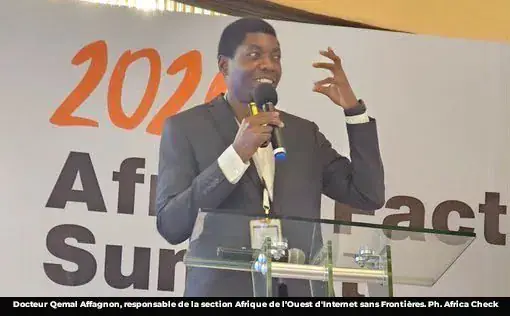
Dr Qemal Affagnon, head of the West Africa section of the non-governmental organization "Internet Without Borders," has spoken out about the risks of micro-targeting in Africa. He made these comments at the 5th edition of the Africa Facts Summit in Nairobi, Kenya. According to Affagnon, the explosion of digital data in Africa has created a fertile ground for micro-targeting, which can be used to spread misinformation and manipulate public opinion.
The factors that favor micro-targeting in Africa, Affagnon explained, include the growing number of internet users in countries such as the Democratic Republic of Congo, Mali, and South Africa. These users produce and disseminate information online, which can be exploited by micro-targeting tools. These tools can analyze user behavior, geolocation data, consumption patterns, and health data to create targeted messages that can be disseminated for various purposes.
Affagnon linked the spread of misinformation in Africa to the expansion of artificial intelligence (AI). He noted that while misinformation is not a new phenomenon in Africa, AI has amplified its impact. The use of AI in micro-targeting has been revealed in countries such as the Democratic Republic of Congo, where a French company used AI to spread misinformation on a large scale.
However, Affagnon also acknowledged that micro-targeting can have positive applications in Africa. For example, in conflict zones or areas affected by humanitarian crises, micro-targeting can be used to disseminate targeted information to populations in need. Nevertheless, he emphasized the need for safeguards to prevent the misuse of micro-targeting, which is often opaque and lacks transparency.
The protection of personal data in Africa is a complex issue, Affagnon noted. Many data centers are located outside the continent, which raises concerns about data sovereignty. He argued that it is difficult to claim data sovereignty when data is stored abroad. To address this issue, Affagnon called for increased efforts to build data centers in Africa and to promote public debate about data protection.
Affagnon also highlighted the need for greater awareness about the importance of data protection and the risks associated with micro-targeting. He emphasized that individuals, civil society, and governments must work together to address these issues. This includes educating the public about the potential risks and benefits of micro-targeting and promoting responsible data management practices.
Internet censorship is becoming increasingly common in Africa, Affagnon warned. He noted that governments often invoke vague reasons to justify censorship, which can have serious consequences for freedom of expression and access to information. To mitigate these risks, Affagnon called for a balanced approach that takes into account both national security concerns and the need to protect individual freedoms.
Key points
- Dr Qemal Affagnon's comments highlight the need for greater awareness and regulation of micro-targeting in Africa.
- The exploitation of personal data and the role of artificial intelligence in spreading misinformation are major concerns.
- There is a need for balanced approach to address the risks and benefits of micro-targeting in Africa.