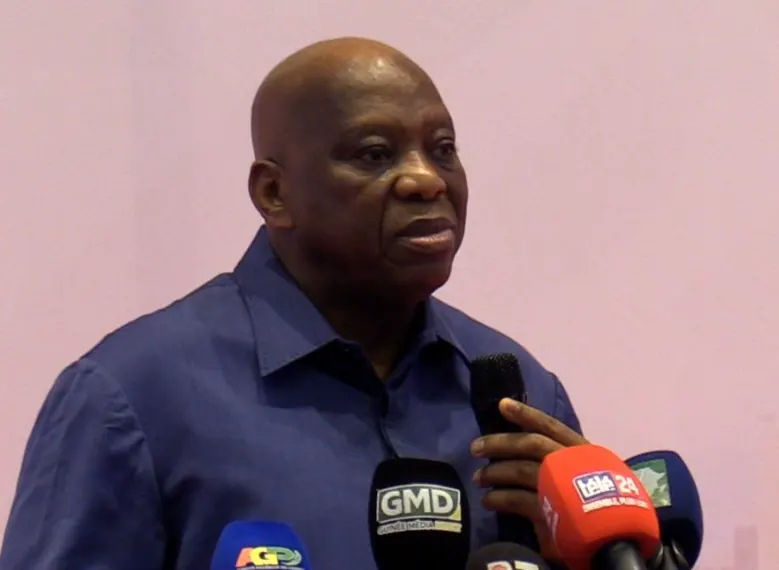
Dr Morissanda Kouyaté, Guinea's Minister of Foreign Affairs, Integration, and Diaspora, has spoken out against the injustices faced by women in Guinea and Africa. At the opening of a roundtable discussion on the Maputo Protocol in Conakry on October 7, 2026, he strongly denounced the subtle and entrenched forms of segregation faced by girls and women across the African continent.
According to Dr Kouyaté, the condition of women suffers from cultural prejudices from conception. He stated that girls and women in Africa are subjected to segregation even before birth, citing traditional wedding blessings where the desire for a boy surpasses that of a girl. This, he said, sets the tone for the inequalities women face throughout their lives.
The minister also highlighted the plight of women who are unable to give birth to a son, often facing family and social pressure. He denounced the ignorance surrounding biological realities, which often leads to women being blamed for not giving birth to boys. Dr Kouyaté emphasized that the determination of sex depends on the chromosomes contributed by men, not women.
Dr Kouyaté also pointed to educational disparities within households and the scourge of early or forced marriages. He noted that girls are often relegated to domestic chores and receive minimal education, while boys are prioritized and given more opportunities. This, he said, limits girls' future prospects and perpetuates inequality.
The minister further highlighted the pressure on girls to marry early, often without their knowledge or consent. He stated that girls are recalled to what some consider their only duty: marriage, often without knowing who they are being forced to marry. This, he said, is a form of injustice that must be addressed.
Dr Kouyaté's comments were made in the context of the Maputo Protocol, a key instrument for promoting women's rights in Africa. His statements reflect a broader conversation about the need to address the systemic inequalities faced by women in Guinea and across the continent.
The issue of women's rights in Guinea and Africa remains a pressing concern, with many women continuing to face significant barriers to education, healthcare, and economic empowerment. Dr Kouyaté's call to action highlights the need for continued advocacy and policy efforts to address these inequalities and promote a more just and equitable society.
Key points
- Dr Morissanda Kouyaté denounces cultural prejudices against women in Africa, citing genetic, educational, and marital inequalities.
- The minister highlights the need to address systemic inequalities faced by women in Guinea and across the continent.
- Dr Kouyaté's comments reflect a broader conversation about promoting women's rights in Africa, including the implementation of the Maputo Protocol.