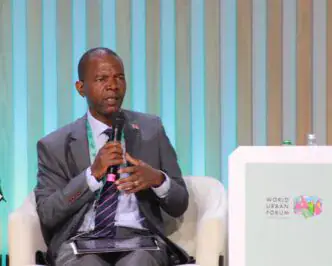
Dr. Derrick Samuels, an international speaker and author, has called on chief executive officers of state-owned enterprises, directors, and senior government officials in Eswatini to adopt a new leadership approach. During an executive leadership session held at the Hilton Garden Inn in Mbabane, Dr. Samuels emphasized the need for ethical, collaborative, and results-driven leadership to accelerate the country's development. The session was sponsored by the Derrick Samuels Leadership Institute (DSLI), LLC, based in New Jersey, USA.
The leadership session, coordinated by Prime Minister Russell Mmiso Dlamini, was part of Dr. Samuels' visit to Eswatini. The Prime Minister received Dr. Samuels for a courtesy call at the Private and Cabinet Office on Monday, October 26, 2026. Dr. Samuels' presentation was themed "The Victor's Mentality: The Leadership Mindset that Produces Impact." He challenged Eswatini's leaders to adopt transformational leadership approaches that would help advance the country's development agenda.
Dr. Samuels, self-styled as "The Voice Against Stagnation," emphasized the importance of "heart leadership" as opposed to "belly leadership." He urged leaders to prioritize collective progress, ethical conduct, and the interests of the people they serve. According to Dr. Samuels, leadership should be measured by the ability to deliver solutions rather than merely identify challenges. He cited history as a testament to those who solved problems, saying, "History does not remember those who saw the problem. History remembers those who solved it."
Dr. Samuels outlined a framework for effective leadership, which he referred to as the VICTORS principles. These include Vision with Value; Inspirational Ideas with Intentionality; Connection with Character and Compassion; Transparency with Trust; Organisation with Observation; Results with Resilience; and Self-leadership with Respect. He explained that effective leadership required a clear vision, purposeful ideas, strong relationships, transparency, organized execution, and a commitment to achieving results despite challenges.
Dr. Samuels also highlighted Eswatini's potential for economic transformation, citing the country's peace, stability, and relatively low crime rate as advantages that could help attract investment, particularly in the manufacturing sector. However, he stressed that the country's ability to translate these advantages into economic growth would depend on the quality of its leadership. Dr. Samuels challenged leaders to take responsibility for unlocking the country's potential by creating an environment that encourages investment, supports development, and delivers tangible benefits to citizens.
Drawing on his observations of African communities in the United States, Dr. Samuels cautioned against a lack of collaboration and unhealthy competition. He encouraged leaders to work together rather than compete at the expense of shared objectives, emphasizing that cooperation was essential for achieving lasting impact. According to Dr. Samuels, such tendencies could undermine collective progress and success if not addressed.
Dr. Samuels expressed appreciation to Prime Minister Russell Mmiso Dlamini for the reception accorded to him in Eswatini, describing him as "so supportive." The Prime Minister's efforts to coordinate the leadership session and provide a platform for Dr. Samuels to share his insights were acknowledged. The visit by Dr. Samuels and his interactions with Eswatini's leaders are expected to have a lasting impact on the country's development trajectory.
Key points
- Dr. Derrick Samuels challenges Eswatini leaders to adopt results-driven leadership to accelerate the country's development.
- Dr. Samuels emphasizes the importance of "heart leadership" and collaboration among leaders.
- Eswatini's leaders are urged to take responsibility for unlocking the country's potential and creating an environment that encourages investment and supports development.