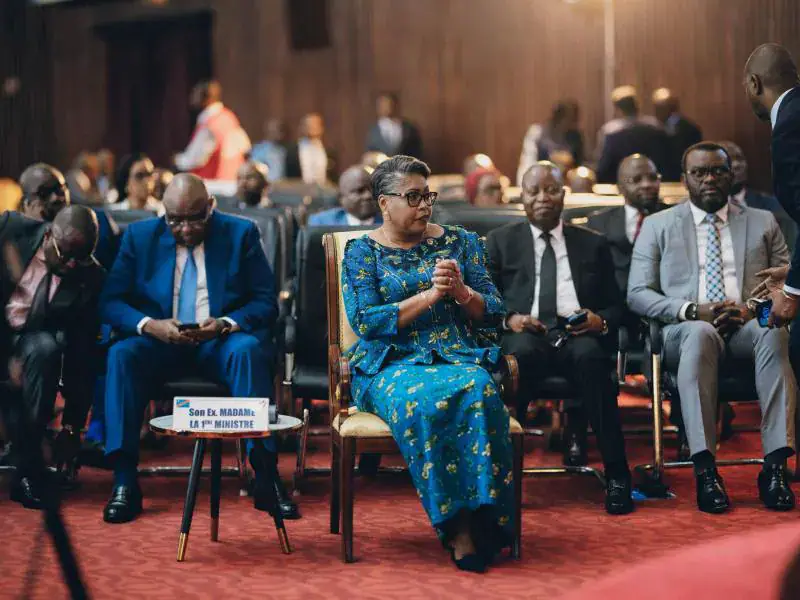
The government of the Democratic Republic of the Congo has taken a significant step towards shaping its economic future with the submission of the 2027 budget to the National Assembly. Prime Minister Judith Suminwa Tuluka presented the budget, which stands at 56.930 billion Congolese francs, approximately $24.8 billion USD. This represents a 12% increase from the 2026 revised budget. The budget aims to address the concerns of the Congolese population, focusing on economic and social dimensions.
The 2027 budget is designed to be balanced in terms of revenue and expenditure, marking a substantial increase from the initial budget forecasts made at the beginning of President Félix-Antoine Tshisekedi's first term. The Prime Minister emphasized that the budget is more than a financial exercise; it is a commitment to building a stronger, more just, and prosperous Congo. The budget's priorities include preserving national sovereignty, supporting economic development, and enhancing public action efficiency.
Judith Suminwa highlighted that the budget aims to protect lives, support families, create jobs, and rebuild territories. The government's objective is to provide a perspective of peace, sovereignty, and prosperity for current and future generations. The budget's focus areas include defense, security, and diplomacy, with a significant allocation for the forces of defense and security, as well as for protecting populations affected by conflict.
The Prime Minister also emphasized the importance of preserving macroeconomic stability and supporting economic diversification. The budget includes investments in agriculture, infrastructure, and basic social services to boost national production, create jobs, and improve living conditions. The government is committed to implementing reforms to enhance revenue mobilization, modernize administration, and improve public expenditure quality.
Key aspects of the budget include the digitalization of procedures, the implementation of a single Treasury account, and the transition to a program-based budget. These measures aim to improve resource mobilization and utilization. The government has assured the National Assembly that it will implement the approved orientations and report on their execution.
The examination of the 2027 budget followed the review of the 2025 accounts, as per the Public Finance Law. After addressing concerns raised by national deputies, the National Assembly will decide on the budget's receivability, which will then be transmitted to the Economic, Financial, and Budgetary Control Commission for in-depth examination before adoption.
The 2027 budget represents a critical step in the DR Congo's efforts to achieve economic growth and social progress. The government's commitment to transparency and accountability in budget execution will be crucial in ensuring the budget's objectives are met. The budget's success will depend on effective implementation and the government's ability to address the concerns of the Congolese population.
Key points
- The 2027 budget focuses on economic growth, social progress, and sovereignty.
- The budget aims to address the concerns of the Congolese population, including job creation and improved living conditions.
- The government has committed to implementing reforms to enhance revenue mobilization and improve public expenditure quality.