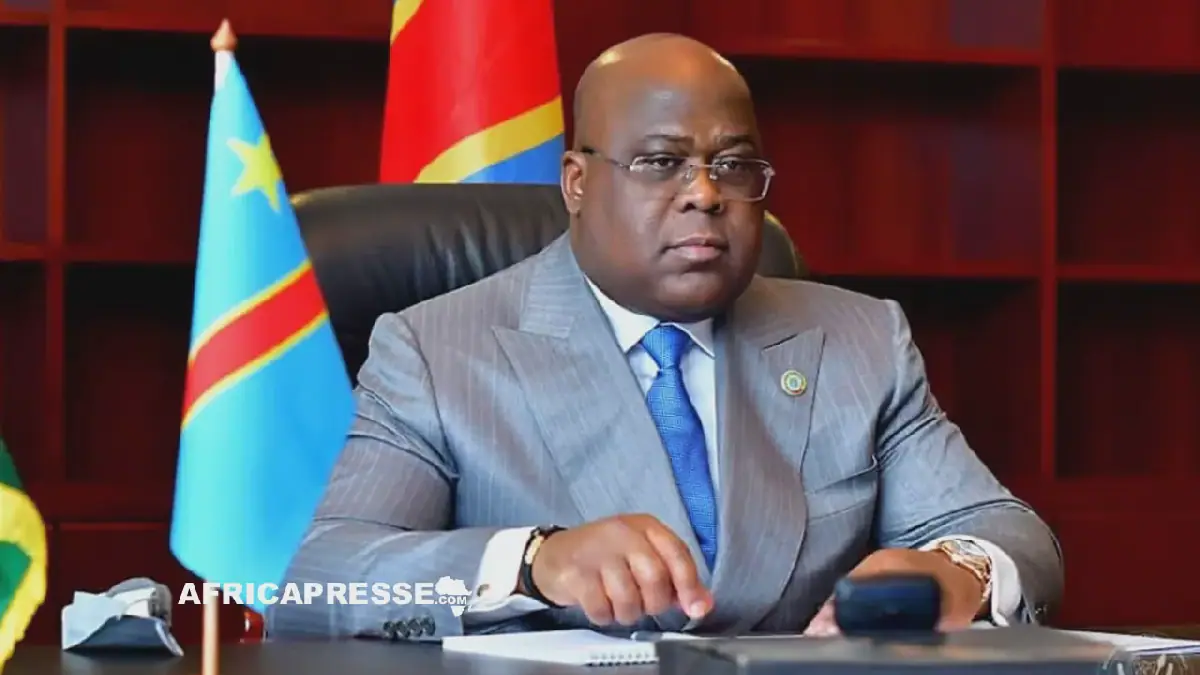
The Democratic Republic of Congo has warned it might leave the Organisation internationale de la Francophonie if Louise Mushikiwabo, the Rwandan secretary-general, is re-elected for a third term. This development has heightened tensions within the organization ahead of the election in Phnom Penh, Cambodia, scheduled for November 15-16, 2026. According to sources, DR Congo's President Félix Tshisekedi expressed this threat during a meeting with French Foreign Minister Jean-Noël Barrot in Kinshasa on October 2.
The dispute centers on Mushikiwabo's candidacy for a third term as secretary-general, a move that DR Congo sees as an exception to the organization's practices. Kinshasa is supporting Juliana Amato Lumumba, daughter of Patrice Emery Lumumba, for the position. Lumumba's campaign focuses on a "Francophonie des peuples" that prioritizes peace and inclusion. This challenge comes amid strained relations between DR Congo and Rwanda, with Kinshasa accusing Kigali of backing the armed group AFC/M23 in eastern DR Congo.
The election in Phnom Penh will see four candidates vying for the secretary-general position: Mushikiwabo, Lumumba, Coumba Ba from Mauritania, and Dacian Cioloș from Romania. DR Congo also contests the voting modalities, particularly the use of a simple majority in the absence of a consensus among member states. A simple majority vote could undermine the legitimacy of the future secretary-general and expose the OIF to a risk of lasting fracture.
Mushikiwabo was first elected in October 2018 and took office in January 2019. She was re-elected for a second term in 2022. Her potential third term has sparked concerns about the concentration of power within the secretary-general's office. The DR Congo's stance raises fundamental questions about the OIF's ability to survive increasing politicization of its institutions.
The DR Congo's threat to leave the OIF would have significant implications, depriving the organization of one of its most populous and influential members in Central Africa. It would also signal a lack of trust in an institution already grappling with the repercussions of geopolitical tensions among its members. The outcome of the Phnom Penh election will not only determine the next secretary-general but also impact the credibility of the Francophonie as a platform for dialogue.
The OIF's challenges are compounded by its struggle to maintain unity among its members. The organization has been criticized for its handling of internal disputes and its ability to address the needs of its diverse membership. As the election approaches, the OIF faces a critical test of its ability to navigate complex geopolitical dynamics and maintain its relevance in the region.
The Francophonie's future hangs in the balance as member states prepare to make their decision in Phnom Penh. The election's outcome will have far-reaching consequences for the organization and its role in promoting peace, democracy, and cultural exchange among its members. The international community will be watching closely as the OIF navigates this critical juncture in its history.
Key points
- DR Congo may quit the Organisation internationale de la Francophonie if Rwandan Louise Mushikiwabo is re-elected as secretary-general.
Reporting sources
- Francophonie : la RDC menace de claquer la porte de l’OIF · Africa Presse