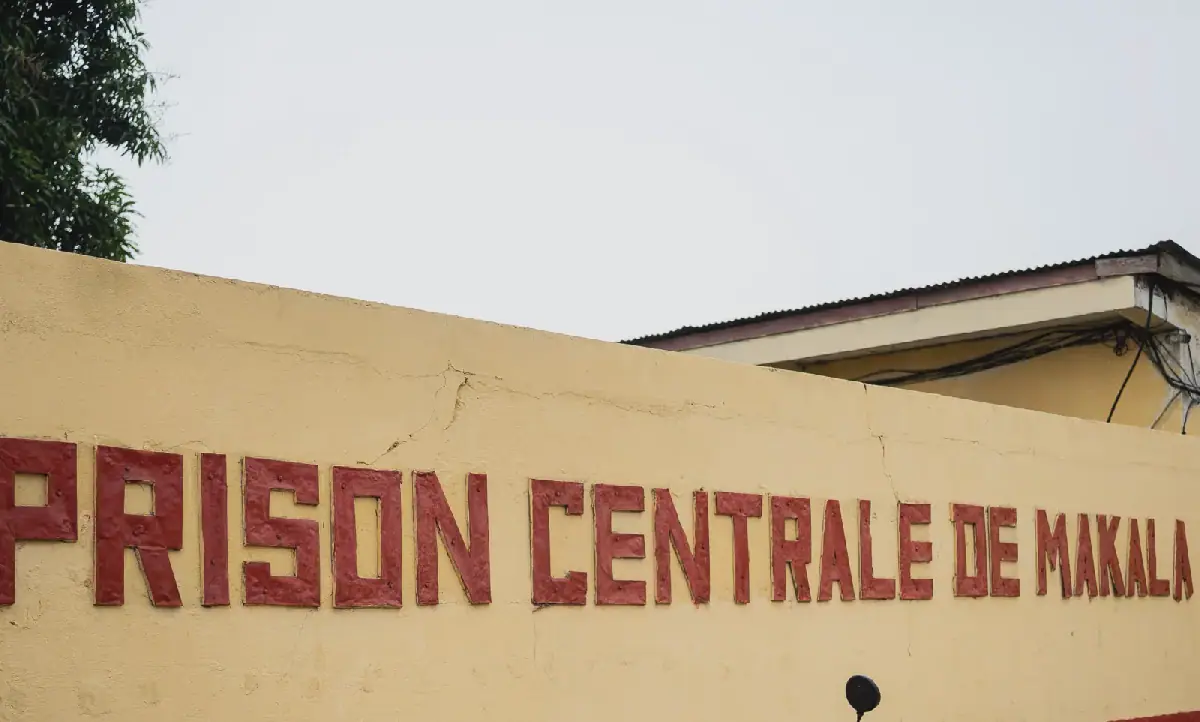
The Democratic Republic of Congo's government has taken a temporary measure to suspend new admissions at the Makala central prison, citing severe overcrowding and related security, health, and humanitarian concerns. This decision was made through the Ministry of Justice, allowing for exceptional derogations. The Makala prison, designed to accommodate 1,500 inmates, is currently housing over 16,000 people.
This situation is not unique to Makala, as several prisons across the country face chronic overcrowding. The Congolese penitentiary system has long struggled with these challenges. The government's decision aims to address immediate concerns but has been met with mixed reactions from human rights organizations. The Association africaine des droits de l'homme (ASADHO) and the Fondation Bill Clinton pour la paix (FBCP) have welcomed the move as a necessary step.
However, these organizations argue that the suspension of new admissions is only a temporary solution and does not address the root causes of the problem. They recommend deeper reforms, including better oversight of the judiciary, the closure of clandestine detention centers, and the implementation of a sustainable policy to decongest prisons. Such measures are seen as essential to improving detention conditions in the long term.
The overcrowding at Makala and other prisons highlights the need for comprehensive reform within the Congolese penitentiary system. Human rights defenders and experts emphasize that addressing these issues requires a multifaceted approach, including policy changes and infrastructure improvements. The current situation at Makala prison is a stark example of the systemic challenges faced by the country's detention facilities.
The government’s decision to suspend new admissions at Makala prison underscores the urgent need for reform. With the prison population far exceeding its capacity, conditions have become increasingly unsanitary and inhumane. This has raised concerns among human rights organizations and advocates, who stress that immediate and long-term solutions are necessary to address these challenges.
Experts and human rights organizations are calling for a comprehensive approach to reforming the Congolese penitentiary system. This includes not only addressing the immediate needs of overcrowded prisons but also implementing policies to prevent future overcrowding. Recommendations include improving judicial oversight, enhancing prison infrastructure, and ensuring that detention conditions meet international human rights standards.
The situation at Makala prison and others across the DR Congo has sparked discussions on the need for sustainable solutions to overcrowding and detention conditions. Stakeholders, including government officials, human rights defenders, and experts, are emphasizing the importance of collaborative efforts to reform the penitentiary system. This involves addressing both the symptoms and root causes of overcrowding to ensure humane detention conditions.
Key points
- The DR Congo government has suspended new admissions at Makala prison due to severe overcrowding, with the facility housing over 16,000 inmates against its 1,500 capacity.
- Human rights organizations have welcomed the temporary measure but stress that deeper reforms are needed to address the root causes of overcrowding.
- Recommended reforms include better judicial oversight, closure of clandestine detention centers, and sustainable policies to decongest prisons.