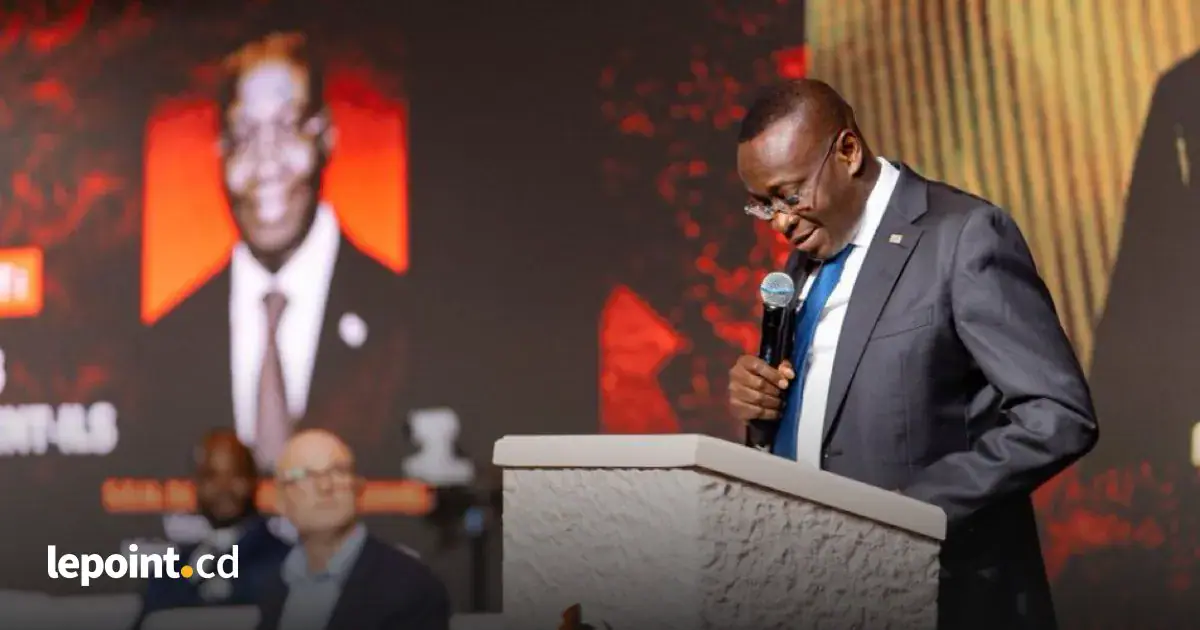
Daniel Mukoko Samba, Vice-Premier Minister of National Economy in the Democratic Republic of the Congo, has emphasized the need for more stringent mining partners. He presented his vision at the Makutano Mining 2026 conference in Kinshasa on November 24. Mukoko Samba stressed that a mining partnership should be evaluated based on the value it leaves in the country after the project is completed. He cited the example of the Botswana-De Beers partnership, which has been renegotiated six times over 50 years.
Mukoko Samba outlined four key conditions for mining partnerships in the DR Congo. Firstly, contracts should be flexible and able to evolve over time. He also emphasized the importance of the state having access to commercial information about projects, allowing it to compare financial assumptions with those of investors. This would enable the government to make informed decisions and ensure that the partnership benefits the country.
The second condition focuses on local transformation, which Mukoko Samba considers essential for the sector's viability. He noted that this depends on factors such as energy, logistics, and market access. The minister cited Indonesia's nickel industry as an example. The DR Congo, rich in copper and cobalt, still faces challenges related to electricity and logistics infrastructure.
Mukoko Samba's third condition concerns local content, which should prioritize skills transfer over mere subcontracting. He suggested making this a criterion for awarding mining rights, similar to Saudi Arabia's approach. The minister asked Sicomine, Kamoa Copper, and Gécamines about the proportion of their purchases and subcontracting allocated to Congolese enterprises. Kamoa Copper's representative reported that the company had paid around $1 billion to Congolese entrepreneurs.
The fourth condition relates to the state's capacity to negotiate and make informed decisions in the general interest. Mukoko Samba believes that the DR Congo needs more demanding partners, not necessarily more generous ones. Marit Kitaw, from the UN Economic Commission for Africa, noted that the effectiveness of export restrictions depends on the country's position in each market. She cited the example of lithium-iron-phosphate batteries, which do not use cobalt.
The discussion also touched on the issue of infrastructure development. The representative of Sicomine highlighted the company's infrastructure investments, which could reach $7 billion, as well as the Busanga hydroelectric dam, with a capacity of 240 megawatts. According to Reuters, this $7 billion infrastructure ceiling was set during the revision of the Sino-Congolese contract announced in January 2024.
The DR Congo's push for more stringent mining partnerships reflects its desire to maximize benefits from its natural resources. Mukoko Samba's conditions aim to ensure that mining projects contribute to the country's economic development and provide lasting value. The government's efforts to renegotiate contracts and prioritize local content and transformation are expected to shape the future of the DR Congo's mining sector.
Key points
- DR Congo's Vice-Premier Minister of National Economy Daniel Mukoko Samba outlines four conditions for mining partnerships.
- The conditions focus on contract flexibility, local transformation, local content, and state capacity to negotiate.
- The DR Congo seeks more demanding partners, not necessarily more generous ones, to ensure that mining projects benefit the country.